
Hypomyces deformans
Hypomyces deformans
Description
Symptoms
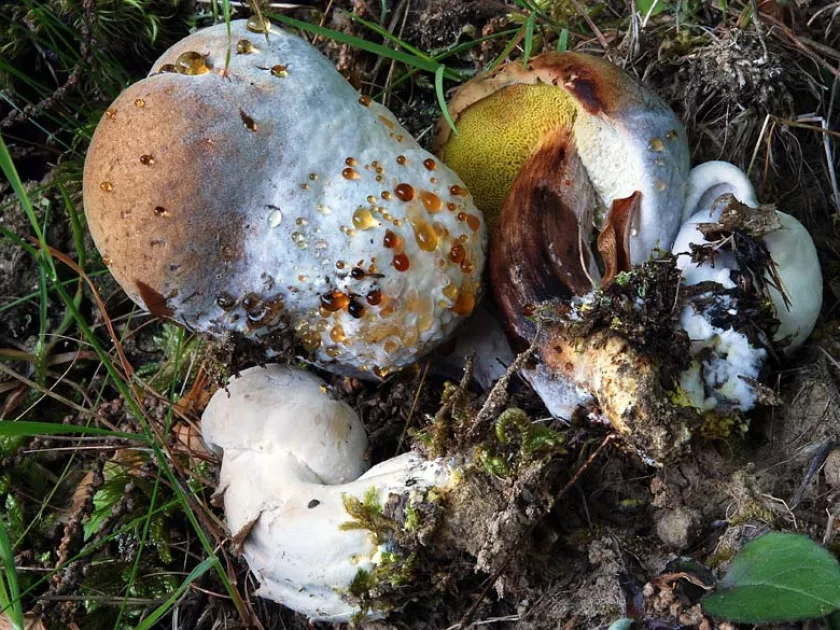
The primary symptom of this disease is the abnormal development of the host mushroom's fruiting bodies. Infected specimens exhibit deformations, such as thickened stalks and malformed, twisted caps.
A distinctive, often velvety coating appears on the surface of the infected mushrooms, which may change color over time. The host tissue eventually becomes soft and spongy, indicating deep penetration of the pathogen's hyphae.
- Discoloration of the mushrooms, often turning into dark or grayish shades.
- Significant retardation in growth compared to healthy specimens.
- Necrotic lesions appearing on the surface of the mushroom caps.
- A foul odor associated with rot during advanced stages of infection.
In the early stages, the infection may be visually subtle, manifesting only as slight yellowing or a loss of turgor in the fruiting bodies. However, high humidity levels make the fungal growth more prominent.
In severe cases, the infected mushrooms lose all market value, becoming entirely unsuitable for harvest. Furthermore, the underlying mycelium often degrades, resulting in a substantial reduction in total yield.
Pathogen
The causal agent of this disease is the microscopic fungus Hypomyces deformans, which belongs to the Ascomycota class. It is a highly specialized parasite that attacks both the fruiting bodies and the mycelium of other cultivated mushroom species.
Biologically, this is a mycoparasitic fungus that invades the host tissues, extracting nutrients for its own growth and development. Its life cycle is inextricably linked to the presence of a host fungus in the cultivation environment.
The pathogen reproduces through conidia, which are easily disseminated by air currents, water droplets, or contaminated tools. The rapid rate of sporulation allows the infection to spread quickly across large cultivation areas.
This fungus is evolutionarily adapted to suppress the host's immune responses, posing a significant threat to industrial mushroom farming. It can persist in the substrate for long periods, even after the production cycle is complete.
Research into the genetic diversity of Hypomyces deformans indicates a high level of adaptability to various microclimatic conditions. This complicates the selection of mushroom strains that are fully resistant to the infection.
Conditions for development
Hypomyces deformans thrives in conditions of high humidity, typically exceeding 85-90%. Condensation on the mushroom surface provides the perfect environment for spore germination and rapid spread.
Temperatures ranging from +18°C to +24°C are considered optimal for the pathogen's aggressive development. While the fungus slows down significantly at temperatures below +10°C, it remains viable.
Poor ventilation leads to stagnant air, which facilitates the buildup of spore concentrations and increases the risk of contamination. Contaminated tools or poor hygiene practices are primary vectors for the spread of the disease.
Inadequate pasteurization of the casing soil or substrate provides a refuge for the pathogen to survive. Using poor-quality raw materials during composting can also introduce the infection into the growing environment.
Fluctuating microclimatic conditions weaken the resilience of cultivated mushroom strains, making them more susceptible to Hypomyces deformans. Maintaining stable environmental parameters is critical for disease management.
Why it matters
The primary danger lies in the total loss of commercial-grade quality, leading to the disposal of entire batches. This results in direct and significant financial losses for mushroom growers.
Infection of the mycelium causes a drastic decline in overall yield. In many cases, infestations can lead to a complete cessation of mushroom production in specific areas of the growing rooms.
The pathogen is capable of spreading rapidly through the entire facility via airborne spores. Failing to control the disease can result in a widespread outbreak that affects the entire production cycle.
Costs related to emergency disinfection and production downtime add significantly to the overall cost of goods sold. Frequent outbreaks can make mushroom farming economically non-viable.
There is also a risk to the brand reputation if infected product accidentally reaches the market. Consumers are highly sensitive to mushroom quality, and even minor visual defects can cause rejection.
Protection
The cornerstone of disease management is strict adherence to sanitary protocols. Regular, thorough disinfection of all surfaces, equipment, and walls in growing rooms is essential to prevent outbreaks.
It is crucial to monitor the pasteurization of the substrate and casing soil carefully. Using approved fungicidal treatments within regulatory limits can help protect the mycelium from infection.
- Ensuring effective ventilation to control humidity and air circulation.
- Promptly removing infected mushrooms and associated substrate to prevent spore dispersal.
- Conducting routine, systematic inspections to detect early signs of malformation.
- Utilizing only high-quality, certified spawn free from pathogen contamination.
Staff should follow strict hygiene practices, including footwear and clothing sanitation when entering growing zones. Any equipment moved between chambers must be disinfected to prevent cross-contamination.
If an outbreak occurs, immediate reduction of humidity and slight cooling of the growing room are recommended. Isolating affected areas and consulting with an agronomist to apply specialized fungicides are mandatory containment measures.
Discussion
No discussions yet — be the first.