
Hypomyces perniciosus
Hypomyces perniciosus
Description
Symptoms
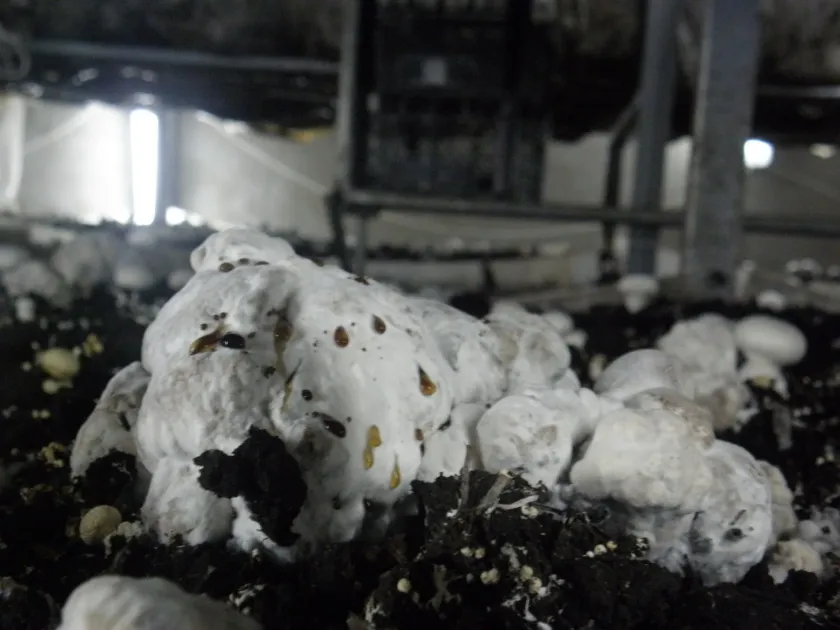
The first clinical sign of infection is the emergence of a white, fluffy, and felt-like growth on the caps or stipes of the mushrooms.
As the infection progresses, affected mushrooms exhibit severe malformations, including thickened, bulbous stalks and distorted, mushroom-like tumor growths.
The tissue of the infected mushroom loses its structural integrity, becoming spongy, watery, and prone to rapid decomposition compared to healthy specimens.
An offensive, putrid odor often accompanies the infection, which is a result of secondary bacterial colonization of the dying mushroom tissue.
In advanced stages, the mushrooms cease growth entirely and turn into a dark, shapeless mass that serves as a reservoir for millions of fungal spores.
Pathogen
Hypomyces perniciosus is a specialized mycophilic fungus known to act as a destructive parasite on cultivated mushrooms, most notably the common button mushroom (Agaricus bisporus).
This pathogen belongs to the Ascomycota division and possesses a highly efficient mechanism for invading the host tissue to extract essential nutrients for its growth.
The fungus produces a dense, whitish mycelial mat that rapidly colonizes the surface of the host, effectively smothering the mushroom and halting its development.
The life cycle of the pathogen is well-adapted to indoor growing environments, allowing it to complete its reproductive phases within a short timeframe.
Its spores are highly resilient to environmental stress and can remain dormant in soil or contaminated structures for extended periods, making them difficult to eradicate.
Conditions for development
The development of Hypomyces perniciosus is heavily favored by high relative humidity levels, consistently remaining above 90% in the growing rooms.
Temperatures ranging from +18°C to +25°C provide the thermal optimum required for rapid spore germination and the subsequent colonization of the casing layer.
Contaminated casing material is the primary vehicle for introducing the pathogen into the growing area if it has not undergone proper pasteurization.
Poor ventilation leads to pockets of stagnant, humid air, which significantly accelerates the spread of the pathogen from infected spots to healthy beds.
Inadequate sanitation practices, such as failing to disinfect tools or personnel movement between contaminated and clean zones, facilitate cross-contamination.
Why it matters
This disease represents a major threat to commercial mushroom production, often causing significant yield losses and reducing overall crop quality.
Infected mushrooms are completely unmarketable due to their unsightly appearance and distorted structure, leading to direct economic losses for farmers.
The rapid spread of the pathogen means that a single point of entry can result in an epidemic across an entire production house within days.
Resources must be diverted toward emergency cleanup and sterilization, increasing production costs and decreasing the farm's operational efficiency.
The persistence of the fungus in the environment poses a long-term challenge, potentially contaminating future crops if the facility is not thoroughly sanitized.
Protection
Strict sanitation protocols, including the thorough disinfection of equipment, walls, and floors, are the foundation of effective disease management.
Casing soil must be subjected to rigorous pasteurization to ensure that all pathogen spores are completely inactivated before application to the beds.
Immediate physical removal of any symptomatic mushrooms, along with a surrounding layer of casing, is essential to contain the localized outbreak.
Integrated pest management (IPM) to control fungus gnats and flies is critical, as these insects act as primary vectors for spreading fungal spores.
Maintaining proper air circulation and controlling humidity levels prevents the surface moisture required for the pathogen to thrive on the mushrooms.
Discussion
No discussions yet — be the first.