
Annosum root rot
Heterobasidion
The disease is caused by the basidiomycete fungus Heterobasidion annosum (and closely related species). It is considered one of the most destructive pathogens in temperate forest ecosystems globally.
What the section contains
Annosum root rot
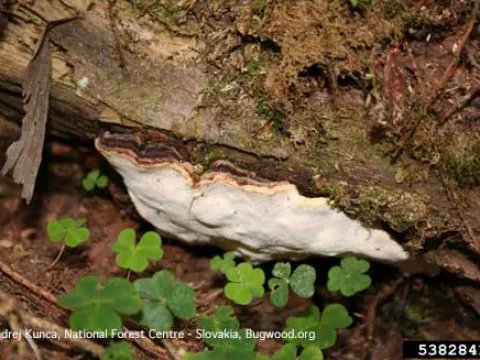
The fungus primarily attacks the root systems and the lower trunk of coniferous trees. It forms perennial fruit bodies that can be found at the base of infected trees or on old stumps.
Spread occurs mainly via airborne spores that infect fresh wood surfaces and through root-to-root contact in stands. The fungus is highly persistent in dead roots and stumps.
Once established in a tree, the fungus decays the wood, specifically breaking down cellulose and lignin. This creates a characteristic white pocket rot that weakens the tree structure.
The mycelium can survive in the soil and woody debris for decades. This makes it extremely difficult to eradicate from a site once it has become heavily infested.
In the early stages, symptoms are often subtle and hard to detect. Visible signs include reduced needle growth, yellowing foliage, and a thinning of the forest canopy.
Resin flow at the base of the stem is a common defense mechanism observed in infected trees. This resin can harden and create noticeable deposits on the bark.
Fruit bodies may be present, appearing as leathery brackets or flat crusts with a brownish top and a creamy-white porous underside. They are often hidden under needles.
Trees affected by root rot show poor wind stability. Even minor wind events can cause these trees to topple because their primary root anchorage has been destroyed.
In pine plantations, the disease manifests as expanding circular patches of dead or dying trees. These gaps in the forest canopy are classic indicators of an infestation.
The disease thrives in well-aerated, sandy, or light soils where roots easily grow and interconnect. These conditions facilitate the rapid spread of the mycelium.
Fresh stumps created during thinning operations are the primary entry points for spores. Moist, moderate-temperature conditions promote the germination of these spores on open wood.
Pure coniferous stands, particularly those between 20 and 50 years of age, are highly susceptible. Lack of tree diversity creates a continuous pathway for the fungus.
Human activities, such as logging or machinery movement, cause root and bark injuries. These wounds provide easy access for the fungus to enter previously healthy trees.
While the pathogen is most active in warm weather, it can persist throughout the year. Soil moisture levels significantly influence the rate of infection spread.
Annosum root rot causes substantial economic losses by killing timber and reducing annual growth increments. It is a major threat to the profitability of forestry operations.
The decay of root systems renders trees susceptible to windthrow, which can destroy large segments of a plantation in a single storm event.
Infected trees suffer from loss of wood quality, as the internal decay makes the trunk unsuitable for high-value timber products.
The disease causes long-term site degradation. Once a stand is infested, the soil remains hazardous for subsequent rotations of susceptible conifer species.
Increased vulnerability to secondary pests, such as bark beetles, is a common consequence of the stress caused by root rot infections in forest stands.
Biological control using Phlebiopsis gigantea, a fungus that competes with the pathogen, is a widely used and effective method for treating stumps.
Forest managers should avoid thinning during peak spore release seasons. If thinning is necessary, protective stump treatments should be applied immediately.
In infested areas, sanitation logging and the removal of stumps are crucial to breaking the chain of infection. This reduces the inoculum level in the soil.
Diversifying the species composition of the forest is a key strategy. Planting less susceptible or resistant tree species helps to buffer the spread of the disease.
Regular forest pathology surveys are essential for early detection. Identifying infection centers early allows for targeted interventions rather than large-scale clear-cutting.