
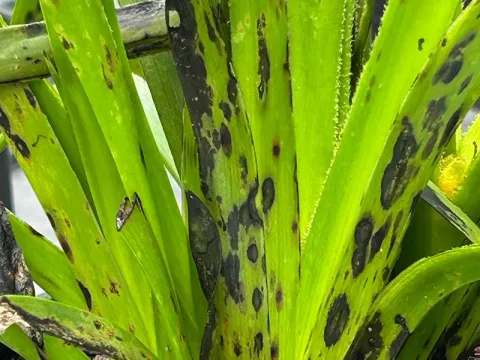
Anigozanthos nothophoma leaf spot
Nothophoma anigozanthi
The primary symptom of Nothophoma infection is the emergence of dark brown or black spots on the leaves of the kangaroo paw. Over time, these spots expand and coalesce, covering significant portions of the foliage.
What the section contains
Anigozanthos nothophoma leaf spot
In humid conditions, tiny black structures called pycnidia appear in the center of the necrotic spots. These are the fruiting bodies of the fungus and serve as a diagnostic sign for the presence of the pathogen.
Severe infestations cause premature drying and curling of the leaves. If the disease progresses, it can spread to the flower stems, severely compromising the aesthetic value of the ornamental plant.
Infection often starts at the leaf tips or near mechanical wounds, eventually moving toward the base of the plant. The foliage gradually wilts, showing a clear decline in plant health and photosynthetic capacity.
Regular monitoring of plants in nurseries and greenhouses is essential for early detection. Identifying symptoms early is the best way to prevent the rapid spread of the disease within the entire collection.
The pathogen responsible for this disease is the fungus Nothophoma anigozanthi. It is a specialized pathogen that specifically targets plants within the Haemodoraceae family, including the popular Anigozanthos species.
This disease is classified as a fungal leaf spot or phomopsis-like blight. The pathogen is a necrotroph, meaning it kills host tissues to extract nutrients, leading to the characteristic necrotic lesions.
Reproduction occurs through conidia, which are produced inside pycnidia. These spores are easily dispersed by splashing water, overhead irrigation, or air currents, enabling quick transmission among neighboring plants.
The fungus can persist in plant debris and soil for long periods. This persistence makes it difficult to eradicate the disease without thorough sanitation practices and substrate replacement.
The life cycle of the pathogen is closely tied to the host's growing conditions. Understanding the biology of Nothophoma helps growers implement targeted interventions during high-risk periods.
High humidity levels are the primary trigger for disease development. Persistent moisture on leaf surfaces provides the necessary environmental conditions for fungal spores to germinate and infect the plant.
Poor ventilation in greenhouse environments leads to stagnant air and condensation on leaves. These conditions significantly accelerate the infection rate and allow the disease to spread rapidly through the population.
Temperatures ranging from 18 to 25 degrees Celsius are optimal for the growth and spore production of the pathogen. Within this range, the fungus can complete its cycle very efficiently.
Improper irrigation techniques, such as overhead watering, create unnecessary moisture stress. Stressed plants have lower resistance, making it easier for the fungus to penetrate their tissues through stomata.
Seasonal changes and increased rainfall in outdoor settings can also trigger outbreaks. During wet periods, constant vigilance and proactive management are required to protect the integrity of the planting.
The main impact of the disease is the loss of commercial quality. Since Anigozanthos is grown for its unique appearance, any foliage discoloration makes the plants unsuitable for market sale.
Chronic infection drains the plant's resources, stored primarily in the rhizomes. This leads to weakened growth rates and a noticeable reduction in the quality and quantity of flowers produced.
In commercial nurseries, Nothophoma can destroy entire batches of plants in a short period. This leads to substantial financial losses and increased production costs due to the need for plant replacement.
Necrotic tissue creates entry points for secondary pathogens, potentially leading to the death of the entire plant. Recovering from such infections is a slow and costly process that often yields suboptimal results.
The presence of the pathogen in the soil or growing media presents an ongoing threat. It necessitates long-term management strategies, such as strict sanitation or changing the substrate, to ensure future crops remain healthy.
The most important control method is ensuring proper irrigation. Watering should be done at the base of the plant to keep the foliage dry, which significantly limits the opportunities for spore germination.
Ensuring effective ventilation and airflow is crucial to reduce humidity levels in the canopy. Plants should be spaced correctly to promote rapid drying of leaves after watering or periods of high humidity.
Regular sanitation, including the removal and destruction of all infected plant parts, is essential. Burn or bury the debris away from the production area to stop the infection cycle.
Chemical control involving systemic fungicides may be necessary during severe outbreaks. Always rotate active ingredients to prevent the fungus from developing resistance to specific treatment products.
Disinfection of tools, pots, and nursery surfaces is a fundamental practice. Furthermore, purchasing only certified disease-free planting material is the first step in preventing the introduction of this pathogen.