
Scented webcap
Cortinarius suaveolens
Description
Symptoms
The primary identification feature of Cortinarius suaveolens is its distinct, spicy or floral aroma, which gives it its common and specific name.
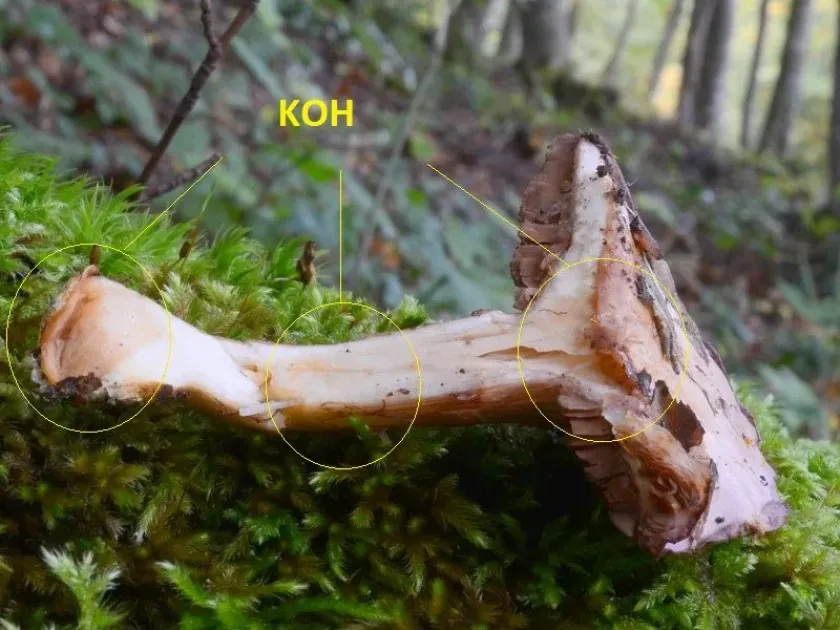
Fruit bodies exhibit an ochre to brown-yellow color. The cap is initially convex, often flattening out as the fungus reaches maturity.
A silky, web-like cortina covers the gills in young specimens, leaving behind visible, fibrous remnants on the stipe as the cap expands.
The gills turn rusty-brown as the spores ripen and are released, covering the surrounding surfaces of the stipe with spore dust.
The stem is generally sturdy and may show faint traces of the veil near the base, characteristic of the Cortinarius group structure.
Pathogen
The scented webcap (Cortinarius suaveolens) is a basidiomycete fungus belonging to the Cortinariaceae family. It is a strictly mycorrhizal species rather than a plant pathogen.
This fungus forms a symbiotic relationship with tree roots, essential for nutrient exchange in forest ecosystems. It provides trees with minerals while receiving carbohydrates in return.
Unlike parasitic fungi that degrade plant tissues, Cortinarius suaveolens promotes forest health by extending the reach of root systems through its mycelial network.
Taxonomically, it is recognized by its inclusion in the genus Cortinarius, distinguished by the presence of a cobweb-like veil (cortina) during its immature stage.
Its biological cycle is integrated into forest soil processes, contributing to the decomposition of organic matter and the overall fertility of the woodland environment.
Conditions for development
This species thrives in deciduous and mixed woodlands, requiring a moist environment and the presence of leaf litter to support its mycelium.
Development is most active during late summer and autumn, provided there is consistent rainfall and moderate, cool temperatures.
It prefers undisturbed, nutrient-rich forest soils where it can maintain its symbiotic connection with host trees without mechanical interference.
Soil acidity plays a role in its distribution, as the species favors slightly acidic to neutral soil environments typical of mature forest stands.
The fungus is sensitive to environmental changes; intensive land clearing or soil compaction will prevent the emergence of its fruit bodies.
Why it matters
The scented webcap poses no threat to agricultural crops. It is not classified as a disease-causing agent or a threat to commercial plant species.
The fungus lacks the enzymes necessary to infect or damage live plant tissue, making it ecologically harmless to cultivated crops in neighboring fields.
Concerns regarding its status as a "disease" are generally due to misidentification, as some people may confuse fungal growth with pathogenic mold.
Economic impact is negligible, and the presence of this fungus is often a sign of a healthy, functioning forest ecosystem nearby.
Therefore, no damage assessment or economic loss metrics are applicable to this non-pathogenic organism.
Protection
No control measures are necessary, as Cortinarius suaveolens is an ecologically beneficial component of the forest flora.
Agricultural fungicide use is discouraged in areas where such species exist, as it could unintentionally disrupt local biodiversity.
Maintenance of natural forest buffer zones around agricultural fields is sufficient to preserve these beneficial fungal populations.
Field management should focus on maintaining healthy soil structure, which inherently supports the presence of native mycorrhizal fungi.
Education on distinguishing between beneficial mycorrhizal species and true plant pathogens is the best strategy for farm management.
Discussion
No discussions yet — be the first.