
Scarletina bolete
Boletus luridiformis
Description
Symptoms
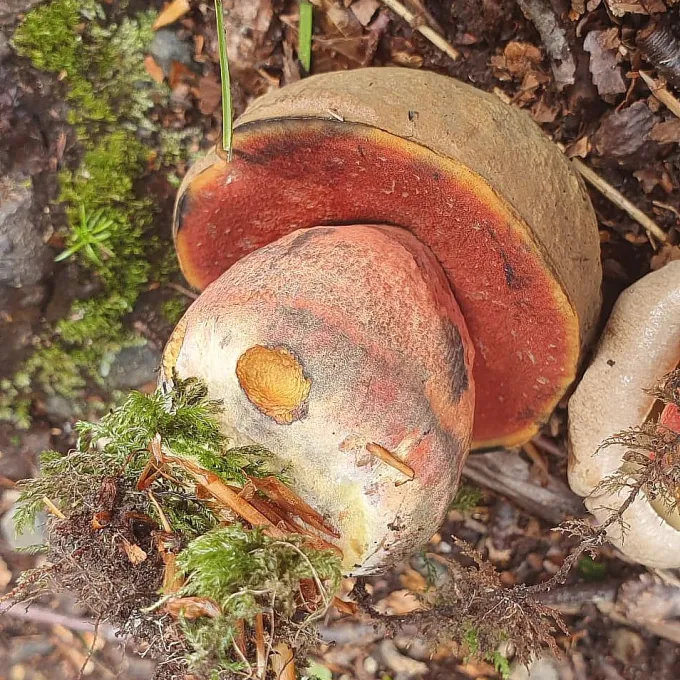
The fungus is easily identified by its velvety, olive-brown cap and distinctive red-pored underside.
A diagnostic feature is the rapid staining of the flesh to a deep indigo blue when sliced or damaged, caused by the oxidation of specific compounds.
The stalk (stipe) is typically yellow with dense red or brown flecks, giving it a unique, textured appearance.
Unlike actual plant pathogens, there are no chlorosis, wilting, or tissue necrotic lesions associated with this organism.
Its presence is merely a sign of a rich and balanced forest floor rather than a signal of plant health decline.
Pathogen
It is critical to note that the Scarletina bolete (Boletus luridiformis) is not a plant disease or a pathogen. It is a prized edible mushroom that functions as a mycorrhizal partner in forest ecosystems.
This fungus maintains a symbiotic relationship with the roots of trees, such as oaks and beeches, rather than infecting or harming them.
The mycelium of this fungus facilitates the exchange of nutrients, helping trees absorb phosphorus and water from the soil more efficiently.
Unlike parasitic organisms that cause decay, this bolete supports the growth and vitality of the tree host.
Labeling this beneficial fungus as a disease is a major scientific inaccuracy that contradicts fundamental principles of forest pathology.
Conditions for development
Boletus luridiformis thrives in acidic, well-drained forest soils, particularly in association with mature broad-leaved and coniferous trees.
It requires consistent humidity and stable temperatures to form its fruit bodies, usually appearing in late summer and autumn.
The fungus is sensitive to soil disturbances and industrial pollution, making it an indicator of pristine environmental conditions.
Mycorrhizal development depends on the age and vigor of the surrounding trees, as the exchange of sugars for nutrients is a long-term investment.
It generally avoids areas with high nitrogen input, as it prefers nutrient-poor, naturally balanced woodland environments.
Why it matters
This species causes zero harm to agricultural crops, orchards, or forestry operations; it is entirely benign and ecologically valuable.
No economic damage is linked to its presence, as it does not compete with plants for survival or damage agricultural output.
The only potential risk associated with this fungus involves consumption: it must be cooked thoroughly, as it can cause gastric upset if ingested raw.
Agricultural professionals should not perceive it as a threat or a target for eradication efforts.
It is an asset to the forest ecosystem, aiding in carbon sequestration and nutrient cycling through its symbiotic interactions.
Protection
There are no control measures for Boletus luridiformis, as it is a beneficial part of the forest community that requires no intervention.
Efforts should focus on protecting forest soil health to ensure that mycorrhizal networks remain intact and functional.
The use of broad-spectrum fungicides should be avoided in areas where such beneficial fungi grow to prevent damage to the soil microbiome.
Management strategies should be redirected toward addressing real phytopathological threats that genuinely impair plant yield.
Conservation of natural habitats and preventing erosion are the best ways to sustain the healthy presence of this species.
Discussion
No discussions yet — be the first.