
Description
Symptoms
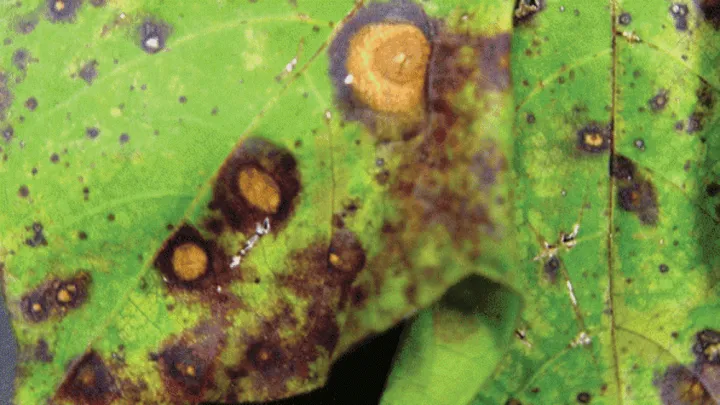
The disease first manifests as small, angular spots on the lower, older leaves of the cotton plant. These spots are initially pale green or yellowish and eventually turn brown.
A distinctive feature is the "areolate" appearance, caused by the confinement of spots between leaf veins and the presence of a faint, light-colored halo around the central necrotic area.
In high-humidity conditions, the underside of the leaves in the affected spots develops a dense white to grayish powdery growth. This growth consists of the fungal conidiophores and conidia.
As the infection progresses, multiple spots may coalesce, covering large parts of the leaf surface. This results in the leaves turning yellow, drying out, and falling off prematurely.
- Angular, necrotic spots restricted by veins.
- Light-colored halo surrounding the dark lesion center.
- Whitish fungal growth on the underside of leaves.
- Premature yellowing and defoliation of the plant.
- Stunting of overall plant development.
Pathogen
The causal agent of areolate mildew is the fungus Ramularia gossypii. It is a foliar pathogen that primarily targets cotton plants, leading to significant foliage damage during the growing season.
The fungus produces conidia, which are the main infectious propagules. These spores are spread easily by wind currents and splashing rain, allowing the disease to progress rapidly across a field.
The pathogen survives the off-season primarily in infected crop debris left on the soil surface. It can also persist as mycelium in the soil or be carried on contaminated seeds.
Upon germination, the fungal hyphae penetrate the leaf stomata. Once inside, the fungus colonizes the intercellular spaces, secreting enzymes that lead to the degradation of host tissue.
High humidity is essential for the pathogen to sporulate. Under favorable conditions, the fungus creates massive amounts of secondary inoculum, leading to repeated infection cycles throughout the season.
Conditions for development
Areolate mildew thrives under warm and humid conditions. It is particularly prevalent when frequent rainfall or prolonged heavy dews occur, providing the wetness required for spore germination.
Dense crop canopies are highly susceptible to this disease. Lack of air circulation within the canopy allows humidity to persist longer, creating an ideal environment for the pathogen.
Excessive use of nitrogen fertilizers can exacerbate the disease. High nitrogen levels lead to lush, succulent vegetative growth, which is more easily penetrated by the fungal hyphae.
The disease usually peaks in the late season as temperatures moderate and periods of leaf wetness extend, coinciding with the development of the cotton bolls.
Environmental factors like strong winds facilitate the long-distance dispersal of the pathogen, potentially introducing the disease to previously unaffected areas.
Why it matters
The primary impact of areolate mildew is the significant reduction of photosynthetic capacity. By destroying leaf area, the fungus limits the plant's ability to produce the sugars required for boll development.
Premature defoliation directly leads to lower yields. Cotton plants that lose their leaves early cannot properly fill the bolls, resulting in smaller, weaker fibers and lower overall lint quality.
In severe cases, the boll development may stop entirely, leading to significant yield losses. Furthermore, the weakened state of the plant makes it more vulnerable to secondary infections and environmental stress.
The cost of managing the disease adds to the economic burden of farmers, as it requires investment in protective fungicides and increased labor for monitoring.
Additionally, contaminated seeds from heavily infected fields can lead to poor germination rates and weaker seedlings in the following planting season, complicating crop management.
Protection
Good sanitation is the cornerstone of control. Destroying crop residues through deep plowing helps bury the inoculum, preventing the fungus from surviving until the next planting season.
Implementing a rigorous crop rotation program is highly recommended to disrupt the life cycle of the fungus and reduce the population of pathogens in the soil.
Selecting and planting resistant or tolerant cotton varieties is the most sustainable and effective strategy to mitigate the impact of Ramularia gossypii.
Fungicide applications are necessary during periods of high disease pressure. Applying systemic fungicides early at the first sign of infection can prevent the spread of the disease within the field.
Optimizing planting density and regular weeding improves airflow through the crop canopy, reducing the humidity levels that the fungus requires to thrive and spread.
Pathogens and affected parts
Affects crops · 1
Discussion
No discussions yet — be the first.