
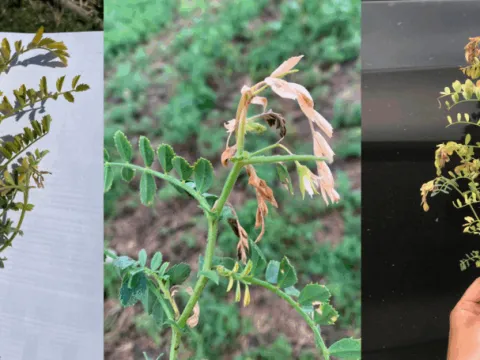
Chickpea chlorotic dwarf virus
Chickpea spp.
The causative agent of the disease is the Chickpea chlorotic dwarf virus (CpCDV), a member of the Mastreviridae family. It is a single-stranded DNA virus affecting various legumes.
What the section contains
Chickpea chlorotic dwarf virus
The virus is transmitted by the leafhopper Orosius orientalis. It survives in perennial weeds and alternative host plants during off-seasons, serving as a persistent source of inoculum.
Transmission occurs exclusively through the feeding activity of the insect vector. The virus is not transmitted mechanically via sap or through infected seeds.
Once inside the plant, the virus moves systemically through the phloem, causing significant disruption to nutrient transport and hormonal balance.
The epidemic potential of the virus is high due to the high mobility of the vector and the wide distribution of potential host plants in agricultural ecosystems.
Symptoms include severe leaf curling accompanied by intense chlorosis. The upper leaves typically exhibit yellowing, and the plant stops growing vertically.
Shortened internodes lead to a bushy, rosette-like appearance. Plants remain stunted and fail to achieve their normal height or architecture.
Leaves become brittle, deformed, and often curl upwards or inwards, presenting a characteristic stunted and chlorotic appearance.
Flowering is severely restricted, and plants often fail to set pods. If pods do form, they are usually small, malformed, or entirely empty of seeds.
- Stunting and dwarfing
- Chlorotic yellowing
- Leaf curling and deformation
- Rosette-like growth
- Failure to produce pods
Disease spread is closely correlated with high populations of the leafhopper vector, which thrive in hot and dry climatic conditions.
Field margins with abundant weed cover serve as primary reservoirs for the virus and breeding grounds for the vectors before they move into crops.
Early-season planting can sometimes mitigate damage by allowing the plants to pass through their most vulnerable stages before leafhopper populations peak.
Proximity to perennial pastures or abandoned lands significantly increases the probability of virus introduction into chickpea fields via insect migration.
Elevated temperatures (above 25°C) favor both the reproduction of the vector and the replication cycle of the virus within the plant tissues.
The economic impact of the virus is severe, with yield losses frequently exceeding 50% in heavily infested fields, leading to significant financial setbacks.
Infested seeds are often underdeveloped, shriveled, and possess poor germination characteristics, which negatively impacts the potential of future planting cycles.
The systemic stress caused by the virus weakens the plants, making them more susceptible to secondary fungal infections in the root and stem zones.
Increased expenditures on insecticide applications to control the vectors add to the total cost of production without guaranteeing total yield protection.
Massive early infection can lead to total crop failure, necessitating the destruction of the infected stand and expensive reseeding operations.
The use of resistant or tolerant chickpea cultivars remains the most effective and sustainable strategy for managing the virus in high-risk areas.
Maintaining clear field borders and managing weed populations near the crops can significantly reduce the habitat available for the leafhopper vectors.
Strategic use of systemic insecticides during the early growth stages is necessary to suppress the insect vector population and delay the onset of infection.
Spatial isolation between chickpea fields and known host perennial reservoirs is a critical preventative agronomic practice for managing disease outbreaks.
Regular scouting for early symptoms and vector activity allows farmers to respond proactively with integrated pest management measures before the virus spreads.