
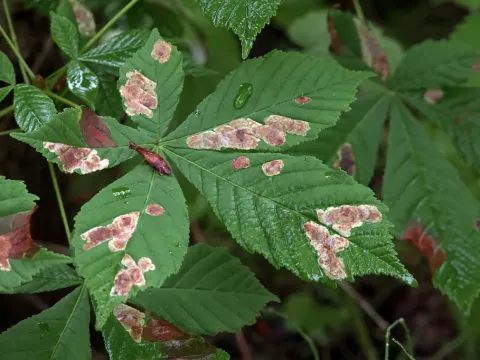
Chestnut Septoria leaf spot
Septoria castaneae
The causal agent of this disease is the fungus Septoria castaneae. It belongs to the Deuteromycetes group and specifically targets trees of the Castanea genus.
What the section contains
Chestnut Septoria leaf spot
The fungus propagates through pycnidia, which are specialized fruiting bodies formed within the leaf tissue. Inside these structures, spores are generated and released.
The pathogen overwinters primarily in fallen leaves and other plant debris beneath the infected tree, surviving as mycelium or dormant pycnidia.
During spring and summer, environmental factors such as moisture trigger the discharge of spores. These spores are then dispersed by rain splashes or wind to healthy foliage.
The fungus is highly infectious and can affect trees at various life stages, with young plants being particularly vulnerable due to less developed defense mechanisms.
The primary symptom is the appearance of small, distinct spots on the leaves. These lesions often have an angular or irregular shape and are marked by a dark border.
As the infection progresses, the spots transition from light brown to a grayish-brown color. Tiny black specks, which are the pycnidia, become visible in the center of the spots.
Severe infestations cause premature leaf yellowing, browning, and eventual defoliation. This leaf drop often occurs long before the natural seasonal transition.
Under humid conditions, a sparse, whitish fungal growth consisting of spore masses may occasionally be observed on the undersides of the necrotic leaf tissue.
Infection typically begins in the lower canopy where environmental humidity remains higher for longer periods, subsequently spreading upwards through the foliage.
Moisture is the primary driver for the development and spread of Septoria castaneae. High humidity, heavy rainfall, and dew are essential for spore germination.
The optimal temperature range for the pathogen's growth is between 18 and 25 degrees Celsius, making it most active during the peak of the growing season.
Dense canopies and improper planting spacing reduce airflow, creating a stagnant microclimate that allows moisture to persist on leaf surfaces for extended periods.
Poor ventilation prevents leaves from drying out quickly after rain, significantly increasing the probability of new infections occurring throughout the canopy.
Failure to implement autumn sanitary cleanup provides the pathogen with a reservoir of inoculum, ensuring the disease returns with higher severity the following year.
The main impact of the disease is the inhibition of photosynthesis. The loss of healthy leaf surface area reduces the tree's ability to produce energy and nutrients.
Prolonged infection weakens the tree's overall vigor, resulting in reduced annual shoot growth and lower tolerance to environmental stressors like drought or frost.
In nut-producing species, heavy defoliation can lead to diminished fruit yields and poor quality, as the tree lacks the resources to complete nut maturation.
In ornamental settings, the disease causes significant aesthetic damage, ruining the visual appearance of chestnut trees in parks and private landscapes.
Trees weakened by long-term Septoria infection are often predisposed to secondary pest attacks or other opportunistic fungal diseases, potentially leading to branch dieback.
The most critical control measure is the thorough removal and destruction of all fallen leaves. This eliminates the primary source of the fungus for the next season.
Pruning is essential to improve crown aeration and light penetration, which helps keep leaves dry and discourages fungal growth.
If the infection is widespread, the application of appropriate fungicides during the growing season can protect new foliage and limit the spread of spores.
Maintaining tree health through proper fertilization, with a focus on balanced potassium and phosphorus levels, enhances the tree's natural resistance to fungal entry.
- Regular sanitation of leaf litter
- Strategic pruning for crown thinning
- Application of copper-based or systemic fungicides
- Promotion of tree vigor through balanced nutrition