
Description
Symptoms
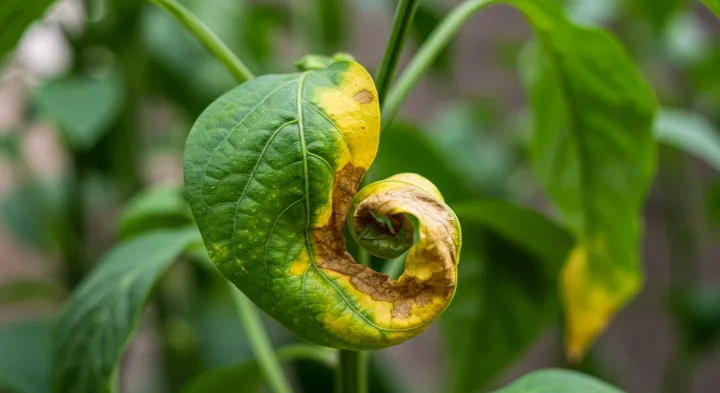
The most distinctive symptom of chili leaf curl is the upward or downward curling of the leaves. The leaf margins become wavy, and the overall leaf surface appears shriveled and wrinkled.
Affected pepper plants exhibit significant stunting. The internodes shorten, giving the plant a bushy and condensed appearance, which is a major indicator of viral stress.
Leaves often lose their deep green color, developing a mosaic pattern with pale yellow patches. The texture of the foliage becomes leathery and brittle compared to healthy leaves.
Flowering is severely restricted in infected plants. Buds often drop prematurely, and the few fruits that do set are usually small, deformed, and lack nutritional quality.
- Upward curling of leaf edges.
- Mosaic chlorosis on leaves.
- Severe stunting and bushy growth.
- Reduced yield and deformed fruit.
- Thickening of leaf veins.
Pathogen
Chili leaf curl is a severe viral disease that primarily affects plants of the Solanaceae family, especially peppers. The disease is typically caused by various geminiviruses, such as the Chili leaf curl virus (ChiLCV).
The pathogen is systemic, spreading throughout the plant via its vascular tissue. Once the virus enters the plant, it redirects resources from growth and reproduction to virus replication, causing stunted development.
This disease is transmitted mainly by the whitefly (Bemisia tabaci) and aphids, which act as vectors. The virus is acquired by these insects while they feed on the sap of infected plants.
There is no chemical cure for viral infections in plants. Once a pepper plant is infected with the leaf curl virus, it remains a carrier for the duration of its life cycle.
The transmission process is very rapid. A whitefly can pick up the virus after only a few minutes of feeding on an infected plant and successfully transmit it to a healthy host shortly after.
Conditions for development
High temperatures and drought conditions are primary drivers for the spread of this disease. These environmental factors favor the rapid reproduction of whiteflies, the main virus vector.
Poor field sanitation contributes significantly to outbreaks. Weeds around the planting area serve as alternative hosts for both the virus and the insect vectors during the off-season.
Greenhouse conditions, if not properly ventilated and screened, can lead to explosive disease development. The stable, warm climate inside protected structures is ideal for year-round vector presence.
Excessive use of nitrogen fertilizers can lead to succulent plant growth, which is highly attractive to aphids and whiteflies, thereby increasing the probability of vector infestation.
Lack of crop rotation leads to the accumulation of pathogen reservoirs in the soil and surrounding environment, facilitating the persistence of the disease from one season to the next.
Why it matters
Chili leaf curl is considered one of the most destructive diseases in pepper cultivation. If plants are infected early in their growth stage, yield losses can reach up to 100%.
The disease negatively impacts the marketability of the crop. Deformed fruits are unattractive to consumers and fail to meet quality standards for commercial sale.
An infected plant acts as a persistent source of inoculum. If not removed promptly, it threatens to infect the entire field, leading to severe economic consequences for the grower.
Plants affected by the virus are significantly weakened, making them susceptible to secondary infections by fungi and bacteria, which can accelerate the death of the crop.
The long-term harm involves the depletion of soil health and the necessity for rigorous, repeated pesticide applications to control vectors, increasing the cost of production.
Protection
Integrated Pest Management (IPM) is the best approach. Controlling the insect vector population through systemic insecticides is critical to preventing the spread of the virus.
Rogueing is essential: all plants showing symptoms of leaf curl should be pulled up and destroyed immediately. Never leave symptomatic plants in the field or greenhouse.
Utilizing insect-proof screens in greenhouses is a highly effective physical barrier against whiteflies and aphids. This prevents the primary vectors from ever reaching the crop.
Developing a consistent crop rotation plan and removing weeds from field perimeters helps break the lifecycle of the virus and its hosts. Keep the environment clean to minimize vector breeding.
Choosing resistant or tolerant pepper varieties is the most sustainable long-term strategy. Always start the season with high-quality, virus-free seeds and seedlings.
Pathogens and affected parts
Affects crops · 1
Discussion
No discussions yet — be the first.