
Chickpea rust
Uromyces ciceris-arietini
Description
Symptoms
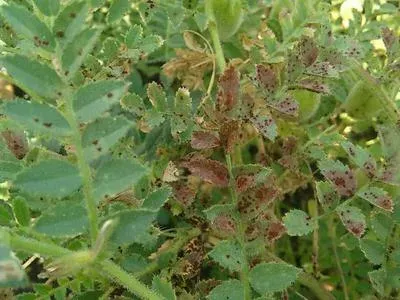
Initial symptoms appear as small, light-yellow spots on the leaf surface, which gradually develop into pustules. These lesions are typically found on both sides of the leaf blades and on the petioles.
Uredinia (the rust pustules) contain a mass of rusty-brown spores that shed easily upon touch. This powdery appearance gives the affected plant parts their characteristic "rusty" look, which is the hallmark of the disease.
As pustules accumulate, the underlying tissue undergoes necrosis. In cases of severe infection, the leaves turn completely yellow and drop prematurely, severely hindering the plant's photosynthetic capacity.
Infection may also spread to stems and pods, where pustules form as well. This disrupts the translocation of vital nutrients to the developing seeds, leading to yield losses.
When scouting fields, it is crucial to distinguish rust from other leaf spot diseases; the presence of powdery, rusty spore masses is the definitive diagnostic feature.
Pathogen
The causative agent of chickpea rust is the highly specialized obligate fungus Uromyces ciceris-arietini. This pathogen belongs to the Basidiomycota phylum and exclusively infects plants of the genus Cicer.
The fungus persists on crop debris in the field or can be transmitted through infected seeds. The pathogen's life cycle involves the production of urediniospores, which facilitate the rapid spread of the infection during the growing season.
The disease cycle begins when spores germinate, allowing the fungal mycelium to penetrate plant tissues through the stomata. The pathogen derives nutrients directly from the host cells, depleting the plant's metabolic reserves.
Towards the end of the growing season, teliospores are formed on the infected tissues as a resting stage of the fungus. These spores exhibit high resistance to environmental stress, enabling the pathogen to overwinter in the field.
The biology of the fungus is closely synchronized with the growth stages of chickpeas, which is why clinical symptoms usually appear in the second half of the season when humidity levels rise.
Conditions for development
The development of chickpea rust is strictly governed by hydrothermal conditions. The disease thrives in warm weather accompanied by high relative humidity.
Frequent rainfall, heavy dew, or persistent fog provide the ideal environment for the spores to germinate on the leaf surface. Such conditions drastically shorten the pathogen's incubation period.
The optimal temperature for successful infection ranges between 20°C and 25°C. Temperatures exceeding 30°C tend to slow down fungal development, potentially stalling the spread of the disease.
Dense chickpea canopies that lack proper air circulation create a microclimate with trapped humidity. This significantly increases the risk of the disease spreading rapidly throughout the crop.
Spores are easily carried over long distances by wind, meaning that local outbreaks can quickly escalate into field-wide epidemics under favorable weather conditions.
Why it matters
The primary damage caused by chickpea rust is the significant reduction of the plant's leaf area, which is vital for photosynthesis. Consequently, the plant fails to accumulate sufficient organic matter.
The disease leads to a sharp decline in grain yield as the pod-filling process is interrupted. The resulting seeds are often shriveled, small, and possess poor germination vigor, negatively impacting seed quality.
If infection occurs early in the season, yield losses can range from 30% to 50%. Under severe environmental pressure and without adequate intervention, a large portion of the crop can be lost entirely.
In addition to direct yield reduction, the rust weakens the chickpea's immune system, making it more susceptible to secondary fungal and bacterial opportunistic infections.
The economic impact of the disease is particularly high during rainy growing seasons, necessitating constant crop monitoring by farmers during critical development stages.
Protection
The foundation of disease management is the use of resistant or tolerant chickpea cultivars. This remains the most cost-effective and sustainable method for preventing significant outbreaks.
Crop rotation is essential for disease control. Avoid planting chickpeas back-to-back or in sequence with other pulse crops for several years to prevent the accumulation of inoculum in the soil.
Agronomic practices, such as deep tillage to bury infected crop residues, are effective in reducing the overwintering inoculum. Managing volunteer plants and leguminous weeds also helps lower the disease pressure.
Chemical control involves the application of systemic fungicides at the first sign of symptoms. Products containing triazoles and strobilurins have demonstrated high efficacy against rust fungi.
It is recommended to scout fields regularly during the flowering and pod-filling stages. Once the first pustules are spotted, timely fungicide application is critical to prevent a widespread epidemic.
Discussion
No discussions yet — be the first.