
Fayodia
Fayodia
The genus Fayodia belongs to the family Tricholomataceae and comprises several species of basidiomycetous fungi.
What the section contains
Fayodia
It is critical to distinguish this genus from plant pathogens, as Fayodia species are strictly saprotrophic organisms.
Their biological role is concentrated on the decomposition of organic matter, such as leaf litter, needles, and decaying woody debris.
They possess specialized enzymes that enable them to break down complex structural polymers in the forest soil environment.
In mycological terms, they are recognized as important decomposers contributing to soil health and nutrient cycling.
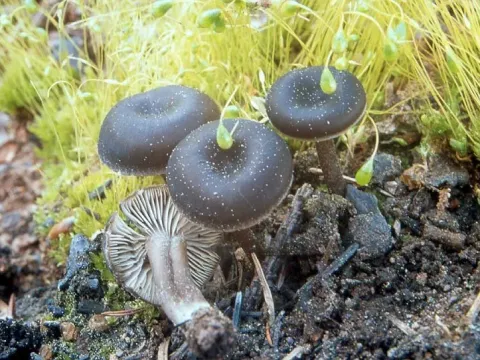
The macroscopic signs of Fayodia include the development of small, often greyish or brownish fruiting bodies.
The gills of the mushrooms are typically well-spaced and attached to the stem, which serves as a diagnostic feature for identification.
A key microscopic characteristic is the amyloid reaction of their spores when treated with Melzer's reagent.
Fruiting bodies are usually found emerging from leaf litter or damp soil during the late summer and autumn seasons.
They often appear in clusters, blending in with the surrounding debris of the forest floor due to their muted color palette.
The growth of Fayodia mycelium is highly dependent on consistent soil moisture and organic content in the substrate.
These fungi thrive in environments with high humidity, typical of shaded, temperate forest regions with acidic soils.
Optimal conditions for the production of fruiting bodies occur during periods of prolonged rainfall or misty weather.
They are well-adapted to habitats where temperatures remain cool to moderate, allowing for gradual decomposition processes.
The presence of stable organic layers provides the necessary energy source for their continuous development throughout the season.
Fayodia species pose no threat to agricultural crops, ornamentals, or living plants, as they lack any parasitic behavior.
The misconception of them being a "plant disease" stems from the observation of their growth on damp soil or mulch in gardens.
They do not invade healthy root systems or plant tissues, meaning they do not affect the physiological health of your crops.
In fact, their presence in garden beds can be viewed as an indicator of an active and healthy organic breakdown process in the soil.
Farmers and gardeners do not need to worry about any yield loss or structural damage caused by this fungal genus.
No chemical or biological control measures are required, as these fungi are considered beneficial components of the soil ecosystem.
If the appearance of fruiting bodies is undesirable for aesthetic reasons, they can be manually removed and composted.
There is no justification for using fungicides to eliminate these saprotrophs, as they do not constitute a plant pathology risk.
Proper garden sanitation, such as preventing excessive accumulation of rotting wood or debris, naturally limits their fruiting.
Accepting their presence is often recommended, as they assist in transforming organic debris into nutrients accessible for plants.