
Feather grass rust
Puccinia stipae
Description
Symptoms
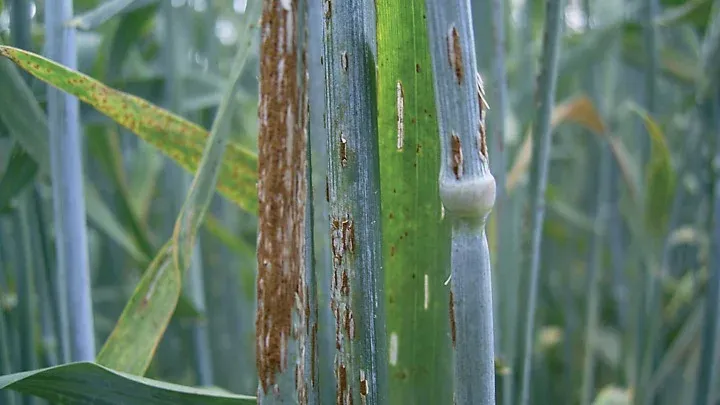
The primary symptom of feather grass rust is the appearance of characteristic pustules on the leaves and stems. Initially, these manifest as small yellowish-orange or brown spots that rupture the plant epidermis.
As the urediniospores mature, the spots become powdery and change to a more intense color. In cases of severe infection, the leaf surface may be entirely covered by the fungal layer, leading to premature yellowing and necrosis.
Affected plant parts frequently lose their natural flexibility and elasticity. The leaves become curled or distorted, which disrupts normal photosynthetic processes and significantly weakens the overall vitality of the plant.
In the later stages of the disease, darker, almost black telia are formed on the stems. These structures indicate that the fungus is entering a dormant phase, marking the completion of its primary seasonal cycle.
General plant decline is observed as slowed growth and reduced tillering capacity. In field conditions, infection patches are easily identified by the shift in the canopy color from green to yellow-brown.
Pathogen
The causative agent of this disease is a specialized rust fungus identified as Puccinia stipae. It is an obligate parasite, meaning it relies entirely on the nutrients derived from living host plant tissues.
The biological life cycle of this fungus is heteroecious, a common trait among many rust species. The pathogen requires an alternation between different host plants to successfully complete all its life stages.
Primary infection is often linked to the presence of alternate hosts where the aecial stage develops. Spores carried by air currents land on feather grass and, under favorable moisture conditions, germinate to infect the tissue.
The fungal mycelium spreads through the intercellular spaces of the plant, utilizing haustoria to extract vital nutrients. This process exhausts the host's metabolism and leads to the formation of new reproductive organs.
Dissemination occurs via urediniospores, which are capable of repeatedly re-infecting neighboring plants throughout a single growing season, potentially leading to rapid epidemic spread.
Conditions for development
Disease progression is facilitated by high atmospheric humidity and the presence of free water on leaf surfaces, such as dew or mist. These conditions are strictly required for spore germination.
Optimal temperature ranges for the active development of Puccinia stipae are generally moderate. Extreme temperature fluctuations or prolonged drought periods can temporarily suppress the spread of the pathogen.
Dense stands or natural thickets of feather grass create a microclimate with poor ventilation, which retains moisture within the canopy. These environments provide perfect conditions for intensive infection.
The infection reservoir is maintained through plant debris, where the fungus can survive the winter in the form of teliospores. Weakened plants are significantly more susceptible to infection by the pathogen.
Spore dispersal is primarily managed by wind currents over long distances. Consequently, even isolated stands of feather grass may become infected if active disease foci are present in the region.
Why it matters
The economic and ecological impact of feather grass rust lies in the dramatic reduction of plant productivity. Affected grasses yield less biomass, which is critical for grazing management and fodder availability.
The fungus disrupts the plant's water balance, causing excessive transpiration through the ruptured epidermis. This renders the feather grass highly vulnerable to drought stress, increasing mortality rates.
Nutritional value declines significantly as the infected tissues struggle to synthesize essential metabolites. Furthermore, the aesthetic and physical quality of the grass becomes unsuitable for hay production.
Systemic infection in perennial stands leads to a decrease in root system viability. This thinning of the stand often results in the displacement of feather grass by less desirable species.
In seed-producing fields, the disease is catastrophic for yield. It reduces seed germination energy and viability, which severely limits the ability of the population to regenerate naturally.
Protection
The primary prophylactic measure involves adhering to good agronomic practices designed to enhance plant vigor. It is essential to avoid over-irrigation and the excessive application of nitrogen fertilizers.
To prevent the buildup of inoculum, timely mowing of the grass at the end of the season is recommended. Removing plant debris significantly reduces the amount of fungal spores available for the next year.
In cases of widespread infection in high-value fields, the application of systemic fungicides may be necessary. The choice of treatment should always be based on active disease monitoring.
Breeding programs are the most strategic long-term method for disease control. Developing and deploying rust-resistant cultivars is the most effective way to minimize losses without environmental chemical stress.
It is important to maintain phytosanitary surveillance of surrounding areas to identify and manage alternate hosts, thereby reducing the overall disease pressure near the main crop stands.
Discussion
No discussions yet — be the first.