
Fechtner's Bolete
Boletus fechtneri
Description
Symptoms
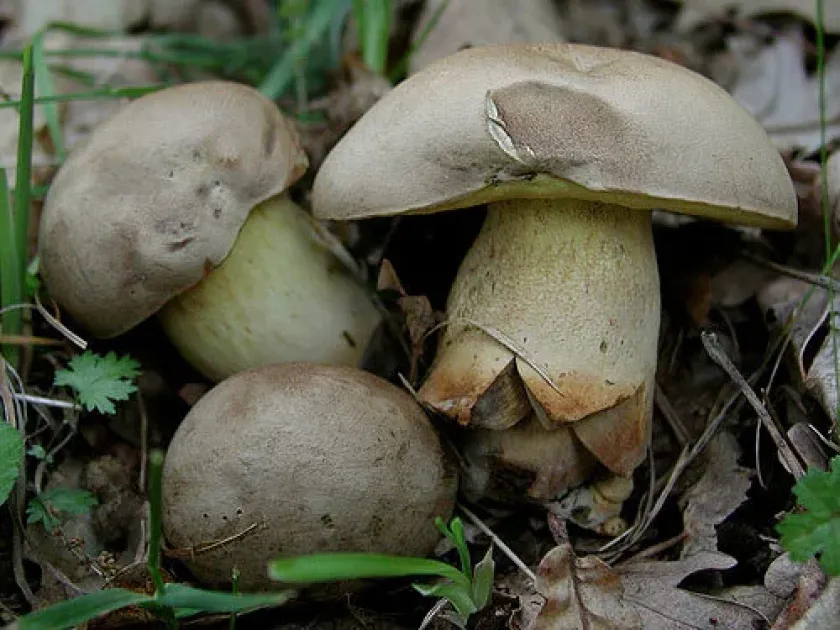
Fechtner's Bolete is characterized by a sturdy cap that typically measures between 5 and 15 centimeters in diameter.
The surface of the cap is usually a silver-gray or pale brownish color, which can appear dull or matte in texture.
The stem of the fungus is thick and barrel-shaped, typically exhibiting a bright lemon-yellow hue with a visible network pattern.
The flesh is firm and dense, and it exhibits a distinct bluing reaction when the fruit body is cut or bruised.
The pore surface underneath the cap is bright yellow in young specimens, turning into an olive-yellow color as the fungus matures.
Pathogen
It is crucial to clarify that this organism is not a plant pathogen and does not cause any diseases in agricultural or wild crops.
Fechtner's Bolete is a mycorrhizal fungus belonging to the Boletaceae family within the order Boletales.
Its biological life cycle involves forming a mutualistic relationship with the root systems of broad-leaved trees like oaks and beeches.
The fungus is officially classified as Boletus fechtneri and serves as an important component of the forest subterranean ecosystem.
As a mycorrhizal partner, it provides the host tree with essential nutrients while receiving carbohydrates in return.
Conditions for development
This species thrives primarily in regions with calcareous soils, which limits its geographical distribution significantly.
It prefers broad-leaved forests where it can maintain a stable symbiotic connection with dominant hardwood tree species.
Optimal development of the fruit bodies requires warm summer temperatures and specific humidity levels within the forest floor.
The species is highly sensitive to environmental pollution and disturbances, making it a bioindicator of healthy forest environments.
The growth period for this fungus is observed from early summer through late September when environmental conditions are balanced.
Why it matters
Fechtner's Bolete is completely harmless to any agricultural crops, forest plantations, or garden vegetation.
Since it is not a parasite, it does not inflict damage on timber, root systems, or foliage of host plants.
There is no economic loss associated with this species; on the contrary, it aids in tree vigor through mycorrhizal association.
The fungus does not produce toxins that could harm the soil microbiology or interfere with the nutrient uptake of nearby plants.
It is regarded as a beneficial organism that contributes to the overall stability and health of the woodland ecosystem.
Protection
Conservation efforts are prioritized over control measures, as this species is rare and protected in many regions.
The main strategy is the protection of its natural habitat from deforestation and chemical contamination.
Responsible foraging practices are recommended, including the prohibition of harvesting the fungus in protected conservation areas.
Monitoring programs are essential to track population trends and understand the ecological requirements of this bolete.
- Protection of natural forest ecosystems.
- Monitoring of population density.
- Prohibition of unauthorized collection in protected areas.
Discussion
No discussions yet — be the first.