
Fellhanera
Fellhanera
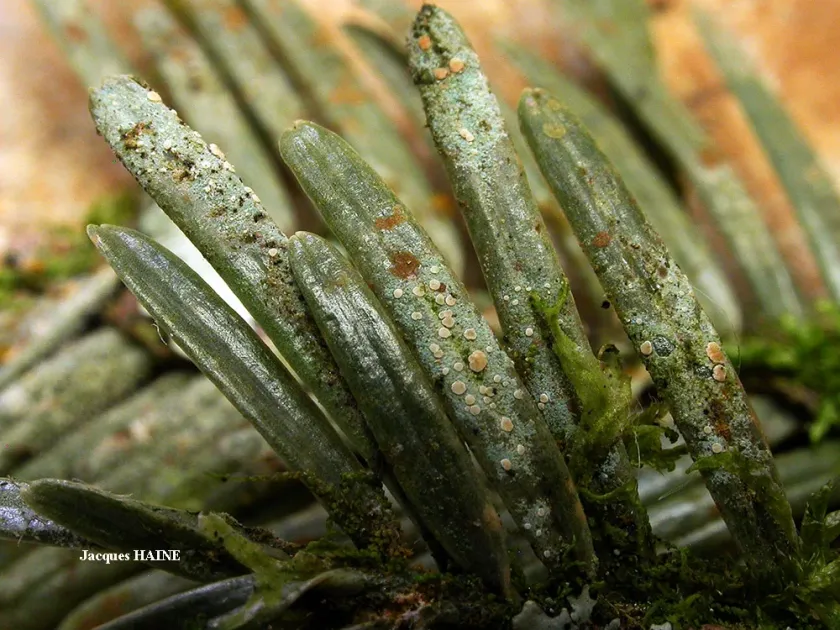
Description
Symptoms
Fellhanera is a genus of crustose lichens that often colonize the bark of trees and shrubs in damp environments.
The signs of its presence include the appearance of small, granular, or disc-like patches on the bark surface.
These patches can vary in color, often showing shades of light grey, yellow, or greenish hues depending on the species and hydration levels.
Unlike parasitic fungi, the lichen grows only on the surface layer of the bark without penetrating deep into the sapwood.
The organism is most noticeable during rainy seasons when the moisture makes the lichen structures swell and become more prominent.
Pathogen
Fellhanera is not a plant pathogen; it is a symbiotic association between a fungus and algae or cyanobacteria.
It functions as an epiphyte, using the tree bark strictly as a substrate for attachment rather than a nutrient source.
The lichen performs photosynthesis through its algal partner, which allows it to thrive on surfaces where nutrients are scarce.
There is no tissue decay or disease symptom associated with Fellhanera; it does not produce enzymes that digest plant tissue.
Taxonomically, it belongs to the Ascomycota phylum, reflecting the fungal nature of the symbiotic structure.
Conditions for development
Fellhanera thrives in habitats with high atmospheric humidity, such as coastal areas, foggy regions, or shaded forest edges.
Poor airflow within the tree canopy provides a stable microclimate that prevents the bark from drying out quickly.
Older trees with slow-growing, rough bark are more susceptible to colonization as the surface remains stable for a long time.
Lack of direct sunlight in dense orchard plantings often encourages the growth of these organisms on stems and larger branches.
Environmental conditions that favor lichen growth are generally associated with temperate climates and frequent precipitation.
Why it matters
The presence of Fellhanera causes minimal to no direct damage to the host tree's overall physiology.
A secondary concern is that a thick covering of lichen may provide a niche for insect pests to hide during the winter.
In extreme cases, dense growth could potentially interfere with the natural transpiration or lenticel function of the bark.
The aesthetic value of trees in ornamental landscapes may be perceived to decline when bark is heavily covered in lichens.
It is important to note that lichens usually colonize trees that are already stressed, making them more of an indicator than a primary problem.
Protection
Regular crown thinning and pruning are the most effective cultural methods to improve light and air circulation, limiting lichen growth.
Mechanical removal using a soft brush during damp weather is a safe and environmentally friendly way to clean the bark.
Maintaining tree vigor through proper irrigation and fertilization helps the bark stay healthy and resists heavy colonization.
Trunk whitewashing is an effective technique used to sanitize the bark surface and create a less hospitable environment for lichen spores.
Chemical fungicides should be avoided as they are designed to kill parasitic fungi and have little effect on symbiotic lichens.
Discussion
No discussions yet — be the first.