
Favolaschia
Favolaschia
Description
Symptoms
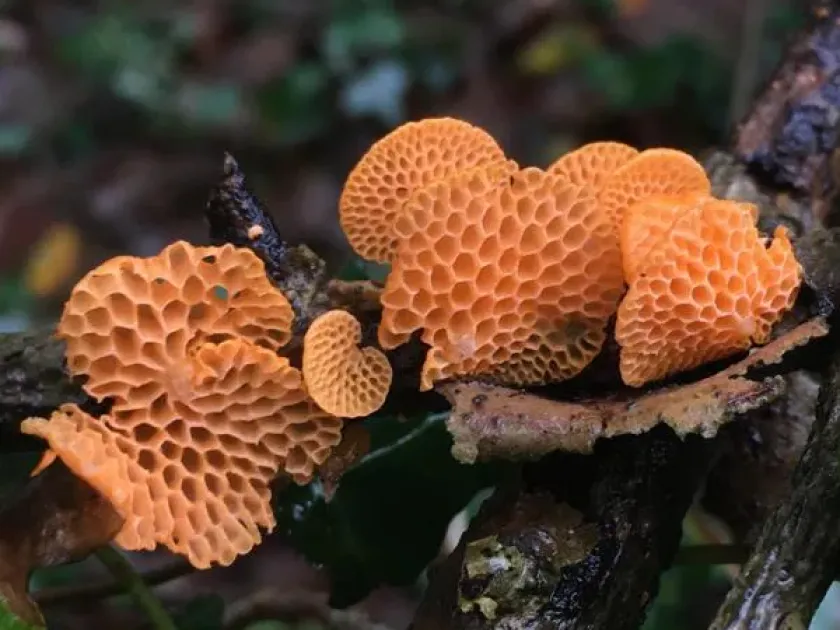
The primary visual sign of infestation is the emergence of distinctive, honeycombed, bright orange fruiting bodies scattered across the bark or twigs.
When observing the undersides of the fruit bodies, one can see a clear, pore-like structure, which serves as a definitive characteristic of the Favolaschia genus.
Affected wood often shows signs of internal decay, turning into a soft, spongy, and light-colored mass as the mycelium consumes the wood fibers.
The bark of the tree may start to peel or crack in areas where the fungus is actively established, exposing the inner layer of woody tissue to further infection.
Structural damage can often be identified by the increased fragility of infected branches, which may snap off under moderate wind or the weight of snow.
Pathogen
Favolaschia is a genus of fungi within the Mycenaceae family, often recognized by its vibrant orange to yellow-colored fruit bodies that grow on decaying wood.
The most commonly reported species, Favolaschia calocera, is considered an invasive fungus that thrives on dead plant matter and woody debris.
Biologically, it is a white-rot fungus that secretes specialized enzymes capable of breaking down the tough lignin and cellulose structures found in tree wood.
Although primarily a saprotroph, the fungus can effectively colonize stressed or damaged living trees, acting as an opportunistic pathogen in humid forest environments.
Reproduction occurs through the massive release of spores that are easily dispersed by wind, rain, and insects, allowing the fungus to spread rapidly across new areas.
Conditions for development
High humidity and consistent rainfall are the most critical environmental triggers for the germination and rapid development of Favolaschia spores.
The fungus thrives in cool to moderate temperature ranges, particularly in shaded, damp woodland areas where moisture lingers on surfaces for extended periods.
Damaged bark, pruning wounds, or existing cavities in trees act as entry points, allowing the fungal mycelium to penetrate the deeper layers of the wood.
Neglected landscapes with significant amounts of fallen timber, rotting stumps, or uncleaned debris provide the perfect breeding ground for this fungus.
During wet seasons, the increased moisture levels on tree surfaces facilitate the formation of new fruit bodies, causing a sudden spike in local infection rates.
Why it matters
The fungus causes significant wood decay, which compromises the structural integrity of both individual branches and the main trunk of a tree.
For landowners, the presence of this fungus reduces the aesthetic and commercial value of wooded areas, often necessitating costly removal or treatment.
In living trees, constant fungal activity can weaken the plant's overall vitality, making it more susceptible to secondary stressors like drought or pests.
The accumulation of spores in the environment can create a problematic infection cycle, where the pathogen spreads from dead wood to nearby healthy plants.
Safety is a major concern, as trees heavily infected by wood-rotting fungi like Favolaschia become hazardous due to the high risk of sudden limb failure.
Protection
The most effective strategy for managing Favolaschia is strict sanitation: removing and destroying all dead wood, fallen logs, and severely infected branches.
When pruning trees, all cuts should be made cleanly and treated with appropriate protective sealants to prevent the entry of fungal spores.
Applying copper-based fungicides during the dormant season can help reduce the spore load on bark surfaces and protect vulnerable pruning sites.
Maintaining a clean, well-aerated garden environment reduces the moisture trapped on wood surfaces, making it less attractive to colonizing fungi.
Regular monitoring of trees for orange fruiting bodies allows for early intervention, significantly increasing the chances of saving the tree from extensive decay.
Discussion
No discussions yet — be the first.