
Farysia
Farysia
Farysia is a genus of smut fungi (family Farysiaceae, class Ustilaginomycetes) that act as obligate parasites on various species of sedges (Cyperaceae). These fungi are highly specialized pathogens, meaning they have evolved to infect specific host plants within the sedge family.
What the section contains
Farysia
The life cycle of the pathogen involves the production of teliospores, which serve as the dormant stage of the fungus. These spores are capable of surviving harsh winter conditions in the soil or on plant debris, ensuring the fungus persists from one season to the next.
Upon germination, the fungus penetrates the host plant's tissues, establishing a systemic infection. It eventually colonizes the developing reproductive organs of the sedge, such as the spikes, effectively hijacking the plant's resources to support its own spore production.
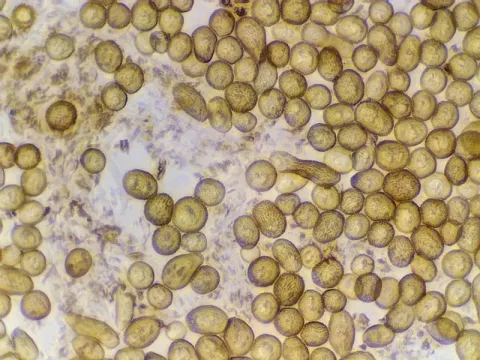
The morphology of Farysia spores is unique, as they are often found in characteristic chains held together by remnants of the basidium. This microscopic feature is the standard diagnostic method used by plant pathologists to identify the genus during field and laboratory surveys.
Because the fungus grows endophytically within the plant, the infection is often invisible during the early stages of development. The pathogen can remain hidden inside the rhizomes and tissues of perennial sedges for long periods, making management challenging.
The most prominent symptom of a Farysia infection is the dramatic transformation of the plant's flowers or spikes. The affected floral parts become distorted, swollen, and frequently replaced by fungal sori that resemble small, puffed-up bags.
As the fungus reaches maturity, these sori rupture, releasing a dense, black or dark brown mass of powdery spores. This characteristic "sooty" appearance is the hallmark of smut infection and clearly distinguishes diseased plants from healthy ones.
While the reproductive parts are heavily impacted, the vegetative portions of the sedge, such as the leaves and stems, often appear outwardly healthy. This creates a deceptive situation where an infected plant seems vigorous until the reproductive stage begins.
Infected spikes often exhibit abnormal branching or shortening compared to their healthy counterparts. Because the fungus replaces the developing seeds with its own spores, the plant becomes functionally sterile, unable to produce viable offspring.
In dense populations, the visibility of the black, dusty spore mass at the tip of the sedge spikes is the primary indicator of a disease outbreak. This helps observers locate infected patches within a larger landscape.
The development of Farysia is strongly favored by high environmental humidity and specific temperature ranges during the host's growing season. The pathogen thrives in wetland habitats, such as marshes and damp meadows, where sedge populations are dense.
Spore dispersal is primarily mediated by wind and water splash. During rainy or windy weather, the powdery teliospores are easily lifted and carried to neighboring healthy plants, where they lodge in the developing inflorescences and germinate.
The critical period for infection is during the host's reproductive phase, specifically when the spikes are just emerging. If the environment remains humid during this stage, the success rate of infection is significantly higher.
Old plant material left on the ground from previous seasons serves as a critical reservoir for the pathogen. In areas with high levels of crop debris, the soil becomes saturated with spores, leading to recurrent infections year after year.
Environmental stressors do not typically hinder the fungus; on the contrary, some conditions that weaken the plant's defense mechanisms can make it easier for the systemic mycelium to colonize the host tissues more effectively.
The primary harm caused by Farysia is the total loss of the plant's reproductive capacity. By replacing the seed-producing tissues with fungal spores, the pathogen effectively eliminates the plant's ability to propagate, leading to potential population declines.
In agricultural or restorative settings, this can be detrimental to the health of wetlands and pasturelands. If the sedges are vital for stabilizing soil or providing habitat, the spread of the fungus can alter the ecological balance of the area.
While Farysia is not a major threat to human food crops, it can reduce the biomass quality of fodder in cases where sedges are utilized for forage. The spore masses can be a nuisance and potentially harmful if ingested by livestock in large quantities.
The infection forces the host plant to redirect its energy reserves toward coping with the fungal parasite rather than growth or storage in rhizomes. This leads to long-term physiological decline and decreased survival rates for the host.
The loss of viable seeds also impacts the genetic diversity of the affected sedge population. Over time, persistent infection may lead to the replacement of the infected species by more resistant plants, causing a shift in local flora.
Managing Farysia is primarily focused on sanitation and the reduction of inoculum. The most effective control method is the manual removal and destruction of infected spikes before the spore masses rupture and release their contents.
Crop rotation and field management are essential in nursery and seed production environments. By moving production away from previously infested soil, growers can avoid the high baseline of inoculum that persists in the environment.
Chemical control using systemic fungicides can be employed in specialized settings. These treatments must be applied preventively, targeting the plant before the pathogen has the chance to establish itself within the developing inflorescence.
Rigorous inspection of seeds and planting material is mandatory. Ensuring that only certified, pathogen-free seeds are used prevents the introduction of the fungus into clean areas, as the pathogen can be spread via contaminated seed lots.
General habitat maintenance, such as mowing and removing dead plant biomass after the growing season, helps disrupt the life cycle of the pathogen by removing the overwintering sites for the spores, thus reducing the risk of a new infection in the spring.