
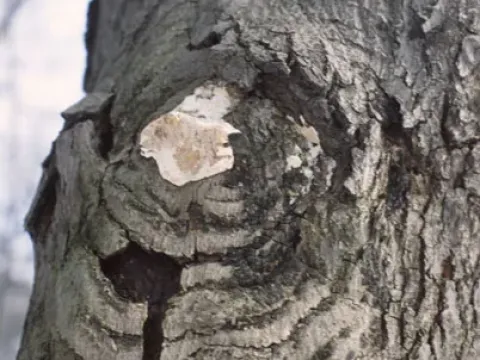
Eutypella canker
Eutypella quaternata
The causative agent of this disease is the ascomycete fungus Eutypella quaternata, which is a specialized pathogen affecting various deciduous tree species.
What the section contains
Eutypella canker
This fungus acts as a facultative parasite, capable of surviving on dead organic material before colonizing the living tissues of the host tree.
The mycelium of the fungus penetrates the bark and cambium layers, causing tissue degradation and disrupting the tree's natural vascular system.
The life cycle involves the formation of small, dark fruiting bodies known as perithecia, which erupt through the bark surface as the infection matures.
Spore dispersal occurs primarily through the release of ascospores into the air, which are then spread to new hosts by wind or splashing rainwater.
The primary symptom is the development of sunken necrotic lesions on the trunk and branches, which eventually progress into clearly defined cankers.
Intense bark cracking often occurs around the lesion area, frequently leading to a rugged, deformed appearance of the affected section of the tree.
Small, dark, protruding black dots appear on the surface of the canker; these are the fungal perithecia confirming an active infection of Eutypella.
Deformation of the trunk, such as localized swelling or deep vertical fissures, is common as the tree attempts to wall off the fungal invasion.
If the canker girdles the stem or a main branch, the foliage above the infection site will turn yellow, wilt, and drop prematurely due to nutrient starvation.
Infection is highly dependent on existing wounds in the bark, such as those caused by pruning, animal activity, weather events, or mechanical damage.
High humidity and moderate temperatures provide the perfect environmental conditions for the fungus to germinate and successfully colonize the host tissues.
Trees weakened by environmental stress, such as drought, nutrient deficiency, or overcrowding, are significantly more susceptible to successful fungal colonization.
Dense canopies that prevent proper airflow create a microclimate with high moisture levels, which facilitates the rapid spreading of fungal spores.
Extended periods of wet weather are critical for the spread of the pathogen, as moisture is essential for the discharge and survival of the fungal spores.
Eutypella canker is highly destructive because it can eventually girdle the trunk, leading to the death of the entire tree or major structural branches.
The disease ruins the wood quality, making it unsuitable for timber or woodworking due to the extensive structural damage caused by the perennial cankers.
Young maple stands are particularly vulnerable, where the disease can cause significant mortality rates if not managed properly during early growth stages.
Infected trees become weakened and are more likely to succumb to secondary pest infestations, such as bark beetles, which further accelerate the tree's decline.
The presence of infected trees poses a continuous risk to the surrounding landscape, necessitating active monitoring and removal to protect healthy maples.
The most effective management strategy is the prompt identification and removal of heavily infected trees to eliminate the source of fungal inoculum.
Strict sanitation protocols must be followed, including the sterilization of pruning tools with alcohol or appropriate fungicides to prevent cross-contamination.
All fresh wounds from pruning or storm damage should be treated immediately with wound sealers or fungicides to prevent opportunistic fungal entry.
Promoting overall tree vigor through proper fertilization, watering, and soil management significantly enhances the tree's ability to resist fungal infections.
Maintaining adequate spacing between trees is crucial for improving air circulation and drying out the bark, which discourages the development of fungal pathogens.