
Eutypa dieback
Eutypa lata
Eutypa dieback is caused by the ascomycete fungus Eutypa lata, which primarily invades the woody tissues of perennial plants, causing systemic infection.
What the section contains
Eutypa dieback
The pathogen is an endophyte that colonizes the xylem, eventually blocking water and nutrient transport by producing phytotoxic metabolites that kill host tissues.
Infection is primarily spread by ascospores produced in stromata on dead wood, which are released during rainfall and dispersed by wind over long distances.
The host range of Eutypa lata is extensive and economically significant, including grapevines, apricots, cherries, and pistachio trees, causing substantial yield losses.
The fungus is long-lived and can persist in dead or dying wood for many years, acting as a perennial reservoir for new infections within an orchard or vineyard.
Early signs of Eutypa dieback in spring include stunted shoots with shortened internodes and leaves that appear chlorotic, curled, or distorted.
In mid-summer, a distinct diagnostic symptom is the presence of stunted and sometimes necrotic clusters that wither and fail to mature properly.
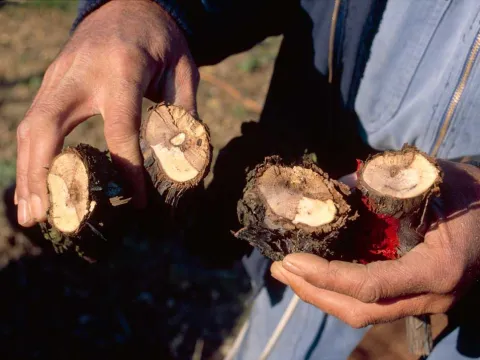
Internally, the cross-section of a branch or trunk infected by Eutypa lata reveals a characteristic wedge-shaped dark brown or black necrosis of the wood.
As the disease progresses, whole branches or entire plants show symptoms of progressive dieback, often leading to total tree or vine death after several years.
In advanced cases, the black, pimple-like fruiting bodies (perithecia) of the fungus may become visible on the surface of dead or weathered wood.
The infection process is almost exclusively linked to the presence of fresh pruning wounds, which serve as entry points for wind-dispersed fungal spores.
Humidity and moderate temperatures are the most critical environmental drivers, as spores require moisture to germinate successfully on the surface of a wound.
Vineyards and orchards with high levels of dead wood are at a significantly higher risk, as these serve as sites for sporulation and subsequent infestation.
Mechanical injuries caused by viticultural equipment, hail storms, or winter frost damage provide additional pathways for Eutypa lata to infiltrate the woody tissues.
The rate of colonization increases in dense plantings where canopy moisture remains high, favoring the survival and germination of fungal spores on plant surfaces.
The primary economic harm from Eutypa dieback is the gradual decline in plant vigor and productivity, leading to the eventual loss of entire scaffold branches.
Yield reduction occurs as the conductive system is destroyed, resulting in poor fruit quality, irregular ripening, and total failure of the fruit to reach maturity.
The disease requires significant investments in labor-intensive corrective pruning and, in severe cases, the complete removal and replanting of affected sections.
By shortening the lifespan of vineyards and orchards, Eutypa lata forces growers to renew their plantings prematurely, disrupting long-term agricultural planning.
The difficulty of early detection means that by the time severe symptoms are visible, the fungus has often already penetrated deep into the main structural wood.
Effective management requires rigorous sanitation, involving the identification and immediate removal of all infected woody parts, cutting well into healthy tissue.
All pruning wounds should be protected immediately after cutting using appropriate fungicides or biological control agents to prevent spore colonization.
Timing of pruning is crucial; performing operations during dry weather or late in the dormant season significantly reduces the risk of infection by airborne spores.
Disinfection of pruning tools between plants is a mandatory practice to prevent the physical transfer of the pathogen from diseased wood to healthy vines or trees.
Implementing integrated management strategies, such as maintaining healthy growth and ensuring proper nutrition, helps plants better withstand the infection pressure.