
Eutypa dieback
Eutypa
Eutypa dieback is caused by the ascomycete fungus Eutypa lata. This pathogen is a wood-inhabiting fungus that primarily infects vines through pruning wounds or other physical injuries to the vine structure.
What the section contains
Eutypa dieback
The fungus is a slow-growing parasite that invades the xylem tissues. As it colonizes the woody parts of the vine, it produces toxins that disrupt the transport of water and nutrients, eventually leading to the death of the infected plant parts.
The pathogen completes its life cycle by forming reproductive structures (perithecia) on dead wood, from which ascospores are released during rainfall and dispersed by wind to infect healthy vines.
It is classified as a trunk disease and is known for its long, chronic progression. The fungus can persist in dry, dead wood for many years, making old vineyards a significant reservoir for the pathogen.
Biological control and prevention are difficult because the fungus remains deeply embedded within the wood, sheltered from the effects of most surface-applied protective fungicides.
Early symptoms appear in the spring when infected shoots show stunted growth with shortened internodes. The leaves are typically small, chlorotic, and often exhibit a cupped or distorted shape.
A hallmark symptom is the decline in fruit production; clusters on infected shoots are often small, shriveled, or fail to develop entirely due to the loss of reproductive function in the affected vascular tissues.
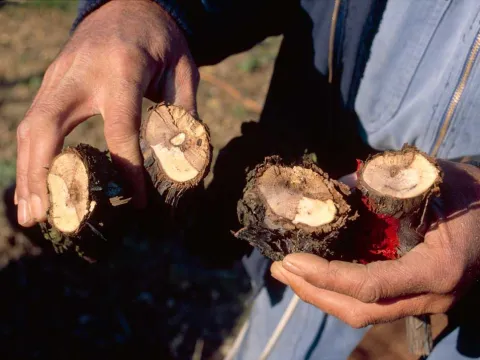
A cross-section of an infected trunk or cordon reveals a distinct wedge-shaped necrosis. This dead wood is typically dark brown or black, surrounded by healthy tissue, and indicates the long-term presence of the fungus.
During hot summer weather, infected branches may suddenly wilt and die, a phenomenon often referred to as "apoplexy." This occurs because the damaged vascular system can no longer meet the plant's transpirational demands.
Over several years, the necrosis spreads until the entire arm or the whole vine may die. This leads to an asymmetrical vine structure and a significant decrease in the overall productivity of the vineyard.
The development of Eutypa dieback is heavily influenced by environmental conditions, particularly cool and wet weather during the pruning season. Rain facilitates the release and dispersal of ascospores.
Large pruning wounds are the most common entry points for the fungus. If a wound is left unprotected, it remains susceptible to spore colonization for several weeks following the pruning operation.
Vineyards with a history of poor maintenance or those containing a high density of old, dead wood are more prone to infection. Physical stress, such as frost or excessive mechanical damage, also increases the plant's susceptibility.
The optimal temperatures for spore germination and mycelial growth range between +10°C and +25°C, which often aligns with the pruning period in many viticultural regions.
The wind acts as the primary vector for long-distance transmission, meaning that even well-managed vineyards can be infected by spores originating from nearby diseased or abandoned vineyard blocks.
The primary harm caused by Eutypa dieback is the progressive decline and death of grapevines. This disease reduces the productive lifespan of the vineyard, requiring costly removal and replanting of affected sections.
It leads to substantial economic losses due to reduced crop quality and quantity. The loss of cordons and trunks reduces the photosynthetic capacity of the vine, weakening it over time.
Infected vines have lower tolerance to environmental stresses, including extreme temperatures and water deficit, which often results in vine collapse under stressful conditions.
Because the disease is irreversible once the fungus reaches the central trunk, it requires drastic management measures like surgical removal of infected limbs, which significantly alters vine architecture.
The pathogen’s ability to persist in dead wood means it remains a constant threat, necessitating ongoing vigilance and high labor costs for sanitation and preventative pruning management.
The most effective management strategy is strict sanitation. All infected wood must be pruned back until healthy, non-discolored wood is revealed on the cross-section of the cut.
All large pruning wounds should be protected immediately with a fungicidal paste or paint to create a physical barrier against spore infection. Sanitizing pruning tools between vines is critical to prevent spreading the pathogen.
Pruning should be scheduled during periods of low rainfall to minimize the presence of spores in the air and to ensure that cuts heal as quickly as possible.
Removed wood must be collected and burned or buried far from the vineyard to eliminate the primary sources of inoculum.
- Disinfect tools with bleach or alcohol between plants.
- Apply wound sealants to all large pruning cuts.
- Perform surgical pruning to remove necrotic wood.
- Maintain vine vigor through proper nutrition and irrigation.
- Monitor for early symptoms during every spring canopy inspection.