
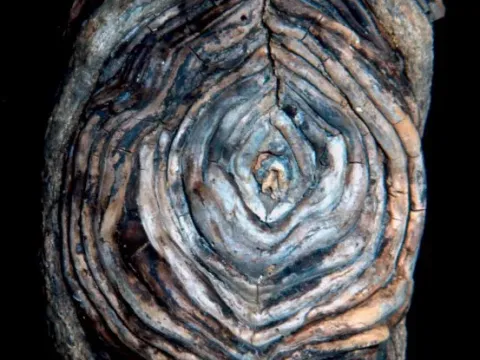
Eutypella canker
Eutypella
The disease is caused by fungi of the genus Eutypella, most notably Eutypella parasitica. This pathogen is a serious threat to various hardwood species, causing persistent infections in stems and branches.
What the section contains
Eutypella canker
The fungus functions as a necrotrophic parasite that infects the bark and cambium, eventually colonizing the sapwood. Its life cycle involves the production of perithecia, which are small black fruiting bodies that emerge from the infected bark.
Spores are dispersed primarily by wind and splashing rain. Once they land on wounds or fissures in the bark, the spores germinate, initiating the colonization process within the tree tissue.
The pathogen is characterized by a slow growth rate, meaning the disease often remains latent for several years before external signs of the canker become clearly visible.
Infected wood remains a reservoir for the pathogen even after the tree dies, allowing the fungus to persist and spread to neighboring trees in the stand.
The most distinctive sign is the formation of a perennial canker. These lesions are often sunken, with the surrounding bark showing callus tissue that fails to close the wound, resulting in an asymmetrical, bumpy appearance.
In the fall and winter months, tiny black fruiting bodies of the fungus appear on the dead bark surface. These are the diagnostic perithecia that release spores during wet conditions.
Leaves on infected branches often turn yellow or brown, become sparse, and drop prematurely. As the disease progresses, the foliage wilts, leading to the eventual death of the affected branch.
Internally, the wood under the canker displays a characteristic dark, discolored area that indicates the spread of fungal mycelium and the beginning of heartwood decay.
Increased fragility is a common symptom. Because the fungus degrades the structural integrity of the wood, infected stems are prone to breaking at the site of the canker during windstorms.
Infection is highly dependent on the presence of entry points such as pruning wounds, storm damage, frost cracks, or animal feeding sites that break the tree's bark barrier.
High relative humidity and consistent moisture are critical for the germination of fungal spores. Rain events facilitate both the maturation of fruiting bodies and the spread of spores.
High-density tree stands or orchards with poor ventilation create a microclimate that promotes the accumulation of moisture on bark surfaces, favoring fungal development.
Trees under physiological stress from drought, nutrient deficiency, or competition are significantly more susceptible to successful colonization by Eutypella species.
Large seasonal temperature fluctuations can cause bark tissues to split, creating vulnerable areas that allow the fungus to enter the sapwood easily.
The primary impact of Eutypella canker is the destruction of cambium and phloem. If a canker grows to girdle the circumference of the stem, the supply of nutrients is severed, resulting in tree death.
The disease reduces the timber quality and structural value of the tree, rendering it unsuitable for wood products due to the deep internal decay and necrotic areas.
It creates significant safety hazards in managed forests and parks. A tree weakened by a large canker is structurally compromised and may fail suddenly, posing risks to people and property.
It acts as a contagious agent in close-spaced plantings. If left untreated, the disease can spread throughout an entire plantation, causing significant economic and environmental losses.
Long-term infestation drains the tree's energy, making it prone to secondary infections and reducing its resilience against other biotic and abiotic stressors.
The most effective management strategy is the physical removal of infected branches or, in severe cases, the entire tree. Pruning tools must be sterilized after each cut to prevent spreading the pathogen.
All infected materials must be burned or destroyed immediately rather than left on the forest floor, which serves as a long-term source of fungal spores.
Wounds caused by pruning should be kept to a minimum and, if possible, treated with appropriate wound dressings or sealants to provide a physical barrier against spore infiltration.
Promoting overall tree vigor through proper fertilization, adequate water management, and ensuring correct spacing can drastically reduce the susceptibility of trees to infection.
- Prune affected branches beyond the infection zone.
- Disinfect tools consistently using alcohol or bleach.
- Monitor stands for early detection of cankers.