
Dogwood anthracnose
Discula destructiva
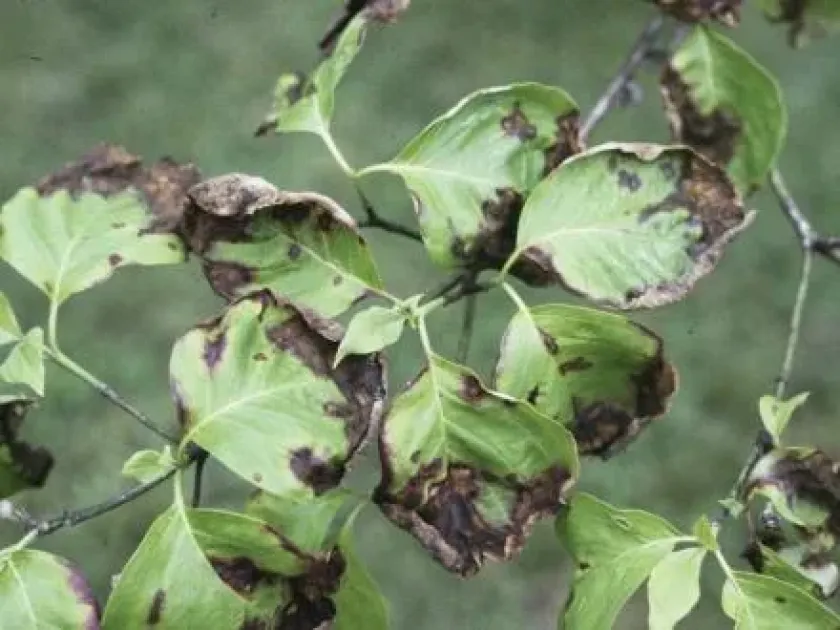
Description
Symptoms
Initial symptoms include small, circular, or irregular spots on leaves. These spots typically appear as tan or brown areas with a distinct dark purple or reddish-brown border.
As the disease progresses, these leaf spots enlarge and merge, eventually causing the entire leaf to wither and die prematurely. Infected leaves often remain attached to the tree long after they should have fallen.
A major diagnostic indicator is the presence of small, cream-colored fruiting bodies that emerge on the undersides of infected leaves during moist weather conditions.
Lower branches often exhibit characteristic cankers, which are sunken, discolored areas of dead bark. These cankers can eventually girdle a twig or branch, leading to sudden wilting and dieback.
Advanced stages of infection are marked by the presence of numerous epicormic shoots (water sprouts) growing along the main trunk as the tree struggles to survive the loss of its upper canopy.
Pathogen
Dogwood anthracnose is caused by the fungus Discula destructiva, an aggressive pathogen primarily affecting flowering dogwoods (Cornus florida) and other susceptible species. It has become a serious threat to native and ornamental dogwood populations.
The fungus produces conidia within acervuli, which are specialized fungal structures that break through the plant epidermis. These spores are the primary agents for spreading the disease throughout the canopy and to neighboring trees.
Discula destructiva overwinters in infected twigs, branches, and dead leaves still attached to the tree. Once environmental conditions become favorable, the fungus resumes development and begins releasing spores.
Infection occurs when spores land on susceptible plant tissues and moisture is present. The fungus utilizes openings like stomata or wounds to penetrate the host's cellular structure and initiate colonization.
The biological success of this fungus is largely due to its ability to thrive in cool, humid environments, making spring and autumn periods the most critical times for disease advancement.
Conditions for development
Dogwood anthracnose is highly dependent on environmental moisture. Prolonged periods of rainfall, heavy dew, and high humidity create the perfect conditions for spore germination and infection.
The fungus prefers cooler temperatures, typically ranging from 15°C to 20°C (60°F to 68°F). In these conditions, the fungus can proliferate rapidly and cause significant damage to host tissues.
Locations with poor air circulation, such as densely wooded areas or gardens with overcrowded plantings, are more susceptible. Stagnant air prevents foliage from drying quickly, extending the infection period.
Trees stressed by drought, poor soil quality, or mechanical damage are significantly more vulnerable. Their weakened immune systems cannot effectively resist the colonization efforts of Discula destructiva.
Shaded environments further promote the disease by reducing the evaporation rate of dew and rain, allowing the fungal spores to remain viable for longer periods.
Why it matters
The primary impact of Dogwood anthracnose is the severe loss of foliage, which deprives the tree of its ability to photosynthesize effectively. This leads to reduced vigor and stunted growth.
Persistent branch dieback eventually destroys the structure and beauty of the tree. Many infected specimens lose their aesthetic value within just a few years of initial exposure.
If the infection reaches the main trunk, it can lead to total tree failure. Once a tree has extensive cankers, its vascular system is severely compromised, and recovery becomes unlikely.
The ecological impact is significant, as native dogwood populations have been decimated in certain regions. This loss affects local biodiversity and the stability of forest understories.
In landscaping, the cost of maintenance, treatment, and potential tree removal adds a heavy financial burden to property owners and municipalities trying to manage the disease.
Protection
Prevention is the most effective management strategy. Select resistant cultivars for planting and ensure trees are placed in locations with ample sunlight and good air movement to help foliage dry out quickly.
Sanitation practices are essential: prune and remove all infected twigs and branches during dry weather. Always disinfect pruning tools with a bleach solution to avoid spreading spores between branches.
Maintain tree health through proper fertilization and watering practices. During dry spells, water at the base of the tree rather than sprinkling the leaves, as wet foliage triggers fungal growth.
Fungicide applications, particularly those containing copper or systemic agents, can provide protection when applied at the bud-break stage and during periods of wet spring weather.
- Avoid planting dogwoods in deep shade
- Clear away all fallen leaves under the tree annually
- Monitor trees regularly for signs of cankers
- Mulch the base to maintain even soil moisture
Discussion
No discussions yet — be the first.