
Chestnut Cytospora canker
Cytospora parasitica
Description
Symptoms
The initial signs of Cytospora canker often appear as localized areas of discolored bark. These spots typically transition into sunken, reddish-brown to dark brown lesions that develop cracks as the tissue dies.
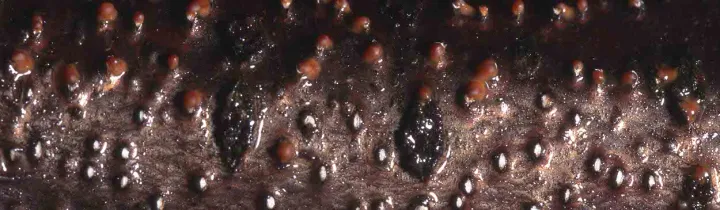
A diagnostic characteristic of the infection is the presence of numerous small, pimple-like bumps on the bark, which are the fungal pycnidia. During wet weather, these produce distinctive orange or yellow spore tendrils.
Foliage on infected branches tends to yellow, curl, and die prematurely, yet it often remains attached to the tree for some time. The canopy becomes sparse, and dieback often progresses from the branch tips inward toward the trunk.
When a canker develops enough to girdle the trunk or branch, the flow of water and nutrients is severed. This leads to the rapid death of all structures distal to the infection point, leaving behind skeletonized, blackened wood.
- Sunken, discolored lesions on the bark.
- Pimple-like pycnidia emerging from the bark surface.
- Visible orange/yellow spore strings during moist conditions.
- Bark peeling and cracking at the infection site.
- Premature yellowing and dieback of leaves.
Pathogen
The disease is caused by the fungus Cytospora parasitica, which primarily infects the bark and cambium layers of the chestnut tree. This pathogen acts as an opportunistic parasite, thriving on stressed or compromised woody tissues.
The fungus penetrates the tree through various openings, including frost cracks, pruning wounds, or sites damaged by insects. Once inside, the fungal mycelium colonizes the living bark tissue and begins to expand.
The biological cycle of the pathogen involves the production of pycnidia, small fruiting bodies embedded in the bark. Under humid conditions, these pycnidia release spores that are disseminated by rain splash, wind, and insect movement to neighboring trees.
The fungus is remarkably resilient and can persist in dead bark for extended periods. This persistence creates a continuous inoculum source, making it difficult to eradicate once it has established a foothold in the environment.
As the infection spreads, the fungus secretes toxins that kill the plant cells, leading to the formation of necrotic areas that slowly girdle the stems and branches of the tree.
Conditions for development
Environmental stress is the primary driver of disease development. Sudden temperature fluctuations, such as late spring freezes or autumn frosts, often cause frost cracks in the bark, providing the perfect entry point for the fungus.
Prolonged summer droughts weaken the tree's internal water balance and reduce its ability to produce defensive compounds in the bark. Such physiological stress makes the chestnut highly susceptible to rapid colonization.
High humidity and consistent rainfall are critical for spore germination and dispersion. Trees planted in high-density areas with poor airflow are particularly prone to rapid infection cycles due to trapped moisture.
Poor orchard management, including inadequate fertilization or improper irrigation, leaves trees vulnerable. Furthermore, wounds created by mechanical equipment or improper pruning serve as direct invitations for the fungus.
Early-season activity is often fueled by mild winter thaws or an exceptionally wet spring, allowing the fungus to colonize the tree before it enters its period of active spring growth.
Why it matters
Cytospora canker is a destructive disease, particularly for young, sensitive saplings, which can be killed within one or two seasons. For mature trees, the disease leads to a steady decline in both vitality and aesthetic value.
As the cankers girdle the trunk, the tree's ability to transport nutrients and water is permanently damaged. This causes the tree to struggle, resulting in stunted growth, leaf loss, and eventually, the death of the entire tree.
The rapid spread of spores throughout an orchard or landscape can lead to significant economic losses, especially in nurseries where thousands of plants can become infected from a single source.
The disease frequently forces intensive and costly management actions, including the removal of infected trees and the pruning of large limbs, which may alter the form and function of the landscape.
Because there is no complete cure for advanced stages of Cytospora infection, the tree’s prognosis is typically poor once the trunk has been extensively colonized, making early intervention critical.
Protection
The cornerstone of management is rigorous cultural practice. Maintaining tree vigor through balanced fertilization and appropriate irrigation is the best primary defense against fungal colonization.
Regular sanitation pruning is essential. All infected branches must be removed, cutting several inches into healthy tissue. Tools must be disinfected with a fungicide or bleach solution between every single cut to prevent spreading the pathogen.
Preventive spraying with copper-based fungicides (such as Bordeaux mixture) during the dormant season — specifically in late autumn and early spring — is highly effective at reducing the overall spore load.
All pruning wounds should be immediately protected with specialized wound dressings to prevent the entry of spores. If small cankers are found on trunks, surgical excision of the infected tissue can sometimes save the tree.
All diseased wood must be promptly removed from the site and destroyed, preferably by burning, as infected logs and branches left in the garden will continue to produce and release spores for several years.
Discussion
No discussions yet — be the first.