
Chestnut dapperling
Lepiota castanea
Description
Symptoms
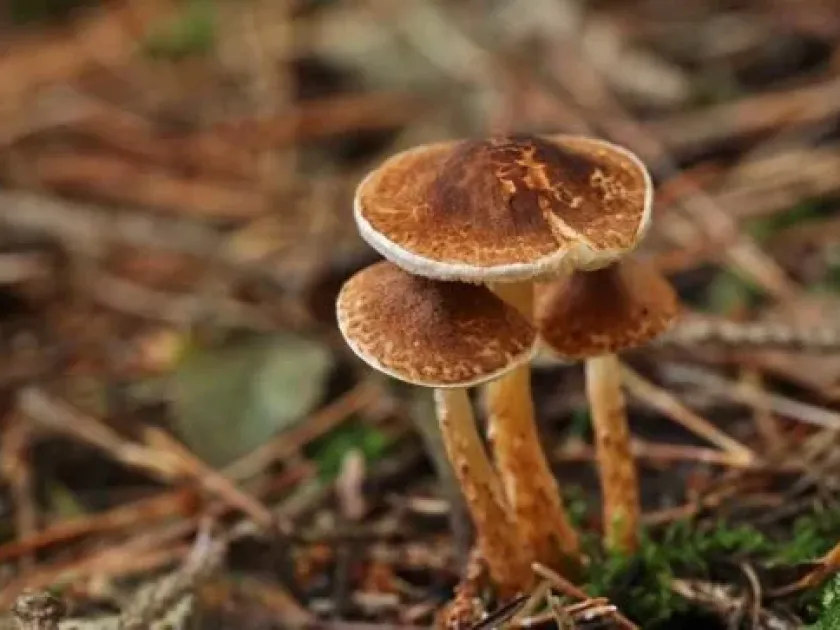
Visual signs of the fungus include the formation of small fruiting bodies, typically observable in late summer and autumn. The cap of the mushroom has a distinct chestnut-brown color with cracking that forms scales.
The stem is slender and fibrous, often featuring a ring that may disappear over time. Discovering these fruiting bodies near the root zone of crops is the primary visual indicator of its presence.
The mushrooms often grow in groups, leading to specific patches in the root zone. Crops may appear stunted not due to the fungus itself, but because of the conditions the mushroom thrives in.
During soil examination, one may notice whitish mycelial threads permeating the humus layer. These threads do not penetrate the roots of healthy plants but remain within the rhizosphere.
A distinctive feature is the rapid growth of fruiting bodies following heavy rainfall or intensive irrigation, which makes their appearance sudden and unexpected for the agronomist.
Pathogen
The Chestnut dapperling (Lepiota castanea) is a gilled mushroom belonging to the Agaricaceae family. In agronomy, this species is not considered a true phytopathogen, as it does not parasitize living tissues of crop plants.
Biologically, this object is classified as a saprotrophic fungus that thrives primarily in soil enriched with organic matter. It does not cause plant diseases, but its presence serves as an indicator of the soil substrate status.
It is not a disease-causing agent for crops; however, its appearance in greenhouses or garden beds may point to improper agronomic practices, excess moisture, and the accumulation of decaying organic matter.
The fungal mycelium develops in the topsoil layers, feeding on plant debris, leaf litter, or compost. It is a gilled fungus that reproduces via spores.
It is crucial to remember that Lepiota castanea is a poisonous mushroom; therefore, any removal procedures must be performed while adhering to personal safety protocols.
Conditions for development
The development of Lepiota castanea is directly linked to the hydrothermal regime of the soil. Optimal conditions include high substrate humidity and temperatures ranging from +15 to +22 degrees Celsius.
The presence of undecomposed organic matter in the soil, such as straw, sawdust, or poorly composted manure, creates an ideal nutritional environment for this fungal species.
Overcrowded plantings that prevent adequate ventilation and drying of the topsoil surface encourage the colonization of this fungus in greenhouse environments.
The lack of crop rotation and regular soil cultivation promotes spore accumulation in the soil horizon, ensuring the fungus reappears annually in the same locations.
Furthermore, the use of contaminated substrates when preparing seedlings or greenhouse beds is a common factor in its spread.
Why it matters
Lepiota castanea does not cause direct damage to crop plants as it is not a pathogen. However, as a toxic species, it poses a significant safety risk during harvest or garden maintenance.
A substantial danger lies in the possibility of accidental collection of poisonous fruiting bodies along with harvested produce, which can lead to severe poisoning.
The presence of the fungus signals unsatisfactory sanitary conditions on the site, which indirectly reduces overall agroecosystem productivity by suppressing beneficial microflora.
In greenhouses, mass development of the mycelium can lead to physical compaction of the substrate and changes in soil acidity, negatively affecting root nutrient uptake.
Thus, the harm is primarily ecological and toxicological, necessitating strict attention to the sanitary cleanliness of planting areas.
Protection
The foundation of prevention lies in high-quality substrate and soil preparation, including deep tilling and the removal of plant debris that serves as a medium for the mycelium.
It is necessary to establish an efficient irrigation regime that avoids water stagnation and over-moistening of the soil surface, significantly reducing the likelihood of fruiting bodies appearing.
If fruiting bodies are discovered, they should be carefully removed along with a small layer of the surrounding soil to prevent spore maturation and dispersal across the site.
In greenhouses, regular aeration and cultivation are recommended, along with the partial replacement of the topsoil layer with sterile substrate if necessary.
The use of fungicides against this species is not considered effective; it is better to focus on agronomic management methods that improve the overall growth environment for crops.
Discussion
No discussions yet — be the first.