
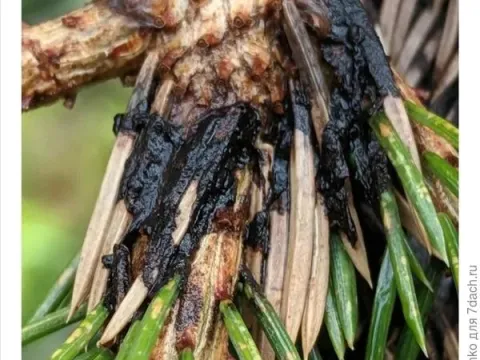
Brown felt blight
Herpotrichia juniperi
The disease is caused by the ascomycete fungus Herpotrichia juniperi. It is a specialized pathogen that thrives in moist, cold environments, primarily targeting coniferous trees and shrubs that remain covered by snow for extended periods.
What the section contains
Brown felt blight
The life cycle of the fungus is closely linked to winter conditions. The mycelium can remain metabolically active under the snow, slowly colonizing the needles and twigs while the host plant is dormant.
As the fungus develops, it creates a thick, dark brown mat of mycelium that coats the branches. Small, spherical fruiting bodies known as perithecia eventually form on this mat, releasing spores that are spread by wind and water splash.
Infection persists on dead or dying branches, needles, and plant debris left on the ground. It can survive for several seasons, turning the area into a potential reservoir for future outbreaks.
Primary infection occurs in late autumn or early spring when temperatures and humidity levels are optimal for the fungus. The pathogen targets branches that are already in contact with moist soil or accumulated snow.
The most distinctive sign of Brown felt blight is the presence of a dark brown or black, felt-like fungal mat that tightly wraps around the needles and small twigs, binding them together in distinctive clumps.
Affected needles lose their green coloration, turning a dull brownish-grey. They do not fall off immediately but remain attached to the branches, covered in the dense, web-like fungal growth that gives the disease its common name.
Upon close inspection, small, black, pinhead-sized fruiting bodies can be observed on the dead needles. These structures confirm the presence of the pathogen and are essential for accurate field identification.
Damage typically starts on branches closest to the ground, where the snow cover persists the longest. The fungal mats are clearly visible immediately after the snow melts in early spring.
Severe infestations can lead to the necrosis of entire branches. If left untreated, the pathogen can spread through the lower portion of the tree canopy, significantly reducing the plant's aesthetic value and overall health.
High humidity and prolonged snow cover are the primary conditions for the development of Herpotrichia juniperi. The snow acts as an insulator, maintaining the consistent temperature required for the fungus to grow.
Dense planting schemes that prevent airflow contribute to a higher risk of infection. Poor ventilation leads to the accumulation of moisture, which is the perfect breeding ground for the pathogen.
Conifers that are weakened due to poor site selection or inadequate nutrition are more susceptible. Physical damage to needles, such as that caused by winter burn or mechanical stress, provides entry points for the fungus.
Shaded areas where snow takes a long time to melt are high-risk zones. These microclimates allow the fungus to continue its development long after the rest of the garden has dried out.
Excessive moisture in the soil, particularly in late autumn, prepares the plant for infection. When the plant enters the winter season under stress, its natural defense mechanisms are significantly compromised.
The primary harm is the destruction of foliage and twigs, which leads to the loss of the plant's decorative appearance. This is a major concern for professional landscapers and nursery owners.
The disease impairs the plant's photosynthetic capacity. As branches die back, the tree's vigor declines, making it more vulnerable to secondary pests like wood-boring insects and other opportunistic pathogens.
If the infection reaches the main stem or spreads extensively, it can lead to the complete death of the plant. Young or dwarf conifers are particularly at risk and can be killed in a single season.
Economic losses in the nursery sector are significant, as infected plants become unmarketable and require extensive labor-intensive cleaning or disposal.
Persistent infection leads to stunted growth and permanent deformity of the crown. Even after the disease is controlled, the recovery period for a conifer to regain its original shape can take many years.
Prevention starts with choosing appropriate planting sites with good drainage and exposure to wind. Avoid planting susceptible conifers in low-lying areas where snow tends to drift or accumulate.
Regular sanitation is crucial. Prune out all branches showing signs of mycelial growth or necrosis to remove the infection source from the environment.
Apply copper-based fungicides in late autumn before the first snow. This creates a protective coating on the needles that inhibits spore germination and mycelial spread during the winter months.
Cleaning debris, such as fallen needles and twigs, from under the trees in early spring helps reduce moisture and lowers the risk of pathogen re-establishment.
If an active infection is detected, apply systemic fungicides containing active ingredients like difenoconazole or similar compounds. Consistent follow-up applications may be necessary to ensure complete control.