
Discina perlata
Discina perlata
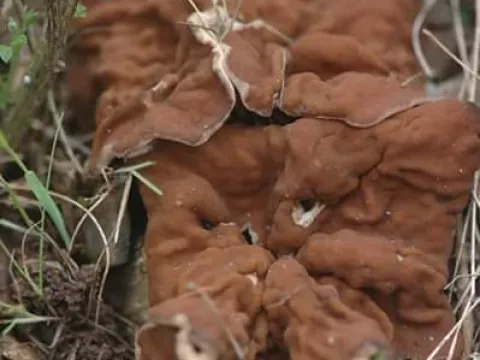
Discina perlata is an ascomycete fungus characterized by its unique saucer or shield-shaped fruiting bodies, which often feature undulating or raised margins.
What the section contains
Discina perlata
The cap typically reaches a diameter of 3 to 10 centimeters and displays a range of brown shades, varying from yellowish-buff to deep chestnut.
The inner surface, where spores are produced, is generally smooth or slightly wrinkled, contrasting with the paler, whitish or cream-colored exterior.
The stem is quite short or even indistinct, often showing folds or ridges, which helps it anchor firmly to the substrate in its natural habitat.
Microscopically, the spores of this fungus are distinct due to the presence of specific appendages at their ends, a feature used for accurate scientific identification.
In agronomy and plant pathology, Discina perlata is not considered a plant disease or a pathogen, as it is strictly a saprotrophic organism.
The fungus functions by decomposing dead organic matter, specifically wood remains and leaf litter, through the secretion of specialized enzymes.
Its mycelium grows within the substrate to break down complex organic polymers, without ever infecting or harming living plant tissues.
Because it does not act as a parasite, it has no negative impact on the health of agricultural crops or forest trees.
The biological role of this fungus is strictly limited to mineralizing nutrients and contributing to the healthy nutrient cycling within its environment.
Discina perlata typically develops during the early spring season, immediately following the snowmelt, when moisture levels are at their peak.
The fungus thrives in moist environments, specifically within coniferous forests where it can access decaying wood from pine or spruce trees.
Optimal growth conditions involve mild temperatures and high atmospheric or substrate humidity, essential for forming its delicate fruiting bodies.
Shaded areas with consistent moisture, often hidden within the forest floor litter, serve as the most suitable habitats for this species.
Spore dispersal occurs primarily through wind, allowing the fungus to find and colonize new, suitable woody substrates across the forest floor.
This species poses absolutely no threat to agricultural productivity or the longevity of forest plantations, as it lacks parasitic traits.
The presence of Discina perlata does not result in yield loss, tissue necrosis, or any reduction in the vigor of agricultural or ornamental plants.
Unlike pathogenic fungi that cause root rot or wilting, this organism is beneficial by aiding in the decomposition of debris.
No damage is ever recorded in association with this fungus, making it a harmless and ecologically important component of forest ecosystems.
Home gardeners or forest managers do not need to worry about this species, as it essentially acts as a natural recycler of dead matter.
There are no control measures or protection strategies developed for Discina perlata because it is not a harmful or pathogenic organism.
The application of fungicides or other chemical treatments is entirely unnecessary and should be avoided to maintain soil health.
Preventive measures are not required, as the fungus does not constitute a disease threat to any cultivated crops or woody plants.
Forest sanitation management naturally influences the availability of its substrate but does not need to specifically target the fungus.
In conclusion, professional advice is to leave this organism undisturbed, as it performs a natural ecological function without any negative impact.