
Dirina stenhammarii
Dirina stenhammarii
Description
Symptoms
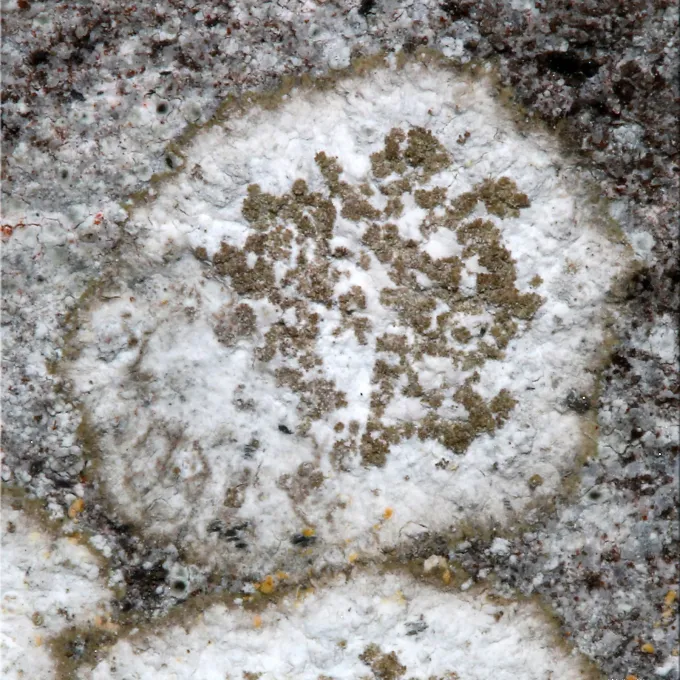
The visual presence of this lichen on bark is characterized by light, greyish-white patches that are firmly attached to the surface. The thallus has a granular or slightly cracked texture.
Upon close inspection, the underlying bark remains healthy and intact. There are no signs of tissue necrosis, rot, or damage to the tree's internal systems beneath the lichen.
Unlike true infectious diseases, Dirina stenhammarii does not cause gummosis, bark splitting, or open cankers on the branches or trunks of the host tree.
The coloration of the lichen can fluctuate based on environmental moisture, appearing more vibrant when wet, which is a natural physiological reaction of the symbiotic components.
The lichen is most commonly found on bark sections that receive adequate light and moisture, away from the drying effects of direct, harsh winds.
Pathogen
Dirina stenhammarii is not a pathogenic fungus or virus causing disease in agricultural crops, but a species of lichen belonging to the Roccellaceae family. In agronomy, it is often misidentified as a plant disease due to its presence on tree bark.
This organism is a biological symbiosis between a fungal mycelium and a photosynthetic partner, specifically green algae. Visually, it appears as a crustose lichen adhering firmly to the tree substrate.
The biology of this species is studied within the field of lichenology rather than phytopathology. It does not possess parasitic traits and does not penetrate the host tissue to extract nutrients.
As an epiphyte, the lichen uses the tree bark merely as a physical support. It does not interfere with the plant's vascular system or nutrient transport.
This species is known for its slow growth rate and high sensitivity to air pollution, making it a reliable bioindicator for assessing ecological air quality in orchards and forests.
Conditions for development
The development of this lichen is dependent on specific light and humidity levels on the bark. It prefers sites with moderate sunlight that are protected from extreme desiccation.
It is a typical epiphyte in temperate climates, often colonizing tree species with bark that maintains a neutral or slightly alkaline pH level.
Air quality is a critical condition for its growth, as this species cannot survive in environments with high sulfur dioxide pollution, thus it is absent in heavily industrial areas.
Stable growth is frequently observed in older plantations where bark turnover is slow, providing a long-term, stable surface for colonization.
Relatively high atmospheric humidity is vital for the metabolic processes of the algae, ensuring the survival and growth of the lichen thallus.
Why it matters
This lichen species poses no direct threat to the health of fruit or ornamental trees. It does not consume tree sap nor does it suppress the growth of the plant.
Potential indirect harm is minimal and usually limited to the formation of dense lichen cover, which may provide shelter for overwintering pests like mites or small insects.
In commercial horticulture, excessive lichen cover on trunks is sometimes viewed as an indicator of neglect, prompting growers to clean the bark to improve orchard aesthetics.
There is no evidence of an agronomic impact on crop yield or fruit quality. Trees thrive and produce normally regardless of the presence of this epiphyte on their bark.
No research suggests that the metabolic byproducts of this lichen have any toxic or negative physiological effect on the host tree.
Protection
Specific chemical control is unnecessary as the lichen is not a disease. Any bark cleaning is performed primarily for sanitary or aesthetic maintenance purposes.
- Mechanical removal of lichen using scrapers or stiff brushes during the tree's dormancy period.
- Application of lime wash (whitewashing) to trunks, which creates an unfavorable surface for lichen spore settlement.
- Proper canopy pruning to improve airflow, which effectively reduces the humidity levels around the trunk.
- Optimization of tree nutrition and irrigation to promote healthy growth and regular bark shedding.
- Preventative pest management to eliminate any small insects that might utilize the lichen cover as winter refuge.
Discussion
No discussions yet — be the first.