
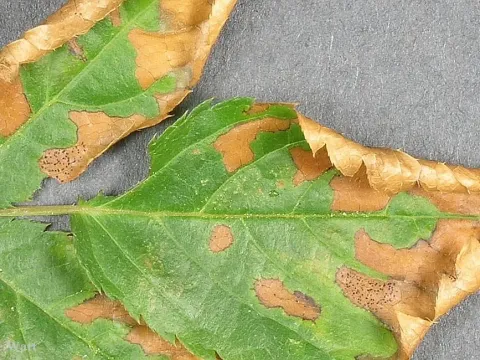
Discosia leaf spot
Discosia
Discosia is a genus of coelomycetous fungi that acts as a plant pathogen, with Discosia artocreas being the most frequently identified species in agricultural settings.
What the section contains
Discosia leaf spot
The fungus survives in dead plant material, such as fallen leaves and stem debris, where it persists as mycelium or as fruiting bodies known as pycnidia.
During the growing season, the pathogen produces conidia, which are disseminated to healthy plant parts primarily via water splash, rain, wind, and potentially insects.
This fungus is often considered a facultative parasite, capable of transitioning between a saprotrophic life stage on necrotic tissue and a parasitic stage on living plants.
Infection is initiated when conidia germinate on the surface and penetrate the host tissue through stomata or mechanical injuries caused by external factors.
The characteristic symptoms of Discosia infection include the appearance of distinct leaf spots that often exhibit a zonate or target-like appearance.
Initial spots are small and often circular, typically developing dark centers where the pycnidia form, surrounded by a lighter or chlorotic halo.
As the infection progresses, the necrotic tissue within the spots may become brittle, eventually drying out and falling away, leading to a shot-hole effect on the foliage.
Under conditions of high ambient humidity, a fine, dark conidial mass may be visible on the surface of the lesions, marking the active sporulation of the fungus.
Severe infections result in premature yellowing and leaf drop, which can lead to extensive defoliation if left unchecked throughout the growing season.
The development of Discosia leaf spot is favored by warm, humid environments, typically with temperatures ranging between 18 and 25 degrees Celsius.
Stagnant air and poor ventilation within dense crop canopies or greenhouses create an ideal microclimate for fungal proliferation and rapid infection cycles.
Plants suffering from environmental stress, nutrient deficiencies, or water-logging are significantly more susceptible to attack compared to healthy, vigorous specimens.
Frequent rainfall or overhead irrigation, which keeps the foliage surface wet for extended periods, is a major factor driving the spread of the disease.
Late summer months often provide the fluctuating temperatures and high humidity that trigger the most intense disease outbreaks in susceptible orchards and nurseries.
The primary damage caused by this disease is the reduction of the leaf surface area available for photosynthesis, leading to stunted plant growth and lower yields.
In ornamental plants, the infection significantly impacts aesthetic quality, rendering the nursery stock unmarketable and causing direct financial losses for producers.
Premature leaf loss depletes energy reserves, which can weaken perennials and reduce their cold hardiness and success in surviving the following winter season.
Repeated annual infections can lead to the chronic decline of host plants, increasing their vulnerability to secondary pathogens and abiotic stresses.
In large-scale agricultural systems, the cost of managing consistent outbreaks represents a significant input expense, impacting the overall profitability of the crop.
Cultural management is the first line of defense, requiring the diligent removal and destruction of all infected plant debris to eliminate overwintering inoculum.
Improving cultural practices, such as maintaining proper plant spacing and pruning to facilitate canopy airflow, is essential for reducing humidity around the foliage.
Chemical control involving timely applications of broad-spectrum fungicides, particularly those containing copper or systemic triazoles, can be effective in high-pressure situations.
- Sanitation: removing and disposing of fallen leaves and infected cuttings.
- Spacing: providing adequate room between plants to ensure effective air circulation.
- Irrigation: avoiding overhead watering to keep foliage dry for as long as possible.
- Monitoring: inspecting plants frequently for the first sign of leaf spotting.
Integrated Pest Management (IPM) strategies, which combine cultural hygiene and biological control options, are recommended to provide long-term sustainable disease suppression.