
Discina
Discina
Description
Symptoms
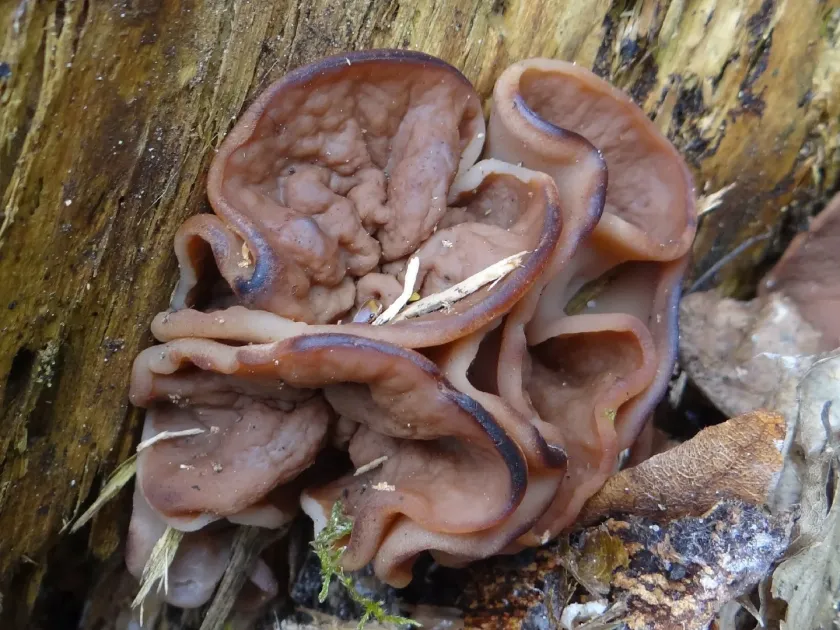
Discina fruit bodies appear as folded or wavy formations, often resembling a disc or saucer in shape. The surface of the cap usually exhibits distinct wrinkling and brownish shades of various intensities.
An important morphological feature is the presence of a short, sometimes deeply embedded in the substrate, stalk. The internal structure of the fungus is dense, with brittle flesh and a characteristic mushroom odor.
The spore print of Discina is white or cream-colored, which helps in identifying the genus during microscopic analysis of samples. Spores are often equipped with appendages, which is a characteristic species criterion.
Most often, these fungi are found in the spring on rotting coniferous wood or directly on the soil rich in organic residues. They form local clusters that are visually noticeable against the background of the forest floor.
Externally, young specimens can be mistaken for other types of ascomycetes, so detailed analysis of the hymenium and spore structure is required for accurate identification.
Pathogen
The pathogen is a fungus of the genus Discina, belonging to the division Ascomycota, class Pezizomycetes. These are saprotrophic organisms that play a role in the decomposition processes of woody residues.
The biology of the pathogen is closely related to the cycle of lignin and cellulose degradation. The fungus develops as an active decomposer, using an enzymatic apparatus to assimilate complex organic compounds.
Reproduction is carried out by spores, which spread through air currents or water. During favorable periods, the mycelium actively colonizes available substrate, forming extensive networks.
The genetic plasticity of the genus allows it to adapt to a wide range of tree species. In forest ecosystems, the fungus is an important link in the nutrient cycle, although in some cases it may compete with mycorrhizal fungi.
The life cycle includes a dormant phase where the mycelium is preserved inside the wood under adverse environmental conditions, waiting for spring humidity to form fruit bodies.
Conditions for development
Discina development critically depends on soil moisture levels and ambient temperature. Optimal conditions occur in early spring during snowmelt and the establishment of positive temperatures.
The fungus prefers shaded forest areas where moisture is retained longer, and the forest litter creates a stable microclimate. High relative humidity is a trigger for spore germination.
The presence of large amounts of decaying coniferous wood (especially pine) stimulates active mycelium growth. The intensity of substrate decomposition correlates directly with the availability of nitrogenous compounds.
The lighting of the area plays a secondary role, but direct sunlight can lead to rapid drying of fruit bodies and the cessation of sporulation.
Anthropogenic impacts, such as disturbance of the forest floor or soil compaction, can negatively affect local fungal populations by altering the hydrological regime of a specific zone.
Why it matters
The main danger of Discina lies in its ability to rapidly destroy woody residues, which, while beneficial in forestry, may be an unwanted process in gardens.
The fungus is not an obligate parasite of living trees, but when stands are weakened, it can colonize damaged bark areas and root systems, accelerating the process of tree decline.
Some species of this genus are capable of accumulating toxins, making them dangerous if accidentally consumed by inexperienced mushroom pickers. This creates a certain threat to human safety.
Mass reproduction of the fungus near valuable forest crops can lead to changes in soil acidity, which indirectly affects the development of mycorrhiza-forming tree symbionts.
In nurseries, the presence of this fungus requires monitoring, as active organic matter degradation may be accompanied by the release of substances that inhibit the growth of young tree seedlings.
Protection
Prevention of spread involves timely sanitary cleaning of forest areas from deadwood and rotten timber, which serve as the primary source of nutrition for the fungus.
Maintaining an optimal soil pH level helps reduce the risk of excessive mycelium growth. It is recommended to avoid waterlogging areas where focal occurrences of Discina are observed.
In nursery conditions, an effective protection method is the use of broad-spectrum fungicides when preparing soil for planting young trees.
Mechanical removal of fruit bodies at early stages before spore maturation allows for the prevention of further spread of the infectious agent throughout the planting site.
Monitoring the condition of forest areas in the spring helps to timely detect zones of active sporulation and take measures to sanitize the territory before mass spore release begins.
Discussion
No discussions yet — be the first.