
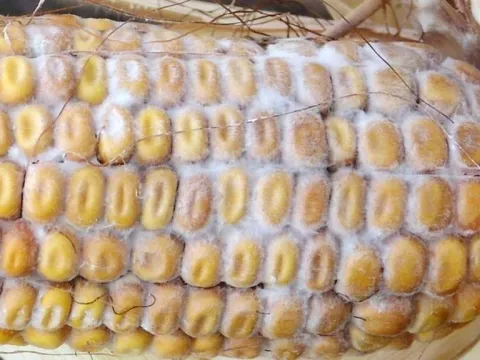
Diplodia ear rot
Stenocarpella maydis
Diplodia ear rot is caused by the fungus Stenocarpella maydis (formerly known as Diplodia maydis). This pathogen is a significant threat to maize production worldwide.
What the section contains
Diplodia ear rot
The fungus overwinters as mycelium and pycnidia (fruiting bodies) on crop residues, such as corn stalks, leaves, and ear shanks left in the field.
During the growing season, pycnidia produce conidia (spores) that are splashed by rain or dispersed by wind onto the ears and stalks of corn plants.
Once it infects the host, the pathogen colonizes the tissues, utilizing enzymes to break down plant cell walls, which leads to the characteristic rot of the plant parts.
The disease cycle is closely tied to moisture availability, which facilitates the germination of spores and the subsequent infection of susceptible corn tissues.
The most recognizable symptom is the presence of white, moldy fungal growth that typically starts at the base of the ear and spreads towards the tip.
Infected ears often appear light, shriveled, and may remain upright, with husks appearing tightly attached to the ear due to the fungal mycelium.
Small, black, pimple-like structures called pycnidia appear on the surface of husks, shanks, and stalks, serving as a reliable diagnostic sign for the disease.
Stalk rot occurs when the fungus infects the lower internodes, causing the internal tissue to turn brown and pithy, leading to stem breakage or lodging.
- White moldy mycelium growing on the corn ear.
- Formation of black pycnidia on the surface of husks and stalks.
- Premature yellowing and drying of the corn plant.
- Shattered or broken stalks due to internal tissue decay.
- Discolored, shriveled, and light-weight kernels.
Prolonged wet and humid weather, especially during the silking and grain-filling stages, is the primary factor favoring Diplodia ear rot outbreaks.
Temperatures ranging from 20°C to 30°C provide the optimal environment for the rapid development of the fungus within the corn tissue.
Continuous cropping of corn in the same field promotes the accumulation of pathogen inoculum in the soil and on surface debris.
High plant populations and poor field drainage can increase local humidity, creating a microclimate suitable for fungal growth and infection.
Mechanical injuries caused by insect feeding (e.g., European corn borer) provide entry points for the fungus to bypass plant defenses.
Diplodia ear rot causes significant grain yield losses by reducing kernel weight and quality, making the grain unusable or low-value.
Infected kernels are susceptible to further deterioration in storage if the grain is not dried properly to moisture levels below 15%.
The presence of the fungus in harvested grain can negatively impact marketability and may cause livestock feeding issues due to potential mycotoxins.
Stalk rot weakens the plant, resulting in lodging, which makes mechanical harvesting difficult and leads to further field losses during combine operations.
The overall reduction in crop uniformity and plant health significantly diminishes the economic return for the corn producer.
The most effective strategy is to plant corn hybrids with high resistance or tolerance to Diplodia ear rot, as susceptibility levels vary significantly.
Implementing a proper crop rotation program, where corn is rotated with non-host crops like soybeans, helps reduce the levels of inoculum in the field.
Tillage practices that incorporate corn residues deep into the soil can speed up the decomposition of infected material and decrease the survival of the fungus.
Ensuring adequate soil fertility and managing insect pests can improve overall plant health and minimize the number of infection sites.
Prompt harvesting and drying grain to safe moisture levels are essential steps to prevent the spread of the fungus during storage.