
Description
Symptoms
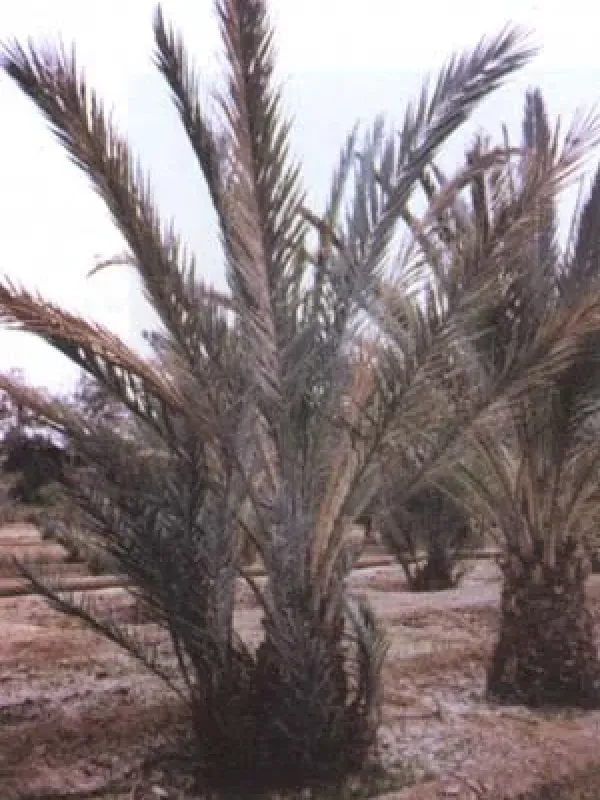
The first symptom is typically the yellowing and wilting of the fronds, starting from the lower part of the crown and progressing upward. This chlorosis is often followed by necrosis of the leaf blades.
Black, elongated lesions or spots appear on the petiole of the palm leaves. These are clear indicators of active fungal growth, as the pathogen destroys the structural integrity of the leaf stalk.
Small black bumps (pycnidia) can be seen on the affected tissues. These structures erupt through the epidermis, releasing mass quantities of fungal spores, especially after rainfall or heavy dew.
Stunting is a common sign as the disease progresses. The palm tree shows a lack of new growth, and the heart of the palm (apical meristem) may eventually be compromised, leading to tree death.
In advanced stages, the fronds turn brittle and brown, giving the tree a scorched appearance. The base of the fronds may decay, leading to the collapse of the crown of the palm.
Pathogen
The disease is caused by the fungus Diplodia phoenicum, a pathogen that specifically targets palm species. It primarily infects the vascular system and internal tissues, disrupting the transport of nutrients and water.
The fungus produces pycnidia, which are small fruiting bodies containing spores that are released during humid conditions. These spores serve as the primary inoculum for spreading the infection to neighboring trees.
It acts as a opportunistic pathogen, often waiting for the palm tree to be stressed due to drought, overwatering, or physical damage. Once it invades, the fungal mycelium colonizes the vascular tissue.
Biological resilience is a hallmark of this fungus. It can survive in dead tissue for extended periods, making it difficult to eradicate completely from an infected plantation or garden environment.
Transmission is frequently exacerbated by human activity, such as pruning with contaminated tools, which introduces the pathogen directly into the inner tissues of the plant.
Conditions for development
High humidity and poor air circulation are the primary factors that trigger the development of Diplodia phoenicum. Excessive moisture on leaf surfaces provides the perfect environment for spore germination.
Warm temperatures, generally between 20°C and 30°C, are optimal for the growth and reproduction of the fungus. Rapid changes in temperature can weaken the tree's natural resistance.
Overwatering or poorly drained soil conditions create stress, which makes the root system and the stem base more susceptible to infection by soil-borne or airborne inoculum.
Physical injuries caused by garden tools, climbing equipment, or insect boring are critical entry points. The fungus cannot easily penetrate healthy, intact tissue without these openings.
Inadequate sunlight and nutrient deficiencies reduce the palm's overall vigor. A healthy, well-nourished tree has a better chance of compartmentalizing infections and surviving the attack.
Why it matters
The economic impact of Diplodia palm leaf blight is significant, particularly in date palm plantations where production is reduced due to loss of photosynthetic surface area.
In landscaping, the damage is severe as the tree loses its aesthetic value and becomes a potential source of infection for other palms, making it a liability in public parks.
Without intervention, the infection eventually spreads to the crown, resulting in the terminal death of the tree. Replanting and restoring the area can take many years.
The disease complicates the management of large-scale palm collections. Constant monitoring and intensive sanitation measures are required to prevent widespread outbreaks (epiphytotics).
It also weakens the palm's structural integrity, increasing the risk of frond drop or limb collapse, which can pose a safety risk in high-traffic or public areas.
Protection
Sanitation is the most effective management strategy. All infected fronds and debris should be removed and destroyed immediately to minimize the spread of spores.
Always sterilize pruning equipment with a solution of bleach or alcohol after each cut. This prevents the mechanical transmission of the pathogen between trees.
Apply preventive copper-based fungicides during the rainy season or periods of high humidity to protect emerging growth from new infections.
Ensure good horticultural practices by maintaining proper spacing between palms to improve airflow and by avoiding over-irrigation that leads to water stagnation.
Strengthen plant immunity through proper fertilization and pest management. A tree protected from insect infestations is far less likely to be colonized by Diplodia phoenicum.
Pathogens and affected parts
Affects crops · 1
Discussion
No discussions yet — be the first.