
Diplodia gall cancer
Diplodia tumefaciens
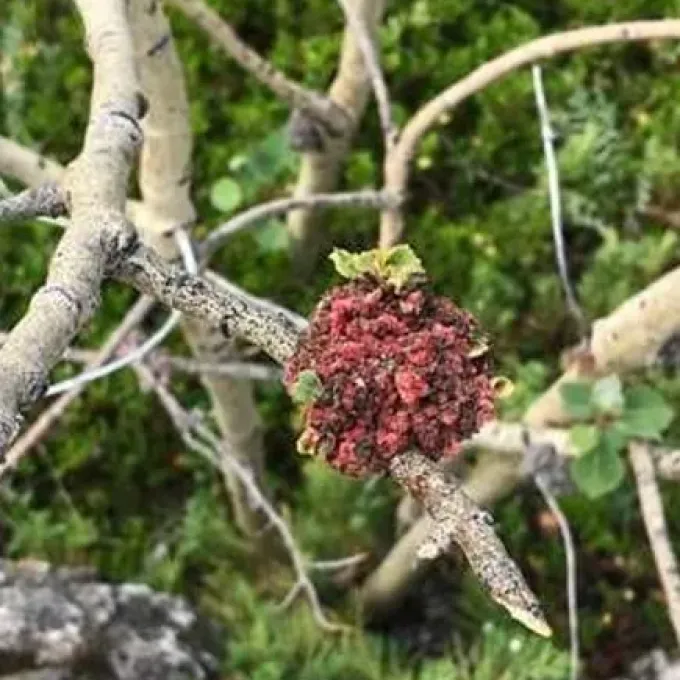
Description
Symptoms
The most distinctive symptom of the disease is the appearance of galls—abnormal, tumorous swellings of varying shapes and sizes on the branches and trunks of infected trees.
Early stages of the infection on young shoots manifest as slight bark swellings, which eventually develop into hard, rough, and deeply fissured growths over time.
As the galls expand, the bark covering them often splits or decays, while the underlying wood becomes necrotic, turning dark or brown as the fungus colonizes the internal tissues.
Infected branches often show reduced growth rates, with leaves becoming chlorotic, stunted, and dropping prematurely, resulting in sparse foliage on the affected parts of the canopy.
In advanced cases, galls can girdle the branch entirely, which disrupts the tree’s vascular system, leading to the death of the distal portion of the affected limb.
Pathogen
The causal agent of this disease is the fungus Diplodia tumefaciens (synonym Sphaeropsis tumefaciens). This phytopathogen primarily attacks various woody plants, leading to the development of characteristic tumor-like growths.
The fungus belongs to the coelomycetes class and reproduces via pycnospores, which are generated in pycnidia structures found within infected plant tissues or on the surface of galls.
The disease is classified as a branch cancer, where the host plant's tissues undergo abnormal cell proliferation, commonly known as hyperplasia, in response to the fungal infection.
The pathogen typically enters the host through wounds, such as pruning cuts, insect-induced damage, cracks in the bark, or mechanical injuries caused by adverse weather conditions.
The fungal mycelium can persist in the woody tissues for extended periods, allowing the disease to re-emerge and follow its infection cycle every year under favorable environmental conditions.
Conditions for development
Infection spreads primarily through the dispersal of pycnospores by rain splashes and wind gusts, which carry the fungal propagules to healthy sections of the host or neighboring plants.
High humidity and moderate temperatures during the active spring growing season provide the ideal environment for spore germination and successful colonization of the host.
The presence of open wounds—often resulting from hail damage, poor pruning practices, or boring insects—significantly increases the likelihood of the pathogen establishing itself.
Persistent wet weather encourages the mass release of spores from pycnidia, facilitating rapid infection spread across the tree canopy and throughout the orchard.
Trees that are already under stress due to poor soil fertility, drought, or low vigor are significantly more susceptible to infection compared to healthy, well-maintained specimens.
Why it matters
The primary damage caused by Diplodia gall cancer is the physical and physiological disruption of nutrient transport, which inevitably leads to branch decline and death.
Severe infections can compromise the structural integrity of the tree, eventually leading to widespread limb dieback and, in extreme cases, the death of the entire tree.
The disease significantly diminishes the aesthetic value of ornamental trees and reduces the yield and quality of fruit-bearing species, causing long-term economic losses.
Galls create micro-environments that are highly conducive to secondary infestations by wood-boring insects and saprophytic fungi, which further degrade the tree’s wood.
Managing the disease is labor-intensive and costly, requiring systematic removal of infected tissues and constant monitoring to prevent the total loss of valuable landscape assets.
Protection
The most effective management strategy is rigorous sanitary pruning: removing all branches with visible galls, cutting at least 15 cm into healthy tissue to ensure complete removal of the mycelium.
It is essential to disinfect pruning tools with alcohol or a copper-based solution between every cut to prevent the inadvertent transfer of spores to healthy branches.
All removed infected plant material must be burned or destroyed immediately, as the fungus remains viable for long periods even in dry, detached woody debris.
Preventive spraying with copper-based fungicides during the dormant period, especially in early spring before bud break, can help suppress spore germination.
Maintaining strong tree vigor through balanced fertilization, proper irrigation, and protection against mechanical damage is crucial for improving the host's natural resistance to the pathogen.
Discussion
No discussions yet — be the first.