
Diplodia shoot blight
Diplodia sapinea
Description
Symptoms
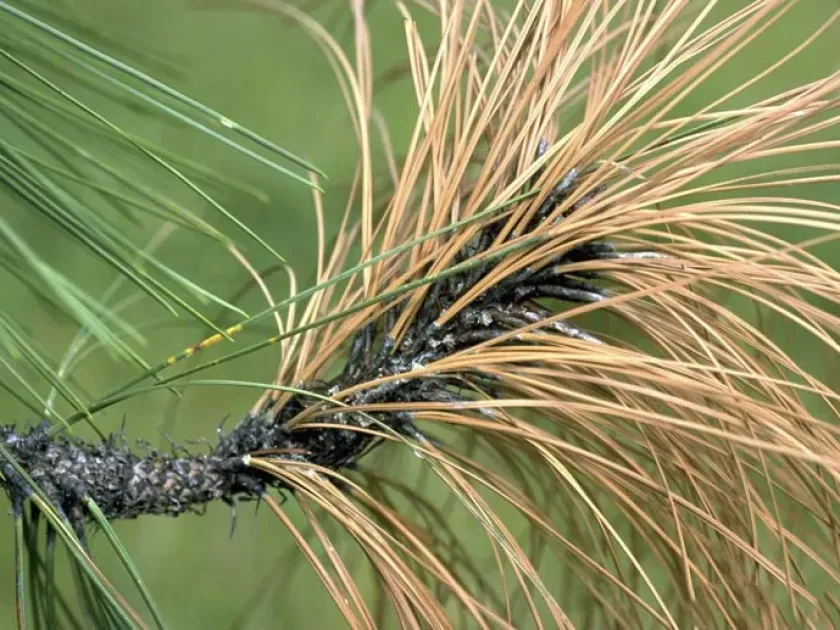
The initial symptoms are often seen in early spring, characterized by the stunting and browning of current-year shoots. The needles on these shoots eventually turn straw-colored and die while remaining attached to the twig.
A distinctive sign of Diplodia sapinea is the excessive resin flow (resinosis) on the stems and branches near the site of the infection, which often darkens the bark significantly.
Small, black, dot-like fruiting bodies (pycnidia) appearing on the surface of cone scales, needles, or the bark of dead twigs are definitive diagnostic features of the pathogen.
Infected shoots frequently exhibit a characteristic bending, forming a shape commonly described as a shepherd's crook, indicating that the vascular tissues have been severely compromised.
- Stunted and discolored needles.
- Heavy resin bleeding on stems and branches.
- Visible black pycnidia on dead plant parts.
- Premature needle drop and shoot death.
- Overall loss of tree vigor and canopy density.
Pathogen
The disease is caused by the fungus Diplodia sapinea (formerly Sphaeropsis sapinea). It is a widespread pathogen that significantly impacts various conifer species, particularly pines, throughout the world.
The fungus invades the plant through wounds, stomata, or natural openings in the bark and needles. It colonizes the xylem and phloem, disrupting nutrient flow and leading to necrotic tissue development.
As the fungus matures, it produces characteristic black fruiting bodies known as pycnidia. These are often visible on the scales of cones, dead needles, or the surface of affected twigs, serving as the primary source of spore dispersal.
Conidia are spread primarily by rain splash and wind, allowing the disease to move rapidly between branches and nearby trees during humid weather conditions.
The pathogen can survive as a saprophyte in fallen debris, which makes it a persistent threat that requires long-term monitoring and sanitation in conifer plantations and nurseries.
Conditions for development
Diplodia shoot blight thrives in warm and wet environmental conditions. High humidity and rainfall, especially during the bud break stage, are critical for spore germination and infection success.
Poor site conditions, such as high-density planting or low air circulation, contribute to the disease prevalence by maintaining moisture on the foliage and branches for extended periods.
Trees under stress due to drought, nutritional deficiencies, mechanical wounds, or insect attacks are significantly more susceptible to colonization by the fungus compared to healthy individuals.
Overhead irrigation in nursery settings or landscape designs often promotes the spread of the pathogen, as constant moisture on the needles facilitates the infection process.
The optimal temperature range for the pathogen's growth typically falls between 15°C and 25°C, which explains why the symptoms often become most prominent during the summer months.
Why it matters
The disease severely impacts the aesthetic value of ornamental conifers. Continuous shoot blight leads to thinning crowns, sparse foliage, and an overall neglected appearance of the trees.
If left unmanaged, the repeated infection of terminal shoots can result in tree deformity, stunted growth, and, in severe cases, the death of the entire plant over several growing seasons.
Infected trees often become prone to secondary infestation by bark beetles and wood-boring insects, which rapidly accelerate the decline and death of the host plant.
From an economic perspective, the disease causes substantial losses in timber quality due to wood degradation and reduces the marketability of nursery stock.
Management of large-scale outbreaks is labor-intensive and costly, necessitating significant investment in sanitation practices and chemical application programs.
Protection
The most important control measure is strict sanitation. All dead or dying twigs should be pruned back to healthy wood, and the debris must be disposed of or burned to eliminate the inoculum source.
Preventive fungicide treatments, particularly those containing copper or systemic azole compounds, should be applied during the spring growth flush to protect susceptible new shoots.
Promoting general tree vigor is essential; this includes proper fertilization, adequate mulching, and irrigation during dry spells to help the tree maintain its natural defense against fungal pathogens.
Effective pest management is required to prevent insect damage, as wounds are primary entry points for the fungus, and insects can act as mechanical vectors for the disease.
Selecting appropriate, site-adapted, and resistant conifer species for landscapes and plantations remains the best long-term strategy for minimizing the risk of Diplodia infection.
Discussion
No discussions yet — be the first.