
Striate earthstar
Geastrum striatum
Description
Symptoms
The striate earthstar (Geastrum striatum) is a fascinating fungus known for its star-like appearance. Its scientific classification belongs to the Geastraceae family, commonly recognized by its unique morphology.
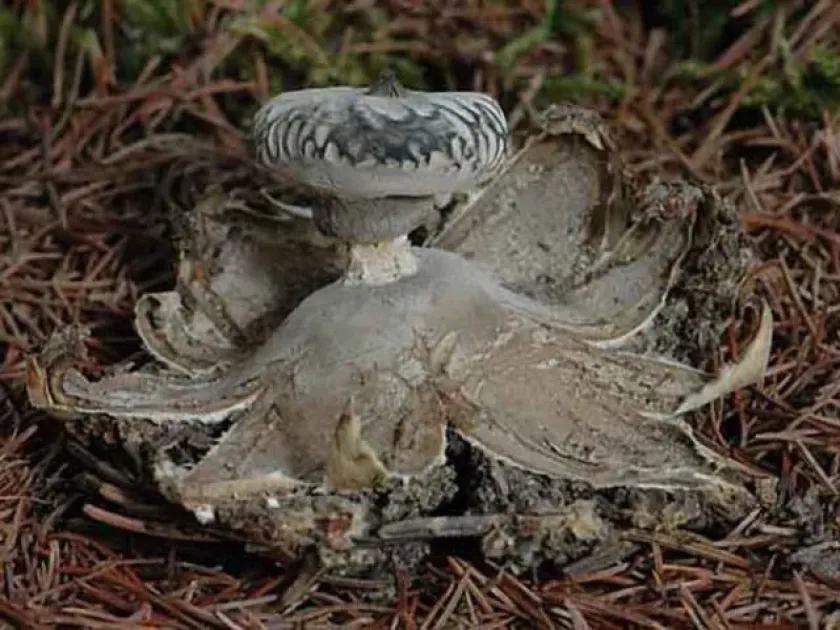
The fungus begins its life cycle as a small, subterranean spherical structure. As it matures, the outer layer splits into several segments that curl back, forming a star shape that pushes the central spore sac upward.
A distinctive feature of this species is the plicate (striated) zone surrounding the stoma (the spore-releasing hole). This specific texture is what differentiates it from other related earthstar species.
Inside the spore sac, the gleba contains the spores. When mature, the interior becomes a dark, dusty mass that is released through the apical pore as environmental triggers occur.
It is important to clarify that this fungus is a saprotroph and does not cause plant diseases. It plays a vital role in decomposing organic matter within its ecosystem.
Pathogen
The striate earthstar is not a plant pathogen. It does not infect, parasitize, or damage agricultural crops, ornamental plants, or forest trees in any capacity.
As a saprotrophic organism, it feeds on decaying organic material. This biological activity is essential for nutrient cycling in forest and garden soils, breaking down dead wood and leaf litter.
Its mycelium remains hidden within the soil substrate. Unlike parasitic fungi, it requires dead plant tissues to survive and propagate, showing no affinity for living vascular plants.
There is no known harmful impact of Geastrum striatum on the agricultural industry. On the contrary, it contributes to the healthy breakdown of compost and soil organic matter.
In the context of agronomical health, the presence of these fungi indicates a high level of biodiversity and active soil biological life, which is generally beneficial.
Conditions for development
This fungus thrives in environments with high organic content, such as leaf mulch, decaying wood, and undisturbed forest soils. It requires consistent moisture levels to produce its fruiting bodies.
The development of the fruiting body is typically triggered by late-season humidity and moderate temperatures. The mycelium can withstand dormancy during less favorable conditions.
Spore dissemination is passive, relying on environmental factors such as wind and water droplets hitting the spore sac to puff out the spores. It is rarely found in intensively cultivated fields.
Sustainable gardening and forestry practices often support these types of fungi. They do not require any control methods, as they are not pests or pathogens.
Understanding their role in the nitrogen and carbon cycle helps to appreciate the ecological health of the soil. Protecting such organisms helps maintain the balance of the local ecosystem.
Discussion
No discussions yet — be the first.