
Davidsoniella
Davidsoniella
The disease is caused by the microscopic ascomycete fungus of the genus Davidsoniella, which specifically targets the vascular tissue of trees. This pathogen is highly specialized and capable of causing systematic damage within the xylem.
What the section contains
Davidsoniella
Upon entry, the fungus colonizes the tree's conducting vessels, disrupting the flow of water and essential nutrients. It produces various toxins that accelerate the necrosis of plant tissues from within.
The life cycle involves multiple types of spores, which are highly mobile and easily spread via wind, water splash, and insect vectors. This facilitates the rapid colonization of new hosts in the vicinity.
The pathogen is known for its aggressive nature, allowing it to overcome the host's innate defense mechanisms. Its biology makes it difficult to eradicate once it has established itself deep within the woody stem.
Ongoing research continues to refine the classification of Davidsoniella species, providing a better understanding of their unique pathogenicity and host range across different climate zones.
A sudden wilting of the foliage is the primary clinical sign of infection. Leaves often turn brown and dry out while remaining attached to the twigs, creating a characteristic appearance of "scorched" branches.
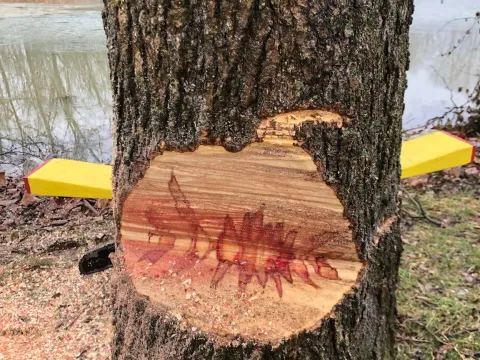
Cross-sections of infected branches or trunks reveal visible discoloration of the wood, where the vascular tissue exhibits distinct brown or dark streaks. This indicates the internal blockage of conducting vessels.
Trees may attempt to combat the infection by exuding resin or gum at points of injury or along the trunk. However, this physiological response is often insufficient to contain the rapid advancement of the fungal mycelium.
As the disease progresses, the bark may show signs of cracking and necrosis. Fruiting bodies of the fungus may also emerge, appearing as small, dark structures on the surface of the dying tissue.
Without intervention, the canopy dies back progressively, eventually leading to the total death of the tree within a relatively short period, often within one or two growing seasons.
High humidity and mild to warm temperatures provide the ideal environment for the activation of fungal spores and the subsequent colonization of the host plant. The fungus is most active during the peak growth months of the tree.
Mechanical injuries to the bark, caused by storms, pruning, or animal damage, serve as primary infection points. Any compromise to the integrity of the tree's outer layer significantly increases the risk of successful entry.
Insects that bore into wood are major vectors for Davidsoniella. Their feeding activity effectively inoculates the tree with fungal spores, facilitating deep penetration into the tree's internal vascular system.
Poor horticultural practices, particularly the use of contaminated pruning tools, are a leading cause of human-mediated transmission. Without proper disinfection, tools spread the pathogen from tree to tree.
Stress factors, such as drought, nutrient deficiency, or improper site conditions, weaken the tree's natural resilience, making it significantly more susceptible to infection by this aggressive pathogen.
The pathogen causes significant economic losses by killing valuable fruit and timber trees. The severity of the disease often leaves removal as the only viable option for management.
Beyond the loss of individual trees, the disease can devastate local landscapes and ecosystems, reducing biodiversity and the carbon-sequestration capacity of affected forest stands.
Infected wood loses its structural integrity and commercial value, leading to financial losses for landowners and forest management industries. It cannot be salvaged for high-quality purposes.
The management costs involved in monitoring, professional tree removal, and preventing further spread place a significant burden on municipal budgets and commercial orchard operators.
The ecological impact is further exacerbated by the potential for the pathogen to establish long-term reservoirs in deadwood, threatening subsequent new plantings on the same site.
Strict sanitary management is the most effective approach. This includes the immediate removal and destruction of infected trees, ensuring the root systems are also addressed to prevent transmission.
Sterilization of pruning tools using appropriate chemical disinfectants between every cut is crucial to prevent the mechanical transmission of spores among trees.
Proactive tree care, focusing on maintaining optimal vigor through correct fertilization and irrigation, is essential. Strong, healthy trees are better equipped to resist and defend against fungal infections.
Integrated pest management to control wood-boring insects is vital for reducing the primary vectors that facilitate the introduction of the fungus into the plant tissues.
- Continuous monitoring for early symptoms of wilting.
- Avoidance of pruning during periods of high insect activity.
- Use of certified, disease-free nursery stock.
- Quarantine of affected areas to limit spore movement.
- Application of protective sealants on necessary pruning wounds.