
Davisomycella ampla
Davisomycella ampla
Davisomycella ampla is an ascomycete fungus that acts as an obligate parasite, primarily targeting various species of pine trees. It is known to cause specific types of needle cast in pine forests and nurseries.
What the section contains
Davisomycella ampla
The life cycle of the pathogen is closely tied to the host's physiological stages. It produces fruiting bodies (apothecia) on the needles, which serve as the primary source of infection for new growth.
The fungus colonizes the internal tissues of the pine needles after entering through the stomata. Once established, it derives nutrients directly from the host cells, leading to tissue degradation.
Environmental stability allows the fungus to persist in fallen needles on the forest floor, maintaining a continuous inoculum source for subsequent seasons.
Spore dispersal is highly dependent on environmental moisture, specifically rain-splash, which carries the infectious material to susceptible needles on the same or neighboring trees.
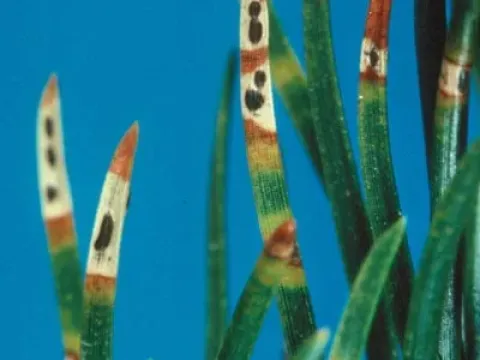
Initial symptoms are characterized by a subtle chlorosis of the needles, which later progress into distinct tan, yellow, or reddish-brown discoloration.
Distinctive black, elongated fruiting structures emerge on the surface of the infected needles, often arranged in lines or patches. These structures are visible to the naked eye upon close inspection.
Premature needle cast is a hallmark of this disease. Affected trees exhibit a sparse crown, particularly in the lower and inner sections where humidity levels tend to remain higher.
Unlike some other fungal pathogens, the infection is most evident on older needles (second-year foliage), leaving the current year’s growth relatively unaffected until later in the season.
In severe cases, the needles may appear shriveled or twisted as the fungal mycelium consumes the cellular content, significantly reducing the tree’s photosynthetic capacity.
The disease thrives in environments characterized by high relative humidity and frequent rainfall, which facilitate the germination of fungal spores.
Poor air circulation within dense plantations or nurseries acts as a primary catalyst for the rapid spread of the disease among individual trees.
Cool to moderate temperatures, typically between 15°C and 20°C, are optimal for the growth of the pathogen's mycelium within the host tissue.
Prolonged wet weather during late spring and early summer represents the most critical period for the establishment of the infection.
Trees that are already under stress due to nutrient deficiencies, drought, or poor soil conditions are significantly more susceptible to successful colonization by the fungus.
The primary impact of Davisomycella ampla is the premature loss of foliage, which dramatically reduces the tree's ability to produce energy through photosynthesis.
In forest nurseries, this pathogen can lead to severe stunting or death of seedlings, causing significant economic losses for commercial pine growers.
Repeated defoliation cycles weaken the tree's physiological defense systems, making it highly vulnerable to secondary attacks by bark beetles and other wood-boring insects.
Long-term infections result in reduced timber quality and increment loss, affecting the overall economic value of forest stands.
The aesthetic degradation of landscape trees and recreational forest areas due to thinning crowns and persistent browning of needles is a major concern for forest managers.
Sanitation is the most effective management strategy; this includes the collection and destruction of fallen needles to remove the primary source of inoculum.
Proper silvicultural practices, such as maintaining optimal stand density, are essential to improve airflow and reduce the humidity levels that favor fungal development.
Chemical control involving copper-based fungicides or appropriate systemic treatments can be utilized in nurseries to protect high-value stock during peak infection periods.
Regular inspections, especially in younger stands, allow for early detection and targeted intervention before the disease reaches epidemic proportions.
- Removing and burning highly infected branches or debris.
- Ensuring adequate spacing between trees for better ventilation.
- Monitoring weather patterns to time preventative fungicide applications.
- Selecting more resistant pine varieties for new planting programs.