
Davisomycella ponderosae
Davisomycella ponderosae
Description
Symptoms
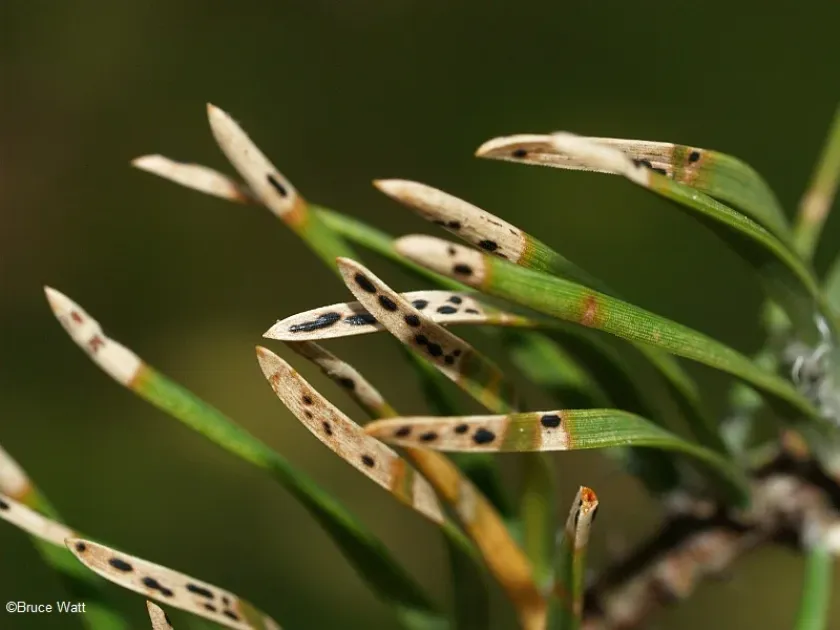
The primary symptom is the discoloration of needles, which change from healthy green to yellow, and eventually to a light brown or tan shade.
Dark, elongated black lines or spots appear on the surface of the infected needles. These structures are the fungal stromata where spores are produced.
Premature needle cast is a common sign of a severe infection. The needles drop off the tree earlier than they normally would, resulting in sparse foliage.
Growth reduction is often observed in heavily infected trees, as the loss of functional needles prevents the tree from performing photosynthesis efficiently.
- Needle yellowing and browning.
- Presence of distinct black fungal stromata.
- Premature defoliation of needles.
- Stunted growth of new terminal shoots.
- Increased susceptibility to secondary pests.
Pathogen
The causative agent of the disease is the ascomycete fungus Davisomycella ponderosae. It belongs to the order Rhytismatales and is a specialized pathogen affecting various pine species.
The fungus completes its life cycle within the needle tissues. After the spores land on healthy needles, they germinate and penetrate the epidermal layer to establish fungal colonies.
The fungus acts as a biotroph, extracting nutrients from the host's cells, which leads to tissue deterioration and the formation of visible fruiting bodies.
The fungus survives the off-season within fallen needles, where it continues to develop until environmental conditions trigger the release of new infectious spores.
This species is highly adapted to pine hosts, often causing chronic infections that persist in the forest environment year after year.
Conditions for development
Moist and humid environments are the main drivers for the development of Davisomycella ponderosae. Rainfall is essential for spore dispersal and successful infection.
Dense stand architecture hinders air circulation, creating a stagnant microclimate that traps moisture and favors fungal colonization of the pine needles.
Temperature plays a critical role in the timing of spore germination. Mild, wet springs usually result in higher infection rates compared to dry seasons.
Wind is the primary mechanism for the long-distance spread of fungal spores. Rain splash also contributes to the localized movement of the pathogen within the canopy.
Trees that are under stress—due to nutrient deficiency or drought—are generally more vulnerable to the pathogen compared to vigorous, healthy trees.
Why it matters
The main damage is the premature loss of foliage, which leads to a significant decrease in the tree's photosynthetic capacity and overall energy reserves.
Prolonged infection cycle reduces the tree's vigor and growth rate, making it struggle to compete in the forest environment and increasing the risk of mortality.
Infected trees become weakened, providing an entry point for secondary infestations by bark beetles or wood-boring insects that can kill the host.
In forest nurseries, this blight can be devastating, destroying seedlings and causing substantial economic losses in timber and reforestation operations.
The disease also affects the visual quality of parklands and ornamental forests, where the aesthetic value of the pine trees is highly prioritized.
Protection
The most effective management strategy involves the sanitation of the forest floor, including the removal and disposal of infected fallen needles to eliminate the inoculum source.
Thinning operations are recommended to improve airflow within the canopy, which helps to reduce humidity levels and limits the success of fungal spore germination.
Fungicide applications are generally reserved for high-value areas, such as nurseries or ornamental landscapes, where timing must coincide with the spore release period.
Promoting tree health through appropriate fertilization and water management can bolster the host's natural resistance to the pathogen.
Regular monitoring of forest stands allows for the early detection of the disease, enabling managers to take prompt action before the blight becomes an outbreak.
Discussion
No discussions yet — be the first.