
Datronia
Datronia
Description
Symptoms
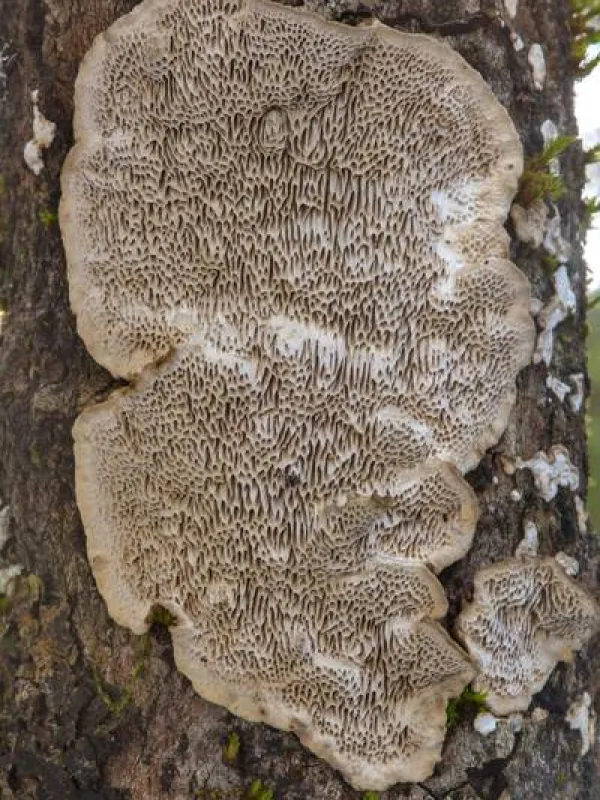
The primary external sign of infection is the presence of fungal fruiting bodies on the bark of affected trees. These bodies have a greyish, brownish, or ochre color and a distinct porous surface.
Infected wood areas show a change in natural color, typical of white rot. The tissues become soft, fibrous, and lose their natural structural integrity.
Where spores are released, the bark surface may be covered with a specific fungal layer. Deep-seated infections often cause cracks and bark peeling, which are visible indicators of severe internal decay.
At later stages, the tree shows signs of general decline: premature leaf drop, dieback of individual branches, and reduced annual shoot growth.
When examining cross-sections of infected wood, white patches or strands of mycelium are visible throughout the infected areas, indicating active colonization of the vascular system.
Pathogen
Datronia is a genus of polypore fungi belonging to the family Polyporaceae. It is primarily a saprotrophic or weakly parasitic fungus that develops on dead or weakened wood.
The pathogen typically presents as annual or perennial fruiting bodies with a leathery or corky texture. The most common species found on infected trees is Datronia mollis.
This fungus actively produces enzymes capable of breaking down complex wood components, such as lignin and cellulose. Its spores are spread by air currents, facilitating rapid dispersal in forests and orchards.
Mycelial growth occurs within the wood tissues, where it gradually replaces the normal structure of the trunk. The fungus mycelium can persist deep within the wood for long periods, waiting for favorable conditions to fruit.
The type of disease caused by this fungus is classified as white rot. It is characterized by the degradation of wood fibers, which significantly weakens the tree trunk and increases susceptibility to mechanical failure.
Conditions for development
Fungal development is closely linked to high air humidity and sufficient moisture within the woody debris. Prolonged rainfall and fog facilitate spore germination on areas of damaged bark.
Datronia prefers moderately warm temperatures, which are optimal for the fungus's metabolic processes. Under these conditions, the growth rate of fruiting bodies increases significantly.
Trees weakened by mechanical injuries, frost cracks, or sunscald are most susceptible to infection. Lack of proper bark maintenance facilitates the entry of the pathogen.
The fungus actively reproduces on trees growing in poorly aerated environments, such as dense or neglected stands. Moisture accumulation in the lower canopy creates an ideal microclimate for germination.
The presence of large amounts of plant debris, such as logs and old stumps, serves as a reservoir for infection, allowing spores to spread to nearby healthy trees.
Why it matters
The primary damage consists of the gradual destruction of the structural integrity of the trunk and branches. Due to the development of white rot, the wood loses density, leading to a high risk of windthrow.
Infection impedes normal sap flow, leading to gradual depletion of the plant. The tree becomes less resistant to frost and other environmental stress factors.
The infection can lead to premature tree death within a few years. Even if the tree continues to live, it loses all decorative or economic value.
Infected plants become a source of spore dispersal for neighboring healthy trees, requiring urgent sanitation measures. Ignoring the problem leads to the loss of a significant portion of the stand.
Economic losses are reflected in the cost of removing large trees and conducting comprehensive forest pathology management on the site.
Protection
The most important prevention method is timely sanitary pruning of trees. All damaged, dead, and fungus-infected branches must be removed and destroyed by burning.
All cut surfaces and mechanical bark injuries should be treated with antiseptics, grafting wax, or specialized fungicidal compounds to prevent infection.
Maintaining a clean garden by regularly removing fallen branches, logs, and rotting stumps is essential, as these are the primary sources of Datronia spores.
Regular preventive spraying with broad-spectrum fungicides is recommended, especially during periods of high humidity when the risk of infection is at its peak.
To treat trees in the early stages of infection, one should excise the infected tissue down to healthy wood, followed by disinfection and sealing with oil-based paint.
Discussion
No discussions yet — be the first.