
Davisomycella
Davisomycella
The disease is caused by fungi of the genus Davisomycella (such as Davisomycella ampla), which are obligate parasites primarily affecting pine species. They belong to the Ascomycota phylum and are known for their host-specific nature.
What the section contains
Davisomycella
The life cycle of the pathogen is closely integrated with the development of the host's needles. Once the spores germinate on the surface, the fungus enters the internal tissues, where it develops its mycelium throughout the needle.
The fungus produces sexual reproductive structures called apothecia, which erupt through the needle epidermis. These structures serve as the primary source of inoculum, releasing spores that spread via wind and rain splash.
Persistence is a key trait, as the fungus can remain viable in fallen pine needles for several years. This creates a persistent reservoir of infection that can initiate new outbreaks annually.
By absorbing essential nutrients directly from the needle cells, the fungus weakens the tree's overall metabolism, which eventually leads to the death of the colonized tissue and premature needle shedding.
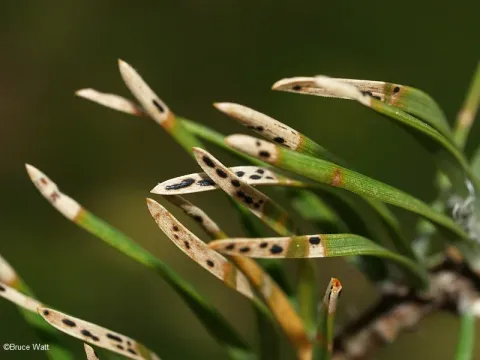
Initial signs of Davisomycella infection include discoloration of the needles, which fade from green to yellow and eventually to a dull brown or tan color. This discoloration typically appears on needles that are at least one year old.
A hallmark symptom is the presence of elongated, black, or dark-brown fungal fruiting bodies (stromata) that emerge linearly along the midrib of the infected needles.
Premature needle cast is a defining feature of the disease. Heavily infected trees lose their older needles prematurely, leading to a sparse, thin canopy that lacks its usual dense appearance.
The needles may remain attached to the branch for some time after the fungus has caused severe tissue death, giving the tree a disheveled and sickly appearance before they eventually drop.
Under close observation, the infected needles exhibit a bumpy texture where the fungal structures have forced their way through the skin of the pine leaf, causing the epidermis to rupture.
High humidity and prolonged periods of wet, rainy weather during the growing season are the primary catalysts for the spread and infection of Davisomycella.
Stagnant air and poor circulation within the canopy create an ideal microclimate for the fungus to thrive. Dense plantations often suffer more because moisture remains on the needles for longer periods.
Trees that are stressed due to poor soil conditions, drought, or competition for light are significantly more susceptible to infection compared to healthy, vigorous trees.
The presence of significant pine litter beneath the trees serves as the primary inoculum source, as it provides a moist environment for the fungus to complete its reproductive stages.
Temperatures ranging from 15°C to 22°C (approx. 60-72°F) are considered optimal for the rapid germination of spores and the subsequent colonization of new, succulent needle growth.
The most significant impact is the reduction of the tree's photosynthetic capacity caused by premature needle loss. This directly translates to lower energy production and stunted growth.
Persistent infection over several growing seasons can lead to a drastic decrease in height and diameter growth, which is particularly detrimental to young plantations and forest regeneration projects.
In ornamental settings, the disease ruins the aesthetic value of the trees by causing thinning of the canopy and persistent browning of the foliage, making them unsuitable for landscaping.
Severely weakened trees are much more prone to secondary infestations by bark beetles and other wood-boring insects, which can quickly become a lethal threat to the entire tree.
For timber production, Davisomycella infection decreases the overall productivity and quality of the wood, resulting in substantial financial losses for forest managers over the long term.
The primary control measure is rigorous sanitation: raking up and burning or disposing of all fallen needles to remove the fungal inoculum from the environment.
Sanitary pruning of the lower, infected branches can help improve airflow within the canopy and reduce the immediate proximity of the pathogen to the rest of the tree.
Chemical control involving copper-based fungicides or other systemic treatments may be necessary in nurseries or high-value landscapes to protect new growth during the infection window.
Proper site selection and maintaining optimal planting density are crucial. Ensuring adequate spacing between trees allows for better ventilation and sun exposure, which inhibits fungal growth.
Regular monitoring for symptoms, especially during the humid spring months, allows for early intervention, preventing the infection from spreading across larger areas or plantations.