
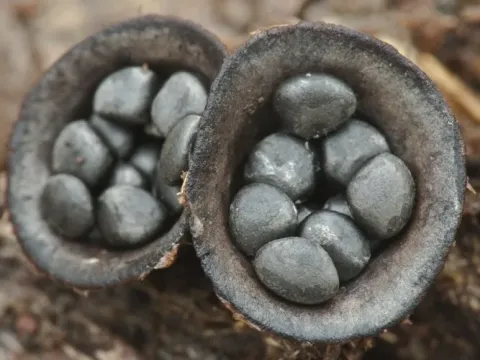
Dung bird's nest fungus
Cyathus stercoreus
Cyathus stercoreus, commonly known as the dung bird's nest fungus, is a member of the Agaricaceae family. It is a saprotrophic fungus that thrives on decaying organic matter, particularly manure or compost.
What the section contains
Dung bird's nest fungus
In agronomy, it is categorized as a saprotroph rather than a primary plant pathogen, meaning it primarily feeds on dead organic materials within the soil.
The fungus is biologically notable for its fruiting bodies, which resemble small cups or bird's nests containing spore-filled structures called peridioles.
The mycelium of this fungus spreads extensively through substrates containing high levels of undigested organic fibers.
While not directly infectious to healthy live plants, its presence indicates specific environmental conditions that may not be optimal for crop development.
The most distinctive sign of Cyathus stercoreus is the emergence of cup-shaped fruiting bodies, often 5–15 mm in diameter, appearing on the soil surface.
These fruiting bodies are typically brownish and hairy on the outside, with a smooth, dark, and shiny interior that holds the spore packets.
White, thread-like mycelial strands are often visible within the growing medium, connecting decaying organic particles under the surface.
In humid greenhouses, the presence of these fungi is often accompanied by a distinct, earthy, or musty fungal odor near the pots or soil beds.
The sudden appearance of these "nests" usually indicates a high concentration of undecomposed organic matter in the substrate mix.
This fungus requires high moisture levels and warm temperatures, typically ranging from +18°C to +25°C, to trigger the development of its fruiting bodies.
High levels of raw organic matter, such as fresh manure or straw, act as a primary food source for the fungal colonization.
Poor ventilation and constant soil dampness in greenhouse environments facilitate the rapid spreading of the mycelium.
Often, the fungus is introduced into an agricultural setting through contaminated or poorly composted organic fertilizers.
Once established in a substrate, it can persist until the organic matter is completely exhausted or environmental conditions change.
The dung bird's nest fungus does not typically cause direct disease in crops, but it can negatively impact plant health by competing for resources.
The dense mycelial network can occupy soil space and consume nutrients intended for the plant roots, potentially slowing down crop growth.
In professional nursery settings, the appearance of these fungi is considered an aesthetic issue, significantly lowering the commercial value of pot plants.
The high activity of saprotrophic fungi can sometimes disrupt the desired balance of the soil microbiota, leading to poor soil structure.
Continued presence of such fungi might suggest that the irrigation or fertilization practices are providing excessive resources for non-target organisms.
The most effective management strategy is to ensure that all organic substrates and composts are thoroughly decomposed before use.
Proper greenhouse management, including adequate ventilation and avoiding excessive moisture, helps create an unfavorable environment for the fungus.
Heat sterilization or steam treatment of the soil mix is highly recommended to eliminate spores before planting sensitive crops.
If fruiting bodies are identified, they should be promptly removed by hand along with the surrounding substrate to prevent spore dispersal.
Maintaining high hygiene standards in growing areas and avoiding the use of fresh manure significantly reduces the risk of infestation.