
Description
Symptoms
The first external symptom is often "flagging," where leaves on one or more branches yellow, wilt, and curl during the late spring or summer months.
A diagnostic sign can be found by peeling back the bark of affected branches to reveal brown or black streaks and discoloration within the outer wood rings.
Over time, the infection spreads throughout the canopy, causing progressive dieback until the entire tree succumbs to the disease and dies.
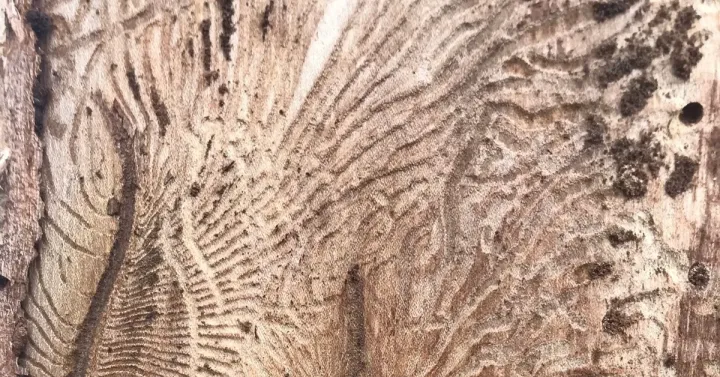
Infestation by elm bark beetles is usually present in diseased trees, evidenced by small exit holes in the bark and galleries underneath the surface.
In chronic cases, an infected tree may show signs of stress over several years, with sparse foliage and dead twigs appearing in the upper sections of the crown.
Pathogen
Dutch elm disease is a devastating fungal infection caused by members of the Ophiostoma ulmi and Ophiostoma novo-ulmi species, which colonize the tree's vascular system.
The fungus produces conidia and spores within the xylem vessels, causing a blockage that prevents the transport of water and nutrients throughout the tree.
The disease is highly aggressive, with Ophiostoma novo-ulmi being particularly virulent, capable of killing mature elm trees in as little as one growing season.
The pathogen can persist for long periods in infected wood, logs, or stumps, providing a constant reservoir for infection in urban and forest environments.
Once the fungus enters the tree, it releases toxins that trigger the tree's own defense mechanisms, which eventually contribute to the blockage of conductive tissues.
Conditions for development
The spread of the disease is predominantly driven by elm bark beetles, which transport fungal spores from infected to healthy trees while feeding on young twigs.
Fungal transmission can also occur through root grafts, where the roots of adjacent elm trees intermingle, allowing the pathogen to move directly between individuals.
Warm and humid weather conditions are ideal for both beetle activity and fungal development, which is why outbreaks are more frequent in such climates.
Stressed or damaged trees are more susceptible to beetle attacks, making them primary targets for the fungus in disturbed urban landscapes.
Movement of infected elm wood by humans is a major factor in the long-distance transmission of the disease to previously unaffected geographic areas.
Why it matters
Dutch elm disease is one of the most destructive tree diseases known, resulting in the loss of millions of elm trees in North America and Europe.
The ecological impact is severe, as elms are vital components of riparian corridors and urban forests, providing shade and wildlife habitat.
Financial losses for municipalities and private landowners include the high costs of tree removal, stump grinding, and the replacement of lost canopy cover.
The aesthetic value of landscapes is significantly diminished when mature, majestic elms die, leading to a permanent change in the visual character of the environment.
Furthermore, the rapid death of these trees creates dangerous situations in public spaces due to the risk of falling branches and collapsing trunks.
Protection
Sanitation is the most critical management strategy, involving the immediate removal and proper disposal of infected trees to eliminate breeding sites for beetles.
In high-value trees, systemic fungicide injections can be used as a preventative measure to protect trees from infection by blocking fungal growth within the xylem.
Root trenching or cutting between adjacent trees is recommended to sever root grafts and prevent the spread of the fungus through underground connections.
Integrated Pest Management (IPM) programs often utilize beetle pheromone traps to monitor and reduce local beetle populations, thereby lowering the risk of disease spread.
- Prioritize planting resistant or tolerant elm cultivars developed through selective breeding.
- Avoid pruning elms during the peak beetle flight season to minimize attraction.
- Regularly monitor trees for early symptoms of flagging or crown dieback.
Pathogens and affected parts
Affects crops · 1
Discussion
No discussions yet — be the first.