
Durvillea
Durvillea
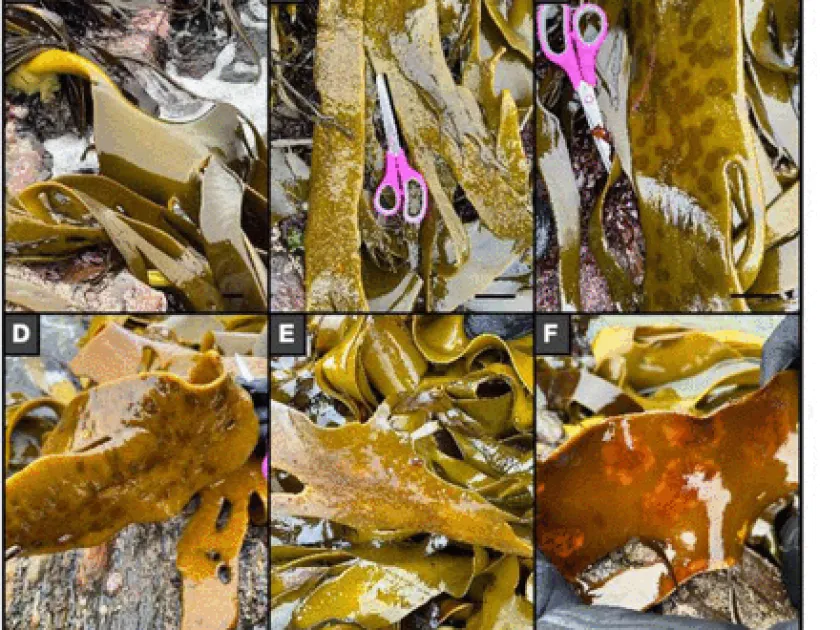
Description
Symptoms
Since Durvillea is a type of seaweed, it does not show symptoms of infection that a gardener or agronomist would recognize on land plants.
A healthy plant of Durvillea appears as a tough, leathery blade with a strong holdfast, naturally adapted to withstand ocean currents.
Any perceived signs of deterioration on these algae are part of their natural growth cycle or reactions to the marine environment.
Phytopathologists do not include this genus in any lists of threats to crop health.
Recognizing the health of marine algae falls under the domain of marine science, rather than commercial agriculture.
Pathogen
It is important to clarify that Durvillea (lat. Durvillea) is not a plant disease or a pathogenic agent. It is a genus of large brown macroalgae (kelp) that inhabits the cold waters of the Southern Hemisphere.
These organisms belong to marine flora and have absolutely no biological connection to the fungi, bacteria, or viruses that infect terrestrial agricultural crops.
Confusion often arises when botanical names are incorrectly searched in agricultural databases, leading to misconceptions about their nature.
Biologically, Durvillea is a complex multicellular organism specialized for high-energy coastal environments.
From an agronomical standpoint, this organism cannot be classified as a disease, as it does not affect any agricultural species.
Conditions for development
The conditions required for Durvillea include high-salinity seawater, cold temperatures, and rocky shorelines.
These requirements are fundamentally different from the ecological niche occupied by pathogens that attack crops.
These algae do not propagate through agricultural equipment, seeds, or soil, making them irrelevant to farm health protocols.
Development depends entirely on oceanographic conditions, which are outside the scope of agricultural management.
They are sensitive to water quality and marine pollution rather than terrestrial fungicides or pesticides.
Why it matters
There is no harm caused by Durvillea to agriculture, as it is a strictly marine organism.
In fact, seaweed derivatives are often used to produce bio-stimulants that support the health of cultivated plants.
Claims suggesting that this organism is a plant disease are scientifically baseless.
No economic damage to farming enterprises is associated with this genus.
The role of Durvillea is purely ecological and commercial within the seaweed harvesting industry.
Protection
No protection measures are necessary for Durvillea, as it is not an agricultural pathogen.
Agro-professionals should focus their resources on managing verified pests and pathogens like rusts, blights, or mildews.
If you encounter sources labeling Durvillea as a disease, these sources should be considered inaccurate.
Crop protection strategies remain unaffected by the biology of marine algae.
Always verify plant health information through official agricultural organizations and established scientific databases.
Discussion
No discussions yet — be the first.