
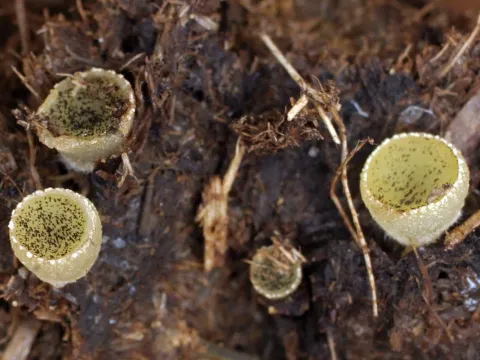
Dung ascobolus
Ascobolus stercorarius
Dung ascobolus (Ascobolus stercorarius) is a coprophilous ascomycete fungus that thrives on the excrement of herbivorous animals.
What the section contains
Dung ascobolus
The fungus propagates through spores that are hardy enough to survive passing through the digestive tracts of animals, facilitating widespread dispersal across agricultural lands.
The mycelium colonizes nutrient-rich organic substrates, breaking down cellulose and nitrogenous compounds as part of the ecosystem's decomposition cycle.
While not a primary pathogen of agricultural crops, its presence is a reliable biological indicator of the maturity and quality of organic amendments used in farming.
Understanding the life cycle of Ascobolus stercorarius is crucial for integrated organic management, as it reflects the microbial health and nutrient profile of the soil environment.
The most distinctive signs are the apothecia—small, cup-shaped or disk-like fruiting bodies that emerge on the surface of manure or enriched soil.
In early stages, these structures are yellowish or greenish, becoming darker as they mature and begin the active discharge of spores.
The surface of the apothecia often appears spotted or speckled due to the protruding asci, a feature that can be identified with basic field observation.
Large clusters of these fruiting bodies can cover the surface of manure piles, particularly in high-humidity microclimates common in livestock areas.
The presence of the fungus often correlates with specific textural changes in the substrate, reflecting the high metabolic activity of the underlying fungal colony.
Development is heavily favored by high moisture levels and the availability of fresh manure, which provides a concentrated source of nutrients.
The fungus thrives within a moderate temperature range of 15°C to 25°C, typical for spring and autumn seasons in temperate agricultural climates.
Insufficiently composted manure, stored under conditions that maintain moisture, acts as the primary reservoir for the continued proliferation of the species.
Poor soil drainage and high humidity levels in fields or greenhouse environments significantly increase the risk of rapid colonization by Ascobolus stercorarius.
Lack of proper field sanitation, including leaving large amounts of untreated organic waste, provides the necessary ecological niche for the fungus to complete its life cycle.
The direct damage to crops is negligible; however, the fungus indirectly affects soil health by altering the rate of decomposition of essential organic matter.
Competition with beneficial microbes in the soil can be a side effect, potentially impacting the efficiency of nutrient uptake by plant root systems.
The presence of abundant fungal activity can indicate poorly managed organic fertilizers, which may lead to reduced yields if nutrient availability is compromised.
In intensive farming, the accumulation of coprophilous fungal spores can be perceived as an indicator of low-quality sanitation practices in the supply chain of fertilizers.
Economic impact is primarily associated with the need for better composting infrastructure and the potential loss of nutrient stability in unmanaged organic layers.
Effective control is achieved through high-temperature composting, where temperatures above 60°C ensure the destruction of fungal spores before application.
Farmers should prioritize the use of fully matured manure or well-rotted compost to prevent the introduction of opportunistic fungi into the growing environment.
In pastures and fields, practices such as harrowing or mechanical breaking of manure heaps accelerate drying and mineralization, effectively suppressing the fungus.
Proper storage of manure in dry, covered facilities helps maintain quality and prevents the moisture levels required for the colonization by Dung ascobolus.
No chemical fungicides are recommended; the focus remains entirely on agronomic management to disrupt the environmental conditions essential for the fungus.