
Dutch Elm Disease
Graphiaceae
Dutch Elm Disease (DED) is a severe vascular wilt caused by the ascomycete fungi Ophiostoma ulmi and the more aggressive Ophiostoma novo-ulmi.
What the section contains
Dutch Elm Disease
The fungus colonizes the tree's xylem, inducing a systemic infection that eventually blocks the transport of water and essential nutrients.
In response to the fungal invasion, the tree produces gums and tyloses within its vessels, which unintentionally accelerates the wilting process.
The pathogen is primarily transmitted by elm bark beetles, which transport fungal spores from infected to healthy trees while feeding or breeding.
The life cycle of the pathogen is highly dependent on both the beetle vector and the host tree's ability to resist the spreading fungal mycelium.
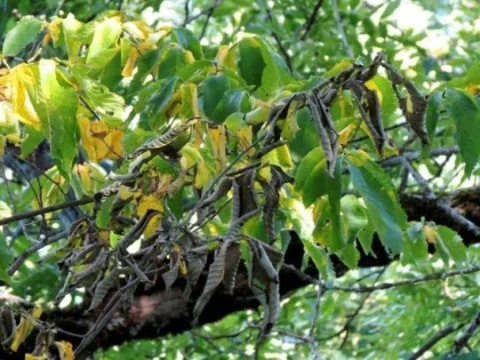
Initial symptoms include flagging or drooping of leaves on one or more branches, usually appearing during the peak of the growing season.
Leaves on infected branches often turn yellow, curl, and then brown, creating a distinct look that mimics premature autumn coloration.
Underneath the bark of affected branches, one can observe diagnostic brown or black streaking in the sapwood, representing the damaged vascular tissue.
Over time, the infection spreads throughout the canopy, causing massive limb dieback and eventually leading to the death of the entire tree.
Cross-sections of diseased trunks show dark concentric rings or spotted patterns, which are indicative of the fungus's deep penetration into the wood.
Warm, dry summers are highly conducive to the spread of DED as they favor the flight activity of bark beetles and weaken tree defenses.
The disease thrives in environments where large populations of elm bark beetles coexist with susceptible host trees, facilitating rapid transmission.
Urban landscapes with high densities of elm trees increase the risk of spread via natural root grafting, where roots of adjacent trees fuse.
Physical injuries to the bark caused by pruning or storms provide easier access for beetles, which can introduce spores into the tree.
Poorly maintained trees, especially those suffering from drought or nutrient deficiency, are significantly more vulnerable to successful colonization.
Dutch Elm Disease is recognized as one of the most destructive tree diseases worldwide, capable of decimating elm populations in a very short time.
The loss of elm trees causes significant economic damage to municipalities, which must pay for the removal and disposal of hazardous deadwood.
Ecologically, the disappearance of elms leads to a loss of shade, biodiversity, and the destruction of complex urban and forest ecosystems.
The rapid spread of the disease often leaves managers with few options other than complete eradication of infected specimens to protect remaining trees.
The cumulative impact on the landscape is profound, as majestic mature trees are often lost, altering the visual character of cities and woodlands.
Effective management focuses on aggressive sanitation, which includes the prompt removal and destruction of infected elm wood and trees.
Monitoring bark beetle populations with pheromone traps is essential for detecting outbreaks before they become unmanageable.
Root trenching can be used to break root grafts between healthy and diseased trees, effectively stopping the subterranean spread of the pathogen.
Preventive systemic fungicide injections can protect high-value elm trees but require professional application and periodic re-treatment.
- Use of disease-resistant elm cultivars for new landscaping projects.
- Strict pruning protocols with tool sterilization between trees.
- Public awareness campaigns to prevent the transport of infected firewood.