
Willow cytospora canker
Cytospora pruinosa
Description
Symptoms
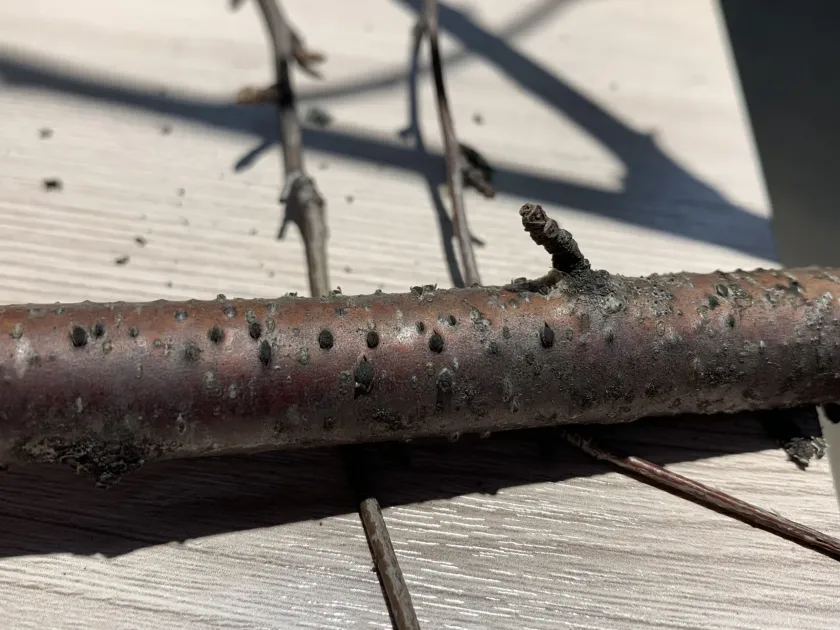
The first sign of infection is a local change in bark color, which turns brown or reddish-brown. On affected areas, the bark becomes sunken, forming characteristic necrotic lesions.
Upon close inspection, numerous small protrusions corresponding to the fungus's pycnidia are visible on the dead bark. In damp weather, spores may emerge from these bumps in the form of yellowish or orange tendrils.
As the disease progresses, the necrosis girdles the branches or trunk, leading to the withering of the entire upper part of the tree or a specific large branch.
Leaves on infected branches turn yellow, curl, and fall off prematurely, while the dead branches remain on the tree, acting as a reservoir for further spore spread.
Unlike normal wilting, the wood in the area affected by cytospora becomes brittle and dark-colored, which can be seen when cutting into the diseased branch.
Pathogen
The causative agent of this disease is the ascomycete fungus Cytospora pruinosa (synonym Valsa pruinosa). This pathogen belongs to the group of necrosis-canker infections of woody plants.
The fungus develops in the tissues of the bark and cambium, gradually penetrating the wood and causing tissue necrosis. The life cycle of the pathogen includes the formation of pycnidia, which appear on the surface of the bark as small bumps.
The infection persists in affected branches, bark, and fallen leaves, making the pathogen extremely resilient in dense plantings. Fungal spores spread actively through wind, rain splashes, and insect activity.
Primary infection most often occurs through wounds in the bark: frost cracks, sunburns, broken branches, or damage caused by wood-boring insects.
The fungus is highly aggressive, capable of secreting toxins that suppress the plant's defense mechanisms and provoke accelerated death of living tissues.
Conditions for development
The primary factor in the development of Cytospora pruinosa is the weakening of the willow's natural defenses. This often occurs due to unfavorable climatic conditions, such as prolonged droughts or excessive soil moisture.
Spring temperature fluctuations and bark sunburn create ideal "entry gates" for fungal spores. Sudden weather changes reduce the tree's resistance to infection.
Dense plantings and poor aeration contribute to a high-humidity microclimate, which is necessary for the active germination of conidia.
Inadequate maintenance, including a deficiency in mineral fertilizers and improper pruning, makes the tree more susceptible to pathogen influence.
Infestation by wood-boring insects significantly accelerates the infection process, as the pests' tunnels serve as deep channels for the fungal mycelium to penetrate inside the trunk.
Why it matters
Willow cytospora canker is an extremely dangerous disease capable of causing the death of significant portions of ornamental plantings in parks and private gardens within a short time.
The damage lies not only in the loss of the tree's aesthetic appeal but also in the total loss of its vitality when the main trunk is affected.
The disease leads to a substantial reduction in growth, deformation of the canopy, and weakening of the plant, which then becomes a target for secondary pests.
Massive spread of the pathogen in nurseries can result in the rejection of the entire stock, leading to significant economic losses.
In advanced cases, the disease spreads to healthy trees, making it impossible to maintain the species composition of avenues or hedges without radical sanitary logging.
Protection
The primary method of protection is strict adherence to agronomic practices: regular watering during dry periods and the application of balanced fertilizers to support the willow's immune system.
Regular sanitary pruning is essential: removing all dead and damaged branches while capturing at least 10-15 cm of healthy tissue below the necrotic zone.
All cuts and wounds on the tree must be treated immediately with horticultural wound paint or fungicidal pastes to prevent contact with fungal spores.
For prevention, spraying the crown with copper-based preparations (Bordeaux mixture, copper oxychloride) in the spring and autumn limits the spread of conidia on the bark surface.
- Regular disinfection of pruning tools after working with infected plants.
- Burning all plant debris (bark, cut branches) to destroy the infection reservoir.
- Using high-quality planting material resistant to fungal diseases.
Discussion
No discussions yet — be the first.