
Willow leaf spot
Drepanopeziza sphaerioides
Description
Symptoms
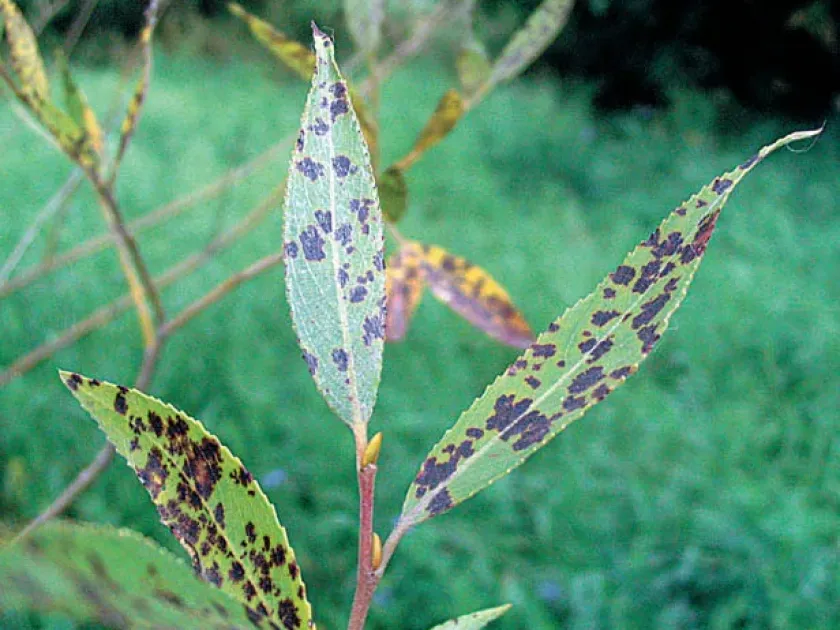
Early symptoms appear as small, dark brown or black spots on the leaves, which often become more prominent as they develop over the season.
These spots can grow together, leading to large necrotic areas that cause the entire leaf to yellow, brown, and eventually wither away.
Tiny, raised, cushion-like structures (acervuli) appear on the underside of the leaf, acting as the primary sites for spore production.
Severe infestations cause premature defoliation, leaving the willow tree looking sparse and unhealthy well before the onset of autumn.
In addition to leaf damage, small lesions may occasionally appear on young, succulent twigs, potentially causing localized dieback.
Pathogen
The causal agent of willow leaf spot is the ascomycete fungus Drepanopeziza sphaerioides, a common pathogen affecting various species of the Salix genus.
The fungus overwinters primarily in fallen leaves, where it develops its sexual stage (apothecia) to survive the adverse cold conditions of the winter season.
When environmental conditions become favorable in the spring, the fungus releases ascospores which are dispersed by wind and rain onto emerging foliage.
Throughout the growing season, the pathogen produces conidia, allowing for multiple infection cycles that cause the disease to spread rapidly through the tree canopy.
This fungus is highly specialized, meaning it targets willow species exclusively and has evolved to sync its lifecycle with the tree's growth cycle.
Conditions for development
The development of Drepanopeziza sphaerioides is heavily dependent on moisture; high humidity and prolonged rainfall provide ideal conditions for infection.
Moderate temperatures ranging from 15°C to 22°C significantly speed up the germination and colonization processes of the fungal spores.
Poor air circulation within dense willow stands allows moisture to linger on the leaf surfaces, creating a perfect microclimate for the pathogen to thrive.
Sites with poor drainage or heavy morning dew are particularly prone to high disease pressure throughout the summer months.
Lack of proper sanitation, such as leaving infected leaf litter under the trees, guarantees a high primary inoculum source for the following season.
Why it matters
Willow leaf spot causes aesthetic damage that significantly detracts from the beauty of willow trees in landscapes and residential settings.
Premature leaf drop reduces the tree's ability to photosynthesize effectively, which limits its growth and overall energy reserves.
Chronic infection weakens the tree's immune system, making it more susceptible to environmental stressors like drought, cold, and secondary pest attacks.
Young willow trees are particularly vulnerable, as repeated defoliation can stunt their vertical growth and lead to a malformed, sickly appearance.
In commercial nurseries, this disease can lead to significant economic loss due to the reduced quality and marketability of the willow stock.
Protection
The most important control measure is strict sanitation; rake and destroy all fallen leaves in autumn to eliminate the primary overwintering site for the fungus.
Pruning the tree crown to improve airflow and increase sunlight penetration is essential to keeping the foliage dry and discouraging fungal colonization.
Fungicide treatments, particularly those containing copper or systemic active ingredients, can be used to manage outbreaks during wet growing seasons.
Apply treatments promptly at the first sign of symptoms and continue at regular intervals as recommended by the product label to ensure effective protection.
- Maintain tree vigor through proper watering and balanced fertilization.
- Space plants adequately to ensure good air movement between canopies.
- Monitor trees regularly during the spring for initial infection signs.
Discussion
No discussions yet — be the first.