
Willow leaf spot
Stigmina deflectens
Description
Symptoms
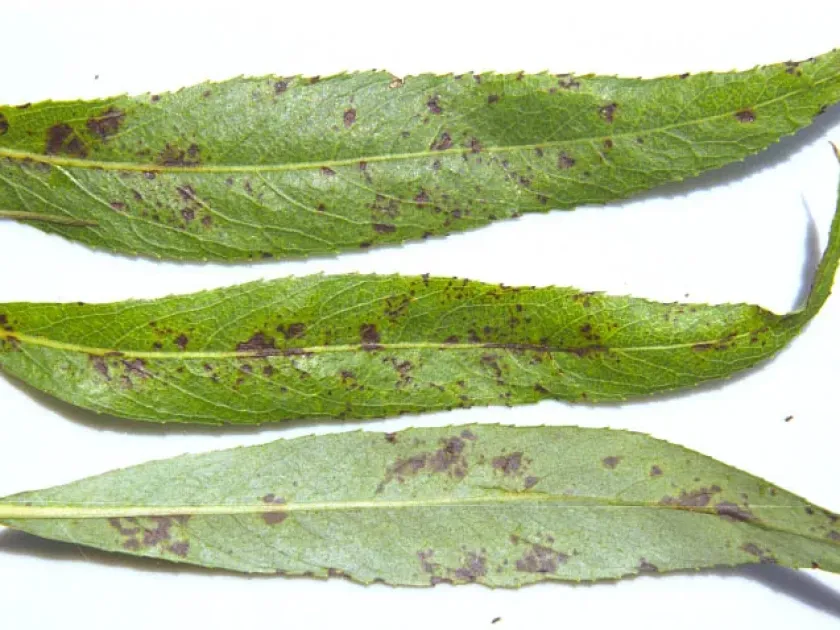
The most prominent symptom is the appearance of small, brown, or dark-colored spots on the leaves. These spots gradually expand and may coalesce, covering a large area of the leaf surface.
On the undersides of the leaves, corresponding to the necrotic areas, a dark-colored fungal growth can often be seen. This consists of conidiophores and spores, serving as a clear diagnostic feature.
As the infection progresses, the affected leaves turn yellow and eventually drop prematurely. Severe infestations can cause significant defoliation of the tree during the summer.
In cases of high disease pressure, the fungus may also infect petioles and young annual shoots. This causes small lesions that can lead to localized dieback of the twigs.
Visually, the tree appears stunted and sparse, losing its ornamental appeal. The canopy becomes thin, and the overall vigor of the plant is visibly diminished.
Pathogen
The causative agent of this disease is the fungus Stigmina deflectens, a specialized parasite that targets various willow (Salix) species. It is a common pathogen in both nursery production and landscape planting.
The fungus overwinters primarily in the form of mycelium and conidia within fallen leaves and infected woody debris. As spring temperatures rise, the pathogen initiates its reproductive cycle.
Infection spreads mainly through splashing raindrops, wind currents, and occasionally insects that carry fungal conidia. Once spores land on a healthy leaf surface, they penetrate through stomata.
Inside the host tissue, the fungal hyphae colonize the plant cells, secreting enzymes that break down the plant's structural integrity. This leads to the formation of characteristic necrotic spots.
The cycle of infection can be repeated multiple times during the growing season, particularly if the weather remains humid and warm, facilitating rapid secondary spread.
Conditions for development
High humidity and consistent rainfall are the primary factors that promote the development of Stigmina deflectens. A film of water on the leaf surface is essential for spore germination.
Optimal temperatures for the fungus range between +18 and +24 degrees Celsius. In these favorable conditions, the incubation period is significantly shortened, accelerating the spread of the disease.
Poor air circulation within the canopy, typically caused by dense planting, creates a humid microclimate. This moisture retention keeps the leaves wet for longer periods, favoring infection.
Neglected plantings with excessive accumulation of leaf litter are common sources of high infection levels. Failure to practice basic hygiene significantly increases the risk to the trees.
Plants under physiological stress, such as those suffering from drought or nutrient deficiencies, are much more susceptible to colonization by this pathogen than healthy, robust trees.
Why it matters
Willow leaf spot is highly damaging to the aesthetic value of the trees, which is a major concern for landscape designers and park maintenance teams. Early leaf drop significantly reduces the plant's beauty.
The loss of foliage directly impacts the plant's photosynthetic capacity, resulting in reduced shoot growth and weakened root systems over time.
Infected branches become more vulnerable to winter cold and secondary infections, including bark necrosis. This weakens the tree's overall defense mechanism.
For industrial willow cultivation, the disease negatively affects the quality of the harvested rods. Infected shoots become brittle and lose their flexibility, making them unsuitable for weaving.
If left unmanaged, the fungus can quickly spread throughout an entire plantation, turning a healthy site into a source of inoculum that can affect surrounding vegetation.
Protection
Sanitation is the most effective management strategy. It is critical to rake and destroy or compost infected leaf litter and debris to remove the overwintering source of the fungus.
Pruning and removal of heavily infected branches should be performed during dry weather to prevent the further spread of spores. Proper tool sterilization is recommended between plants.
Preventive fungicide sprays, particularly during the early leaf-out stage, are essential in nurseries. Copper-based products or systemic triazole fungicides are commonly used.
Improving the health of the tree through balanced nutrition (focusing on potassium and phosphorus) helps boost natural resistance to fungal pathogens. Avoid excessive nitrogen fertilizer.
- Prune to improve light penetration and air circulation.
- Apply fungicide sprays when conditions are favorable for disease.
- Strictly dispose of all fallen leaves during autumn.
- Monitor trees for early signs of leaf spots to prevent outbreaks.
Discussion
No discussions yet — be the first.