
Willow leaf spot
Plagiostoma salicellum
Description
Symptoms
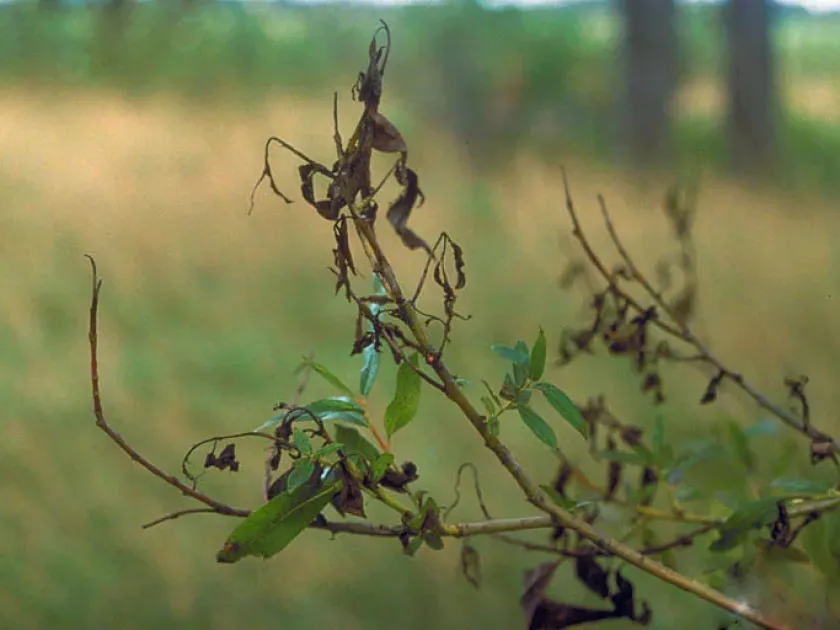
Key symptoms include the appearance of small, dark, and slightly sunken lesions on the branches and young twigs.
Over time, these lesions develop into noticeable cankers that may crack, exposing the wood underneath the infected bark.
Leaves on affected branches may show irregular necrotic spots, which eventually lead to premature leaf drop during the growing season.
Tiny black fruiting bodies of the fungus may emerge through the surface of the infected bark, indicating the presence of active spores.
Severe infections lead to significant dieback of branches, resulting in a sparse, thin canopy and an unthrifty appearance.
Pathogen
The disease is caused by the fungus Plagiostoma salicellum, which is a common pathogen affecting various willow species.
This fungus is classified as an ascomycete and is known to invade the branches and twigs of willow trees, disrupting their internal structure.
The pathogen overwinters within the infected bark and dead wood of the host, surviving in the form of dormant fungal structures.
When spring conditions become favorable, the fungus produces spores that are spread by wind currents and splashing rain.
Infection primarily occurs through wounds, pruning cuts, or natural fissures in the bark of the host plant.
Conditions for development
High humidity and prolonged periods of wet weather are the most critical factors favoring the spread of the infection.
Poor air circulation within dense plantings prevents the foliage from drying out, facilitating the germination of spores.
Trees that have suffered physical damage, such as frost cracks or wind-related breakage, are highly susceptible to colonization.
The fungus thrives in moderate temperatures, typically ranging from 15 to 22 degrees Celsius, which often coincide with spring growth.
Neglected willow stands with heavy weed competition or lack of nutrition exhibit lower resilience against the pathogen.
Why it matters
The disease can significantly compromise the aesthetic value of ornamental willow plantings by causing unsightly branch dieback.
Young, newly planted trees are particularly vulnerable and may die completely if the infection spreads to the main stem.
Reduced foliage leads to decreased photosynthetic capacity, weakening the tree over time and making it susceptible to secondary pests.
The persistent nature of the fungus requires intensive maintenance to prevent the gradual loss of the entire tree.
Economic losses in nurseries can be substantial due to the need for discarding infected stock and increased maintenance costs.
Protection
Pruning out infected branches and twigs during the dormant season is essential to reduce the overall inoculum load.
Ensure that all pruned material is removed from the site and destroyed, preferably by burning or deep burial, to prevent reinfection.
Preventative applications of copper-based fungicides can help protect trees during the critical period of bud break.
Maintain healthy, vigorous growth through balanced fertilization and appropriate irrigation to boost the tree's natural defense systems.
Monitor trees regularly for early signs of infection and address mechanical injuries immediately to close potential entry points for the fungus.
Discussion
No discussions yet — be the first.