
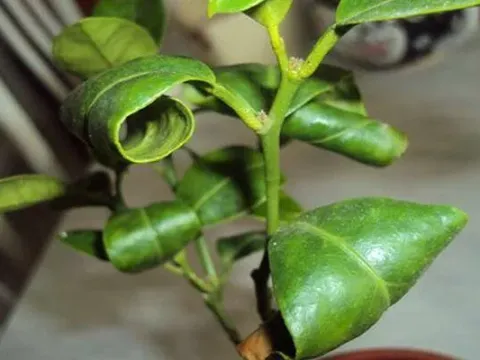
Citrus crinkly leaf
Crinkly leaf
The disease is caused by the Citrus crinkly leaf virus (CCLV), a plant virus classified within the Fabavirus genus of the Secoviridae family.
What the section contains
Citrus crinkly leaf
It acts as an obligate parasite, infecting the vascular system of the host plant and disrupting its normal physiological development processes.
The virus is primarily transmitted through vegetative propagation, specifically using infected scions or rootstocks during the grafting process.
Being a systemic pathogen, once a tree is infected, the virus spreads through the phloem to all parts, making local control impossible.
Research indicates that CCLV is often found in association with other viral pathogens, exacerbating the severity of symptoms in susceptible citrus species.
The most prominent sign is the severe deformation of leaf blades, which appear crinkled, puckered, and exhibit irregular, wavy margins.
Leaves often show characteristic mosaic-like chlorotic patches and blister-like protrusions, significantly altering the normal foliage structure.
Affected trees display stunted growth, with shortened internodes and a thinner, less vigorous canopy compared to healthy specimens.
Fruit symptoms include irregular shapes, surface malformations, and reduced overall size, making them unsuitable for commercial marketing.
In severe cases, trees may exhibit dieback symptoms and show a general lack of vigor throughout the growing season.
The virus causes substantial economic losses by reducing the total fruit yield and impairing the quality and appearance of the harvest.
Reduced photosynthetic efficiency, caused by leaf deformation, leads to a decline in tree health and a decrease in long-term productive lifespan.
Infected trees become more susceptible to environmental stress factors, including drought and frost, due to their weakened physiological state.
The necessity to remove and replace infected trees creates significant financial burdens for orchard owners and commercial citrus growers.
Due to the irreversible nature of the infection, the virus poses a constant threat to the viability and productivity of citrus nurseries worldwide.
The primary control strategy involves the exclusive use of virus-free plant material obtained through certified nursery programs.
Strict sanitation protocols for pruning and grafting tools are essential to prevent the mechanical transmission of the virus between trees.
Regular visual inspections of citrus orchards are critical for the early detection and immediate removal of infected trees to stop further spread.
Quarantine measures and the careful selection of propagation material are the most effective ways to manage the virus in areas with high infection rates.
Since there are no curative treatments for viral diseases in field conditions, preventive measures remain the only viable approach to protect the crop.