
Citrus phyllosticta
Phyllosticta citribraziliensis
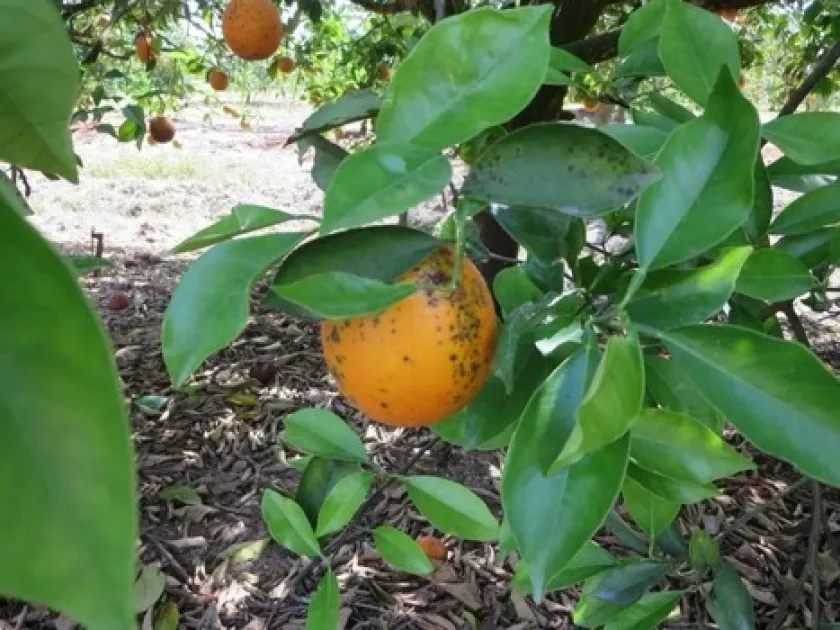
Description
Symptoms
Initial symptoms include the appearance of small, circular spots on leaves that gradually turn brown or greyish-brown with a distinct darker margin.
As the infection progresses, tiny black dots representing the pycnidia of the fungus appear, scattered or in concentric circles within the affected areas of the leaf.
Fruit infections manifest as necrotic lesions, which not only reduce the aesthetic value of the harvest but can also trigger premature fruit drop.
In cases of severe infestation, young shoots may develop canker-like symptoms, leading to tissue death and deformation of the growing tips.
- Small circular necrotic spots on leaves.
- Formation of black pycnidia on the surface of lesions.
- Premature leaf abscission under high disease pressure.
- Visible necrotic lesions on stems and developing fruit.
- Reduced overall tree vigor due to photosynthetic loss.
Pathogen
The causative agent of the disease is the fungus Phyllosticta citribraziliensis, an ascomycete that reproduces via pycnidia, small flask-shaped fruiting bodies formed within plant tissues.
The fungus is specialized in infecting citrus species, utilizing conidia to spread through water splashes and high humidity environments typical of citrus growing regions.
The pathogen overwinters as mycelium or dormant pycnidia on fallen leaves and necrotic twigs, remaining a threat to subsequent growing seasons if not managed properly.
Biological studies highlight that this fungus thrives in tropical climates where the biological cycle is continuous, allowing for rapid colonization of susceptible plant hosts.
Understanding the life cycle is crucial for effective control, as the timing of spore release often coincides with the flush of new, vulnerable citrus leaves.
Conditions for development
Development of this disease is highly dependent on humidity, with an optimal range above 80% combined with temperatures ranging from 20 to 28 degrees Celsius.
Heavy and frequent rainfall provides the primary mechanism for the spread of spores, as water drops splash the fungus from infected debris onto healthy new growth.
Poor orchard hygiene, such as leaving infected plant material on the ground, creates a constant reservoir of spores that can re-infect the trees during rainy spells.
High planting density without adequate pruning restricts airflow, maintaining a microclimate around the foliage that is highly favorable for fungal germination.
Stressed or nutritionally deficient trees are significantly more susceptible to Phyllosticta, as their structural integrity and immune responses are compromised.
Why it matters
The primary economic impact is the loss of photosynthetic area due to leaf necrosis, which leads to reduced yields and smaller fruit size over the growing season.
Fruit quality is drastically impaired by the necrotic spots, rendering the harvest unacceptable for fresh market sale and lowering the financial return.
Chronic infections weaken the trees, making them more susceptible to other pathogens and environmental stresses such as drought or frost damage.
Operational costs increase significantly due to the need for repeated fungicide applications to maintain the health of the citrus orchard.
If left unmanaged, the cumulative damage over several years can lead to the death of branches or even entire young trees, necessitating costly replacements.
Protection
Sanitation is the most critical control measure: gathering and destroying all fallen leaves and pruning infected twigs to eliminate primary inoculum sources.
Implementing proper orchard management, including regular pruning to open the tree canopy, ensures better ventilation and reduces foliage wetness duration.
Application of copper-based fungicides serves as a preventative measure, protecting the vulnerable new growth during periods of peak disease risk.
Balanced fertilization programs help maintain plant health, ensuring that citrus trees possess enough vigor to withstand moderate pathogen pressure.
In greenhouses or nurseries, controlling irrigation methods to avoid overhead watering is essential to prevent the spread of conidia from infected to healthy plants.
Discussion
No discussions yet — be the first.